Sharp Increase in Youth Neither Working Nor Seeking Jobs
Shortage of Quality Jobs Identified as Main Cause... Bank of Korea Analysis Report
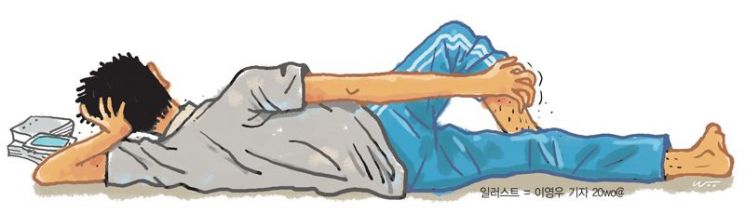
With as many as 420,000 young people neither working nor seeking jobs and simply resting, an analysis has emerged that the main reason for their withdrawal from the job market is the lack of quality jobs.
According to the report "Background and Evaluation of the Increase in the Resting Population Among Youth" released by the Bank of Korea on the 2nd, the recent increase in the 'resting' population in the labor market is led by young people with employment experience.
The resting population refers to those in the domestic non-economic activity population who are not seeking jobs and are resting without any special reason. Since these individuals are resting without special reasons such as childcare, studies, job preparation, or health, it implies a potential loss of labor force.
As of the third quarter, the domestic resting population is 2.35 million, of which the youth group (ages 25?34) accounts for 29.5%, a significant increase from 22.7% in the fourth quarter of last year.
When examining the resting youth population by employment experience, most of the recent increase in resting is seen among young people who have employment experience. This means that rather than not entering the labor market, there has been an increase in cases where young people, after having experienced employment, no longer seek jobs and have withdrawn into resting.
Looking at the reasons for quitting jobs among the resting youth population, cases of voluntarily quitting and resting have been increasing as a trend, while involuntary quitting and resting cases have also significantly increased this year.
The report evaluated that the trend of increasing voluntary resting among youth is due to structural factors such as job mismatches. This is because the quality of youth employment has sharply declined since the COVID-19 pandemic and has still not recovered to previous levels, showing a downward trend.
Youth tend to have relatively higher educational levels and often voluntarily choose jobs, setting high standards for job selection, but the deterioration in job quality has led to an increase in young people resting. Ultimately, the report emphasized that the mismatch phenomenon, where there is a shortage of quality jobs that meet their expectations, acts as a major factor causing youth to voluntarily exit the labor market.
The report argued that as the resting state among youth prolongs, attention should be paid to the possibility that they may permanently leave the labor market or become NEETs (people who neither work nor have the willingness to work). Looking at past trends, short-term increases in resting youth have led to long-term increases in resting. The longer the resting state continues, the lower the proportion of those wishing to work, resulting in a lower actual employment rate. In fact, among youth who involuntarily quit jobs within one year, the proportion wishing to work is around 90%, but after one year, this figure drops to about 50%.
Lee Soo-min, head of the Employment Analysis Team at the Bank of Korea's Research Department and author of the report, stated, "The probability of successfully finding employment while in a resting state is significantly lower than when unemployed," and added, "The increase in resting youth is a factor that will worsen future labor supply, so policy efforts are needed to attract them back into the labor market."
© The Asia Business Daily(www.asiae.co.kr). All rights reserved.

















