World AIDS Day... Importance of HIV Prevention and Treatment
Advances in Medication Enable Healthy Daily Life with Management
December 1st of every year is 'World AIDS Day.' It was established following the adoption of the 'London Declaration' at the World Health Ministers' Meeting held in London, UK, in 1988, which emphasized the need for information exchange, education, publicity, and respect for human rights to prevent AIDS (Acquired Immunodeficiency Syndrome).
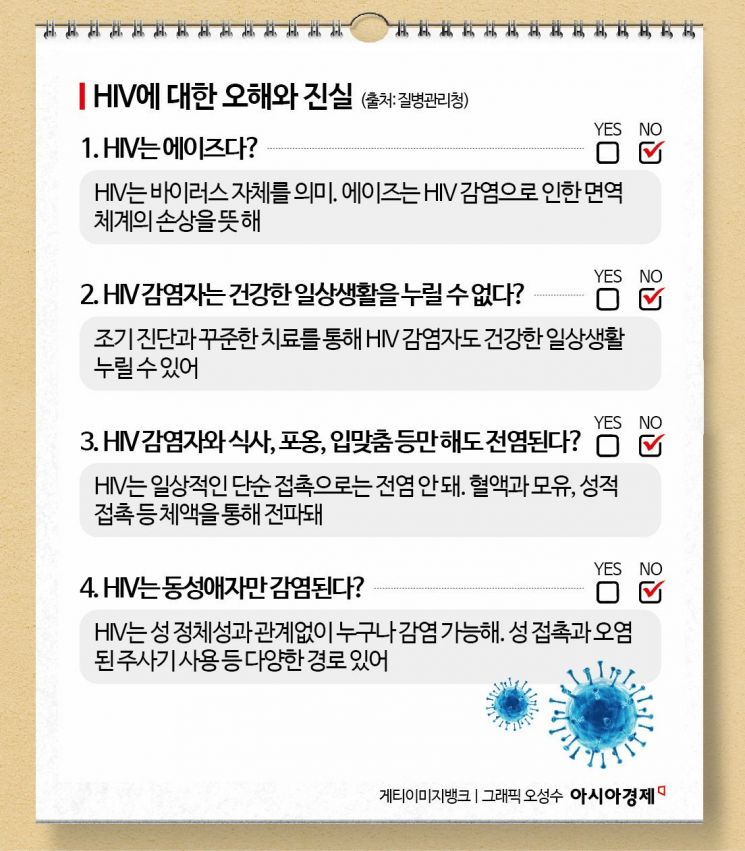
AIDS is a disease in which HIV (Human Immunodeficiency Virus) invades the human body, destroying immune cells and weakening the body's immune function. HIV is the virus that causes AIDS, and a person who carries HIV in their body is called an HIV-infected person. People infected with HIV are referred to as HIV-infected individuals or AIDS patients depending on the stage of the disease. With consistent treatment during the early stages of HIV infection, progression to AIDS can be prevented. In other words, not all HIV-infected individuals are AIDS patients.
◆ More than half (64.1%) of new HIV infections in Korea are among people in their 20s and 30s... Social discrimination and stigma persist= According to the '2023 HIV/AIDS Status Report' recently released by the Korea Disease Control and Prevention Agency, the cumulative number of domestic Korean HIV-infected individuals is 19,745. Last year, 1,005 new HIV infections were reported to domestic health authorities. Among the new infections, 89.9% were male, and people in their 20s and 30s accounted for 64.1% of all infections (35.4% in their 30s, 28.7% in their 20s). However, it is estimated that many infected individuals remain hidden due to social prejudice and misinformation about HIV, thus not being counted in the statistics.
In fact, according to a 'Perception Survey of HIV-Infected Individuals' conducted on 217 HIV-infected persons, more than 9 out of 10 respondents said they had heard or seen HIV-related hate speech in the past year. Additionally, 38.2% of HIV-infected individuals reported that they had not disclosed their HIV status to their family.
◆ HIV poses no transmission risk with proper treatment... Normal daily life is possible= HIV was once known as a fatal disease. However, with advances in treatment, it is now considered a manageable condition. Early diagnosis and appropriate treatment allow individuals to maintain a normal life at school, work, and elsewhere while staying healthy. In fact, the life expectancy of infected individuals is about 78 years, which is not significantly different from the 80 years life expectancy of uninfected individuals.
Internationally, the concept of 'U=U (Undetectable = Untransmittable)' has emerged. 'U=U' means that if an HIV-infected person consistently takes medication daily and their HIV-1 RNA (viral load) drops to undetectable levels and remains so, they do not transmit the virus to others. This concept is based on scientific evidence from multiple studies and is emphasized as a key aspect of HIV treatment by organizations such as UNAIDS and the World Health Organization (WHO).
Moreover, HIV is primarily transmitted through bodily fluids such as blood, sexual contact, and breast milk, and is not transmitted through activities like eating together, hugging, or kissing.
◆ Regular testing and prompt treatment are crucial... Anonymous testing available at nearby public health centers= The most important factors are regular diagnosis and prompt treatment. The government supports early detection of HIV infection to prevent further transmission and to help HIV-infected individuals live healthily without progressing to AIDS. Accordingly, anonymous HIV testing is available free of charge at nearby local public health centers.
If diagnosed HIV-positive, treatment should begin promptly. Current HIV treatment is based on the U.S. Department of Health and Human Services (DHHS) guidelines, aiming to suppress the viral load as much as possible and maintain a high number of immune cells.
There is also hope for various options in HIV management and treatment. In the past, HIV-infected individuals had to take dozens of pills daily at once. However, recently, single-tablet regimens have been developed, allowing viral suppression and management with just one pill per day. Additionally, an injectable medication that only needs to be administered once every two months is expected to be released next year.
© The Asia Business Daily(www.asiae.co.kr). All rights reserved.

















