Increase in Golf Course Complaints This Year, Monthly Average 27.8 Cases
Age Group 50s 31.0%, 60s 25.9%
Reservations/Cancellations, Unfair Use, Food-Related Issues
Complaints have increased. This concerns complaints related to golf courses. According to the analysis of golf course-related complaints collected through the Civil Complaint Information Analysis System by the Anti-Corruption and Civil Rights Commission, complaints about golf courses have surged sharply this year. From January to June, 334 cases were received, averaging 27.8 cases per month. Compared to 21.8 cases received monthly in 2021, this is an increase of 6 cases per month. In 2022, 24.5 cases and in 2023, 24.3 cases were reported monthly.
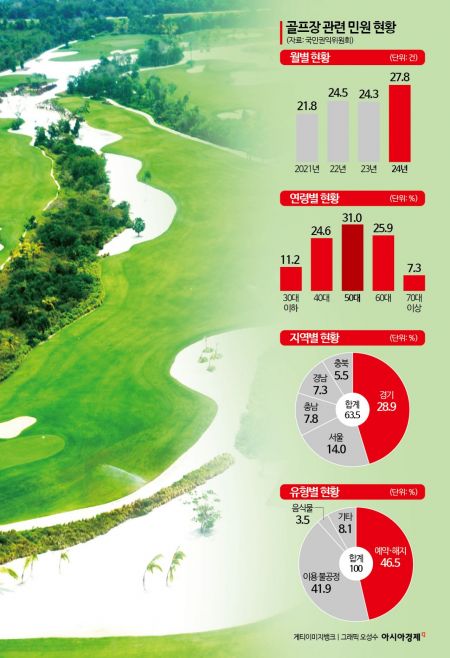
Looking at golf course-related complaints by age group, they occurred mainly among the primary customers aged 40 to 60, accounting for 81.5% of all complaints. Those in their 50s ranked first with 31.0% of total complaints, followed by those in their 60s (25.9%) and 40s (24.6%). The elderly aged 70 and above accounted for 25.9%, while younger people aged 30 and below made up only 11.2%.
By region, Gyeonggi-do recorded an overwhelming figure. Gyeonggi-do ranked first with 28.9% in the regional status of golf course-related complaints. Seoul was second (14.0%), Chungnam third (7.8%), Gyeongnam fourth (7.3%), and Chungbuk fifth (5.5%). Comparing by gender, the majority of complaints were filed by men, accounting for 84.2% of the total. Female golfers accounted for only 15.8%.
The content of golf course-related complaints was 46.5% about reservations and cancellations. Complaints included forced bundling sales such as accommodation and restaurant use during reservation, macro activities like reservation preemption, and unreasonable cancellation and refund policies. Complaints about unfair use accounted for 41.9%. Issues raised included providing reservation opportunities only to deposit payers at public golf courses, operation without considering weather conditions such as heavy rain, and rank-based discriminatory military golf course reservation allocations favoring high-ranking military officers. Complaints related to food accounted for 3.5%, citing excessive measures against bringing food, poor restaurant hygiene, and golf course restaurant prices several times higher than market prices as areas for improvement. Other complaints included opinions to ban the use of corporate golf course credit cards recognized as corporate expense processing for entertainment golf.
The Anti-Corruption and Civil Rights Commission delivered the results of this complaint analysis to related agencies including the Ministry of Culture, Sports and Tourism, Ministry of National Defense, Fair Trade Commission, Ministry of Economy and Finance, National Tax Service, and Korea Consumer Agency. They plan to use this as a reference for promoting work to improve consumer rights across golf course use. The Commission explained, "Although golf has become a popular sport, complaints about the burden and inconvenience of golf course reservations and use continue." The complaint analysis data is available for anyone to easily access anytime on the ‘Big Data on Complaints at a Glance’ website operated by the Anti-Corruption and Civil Rights Commission.
© The Asia Business Daily(www.asiae.co.kr). All rights reserved.

















