Housing Transactions Decrease in Seoul Metropolitan Area, Increase in Provinces
Unsold Units After Completion Rise Mainly in Incheon
Supply Leading Indicator Permits Continue to Lag
Due to loan regulations, apartment transactions in Seoul have decreased for three consecutive months. While housing transactions in the Seoul metropolitan area, including Seoul, have slowed, transactions in other regions increased by 24% in just one month. Although the total number of unsold houses slightly decreased, the number of post-construction unsold houses classified as problematic increased by more than 1,000 units, mainly in Incheon, compared to the previous month.
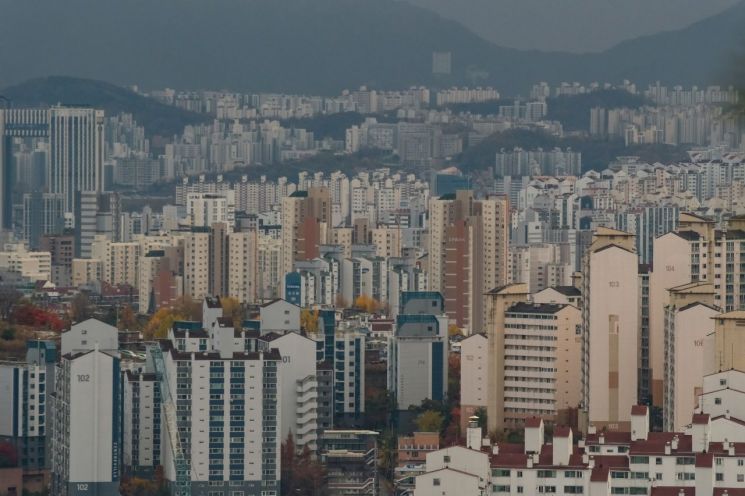
According to the 'October Housing Statistics' released by the Ministry of Land, Infrastructure and Transport on the 29th, the number of apartment transactions in Seoul last month (based on the reporting date) was 4,000, down 19.2% from the previous month (4,951). This is the lowest figure in six months since April this year (4,840).
The Ministry analyzed that the decrease in transaction volume is due to weakened expectations of housing price increases caused by strengthened loan regulations. Seoul apartment transactions increased for seven consecutive months from December last year (1,790) to July this year (9,518). However, after the government began enforcing loan regulations in August, the number dropped to 7,609, and with the application of the second stage of the Debt Service Ratio (DSR) in September, it fell further to 4,951.
As a result, the total housing transactions in Seoul, including apartments, exceeded 10,000 units for the first time in 2 years and 11 months in July but collapsed within two months. The downward trend continued with 8,206 transactions in September and 7,164 in October.
However, nationwide housing transactions (56,579 units) increased by 10.4% in one month, which is attributed to increased transactions in regions less affected by loan regulations. Last month, housing transactions in other regions were 31,568 units, up 24.1% from the previous month (25,438 units). A Ministry official stated that the volatility trend in regional transactions needs to be monitored further.
Last month, nationwide monthly rental and lease transactions totaled 211,218, an 11.1% increase from the previous month (190,146). Lease transactions increased by 12.1%, and monthly rental transactions rose by 10.3%. From January to October this year, the proportion of monthly rentals in lease transactions was 57.3%, up 2.4 percentage points compared to the same period last year.
Thanks to the increase in regional housing transactions, the total number of unsold houses nationwide (65,836 units) decreased for the fourth consecutive month. While the metropolitan area (13,948 units) increased by 0.4% compared to the previous month, other regions (51,888 units) decreased by 1.9%.
However, post-construction unsold houses nationwide numbered 18,307 units, an increase of 1,045 units (6.1%) in one month. This number has been rising for 15 consecutive months since August last year. It is also the highest figure in 4 years and 3 months since July 2020 (18,560 units). The increase in post-construction unsold houses mainly came from Incheon. Problematic unsold houses in Incheon rose nearly threefold from 555 units in September to 1,547 units in October.
Meanwhile, housing supply indicators showed recovery in housing starts and sales compared to the previous year, but permits continued to show a sluggish trend.

The number of housing permits nationwide in October was 26,136 units, up 28.9% from the same month last year (20,273 units). However, the cumulative total from January to October was 244,777 units, down 19.1% from the same period last year (302,744 units). Cumulative apartment permits decreased by 17.3%, and non-apartment permits such as villas decreased by 30.0%.
Housing starts were 24,170 units, up 10.0% from the same month last year (21,976 units). The cumulative housing starts from January to October were 218,177 units, a 34.0% increase from the same period last year (162,873 units). However, by type, cumulative apartment starts (189,676 units) increased by 49.7%, while non-apartment starts decreased by 21.2%.
Sales (based on approval) and completions decreased by 38.9% and 25.0%, respectively, compared to the same month last year. However, on a cumulative basis from January to October, sales reached 182,373 units, up 28.3% from the same period last year (142,117 units). Completions also increased by 4.3% to 361,527 units compared to last year (346,517 units) on a cumulative basis.
© The Asia Business Daily(www.asiae.co.kr). All rights reserved.
!["The Woman Who Threw Herself into the Water Clutching a Stolen Dior Bag"...A Grotesque Success Story That Shakes the Korean Psyche [Slate]](https://cwcontent.asiae.co.kr/asiaresize/183/2026021902243444107_1771435474.jpg)

















