20% of All Distressed Projects Under CMS Sold via Early Auction as of November
Restructuring Intensifies Since September Following 'PF Normalization Plan'
Early Auction Performance Lagged...Cumulative Volume More Than Doubled in November
Financial Authorities Meet Savings Bank CEOs...Press for Enhanced Soundness Monitoring
Early Auction Results Fall Short of Expectations...Authorities Stress Need for Swift Resolution
Financial authorities and the financial sector have completed the first and second rounds of feasibility evaluations for real estate project financing (PF) sites and are focusing on foreclosure and write-off procedures for non-performing sites. Among the sites held by savings banks, it has been confirmed that those worth over 400 billion won have completed the foreclosure procedures. Although the continuous pressure from financial authorities has accelerated the foreclosure process for non-performing sites compared to the initial stages, it is still evaluated that the expectations set in the normalization plan for the “soft landing of real estate PF” have not yet been met.
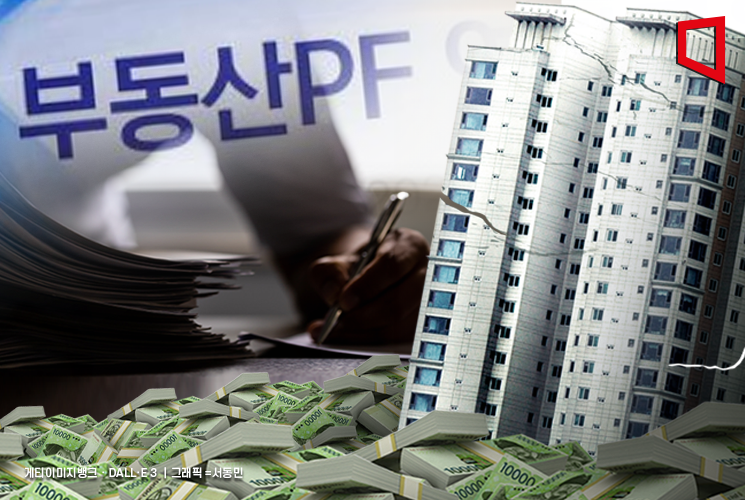
According to a comprehensive report by Asia Economy on the 29th, among the PF sites subject to foreclosure by savings banks worth about 2.1 trillion won, it has been confirmed that sites worth over 400 billion won have recently completed the procedures. This means that about 20% of all non-performing sites have been resolved through foreclosure procedures over the past three months since the real estate PF restructuring process began in earnest last September.
A financial sector official in charge of the foreclosure procedures for real estate PF explained, “There is strong pressure from financial authorities to complete the cleanup of sites under caution and those at risk of non-performance within six months. At the same time, soundness monitoring has been strengthened compared to the past, leading to an increase in foreclosure cases centered on PF sites related to savings banks.”
Earlier, in June, financial authorities revised the detailed criteria for feasibility evaluations, subdividing the previous lowest grade of “deterioration concern” into “caution (Grade C)” and “non-performance concern (Grade D).” Sites graded as caution are to pursue restructuring or voluntary sale, while those with non-performance concerns are to be sold through foreclosure or write-off. The cleanup of non-performing sites began following the first feasibility evaluation results released at the end of August.
The cleanup of non-performing PF sites through foreclosure has gained momentum since November. After the financial authorities announced the normalization plan and the first evaluation was completed, the foreclosure procedures in the savings bank industry had not produced results as expected by the end of last month, which was still an early stage. In fact, the non-performing sites cleared by savings banks until October amounted to about 180 billion won, representing only about 8% of the total.
The sluggish performance of foreclosure in the early stages of the normalization plan is attributed to a reluctance to proceed with foreclosure procedures while accepting confirmed losses. Additionally, there was a vague expectation that the non-performing PF market would improve due to the base interest rate cuts. As the cleanup performance remained poor, the Financial Supervisory Service convened meetings with CEOs of some savings banks earlier this month to increase pressure on site cleanup.
Although the cumulative cleanup scale of non-performing sites by savings banks has more than doubled from 180 billion won to over 400 billion won in just one month, some analysts still believe it falls short of the financial authorities’ expectations. Half of the six-month deadline set by the authorities has passed, but despite strong pressure for cleanup, less than 50% of the PF sites subject to foreclosure have been disposed of.
Moreover, with the Financial Services Commission’s decision to impose a management improvement order on Mugunghwa Trust, close attention must be paid to its impact on the restructuring real estate PF market. The management improvement order is the highest-level corrective measure among prompt corrective actions imposed by financial authorities on financial companies whose financial soundness has deteriorated below certain standards.
Financial authorities stated that since the proprietary accounts and trust assets of real estate trust companies are separated from insolvency, the normalization of Mugunghwa Trust will have a limited impact on real estate PF sites promoted through trust business. They also expressed their intention to implement market stabilization measures in parallel to block shocks to the financial and PF markets. However, concerns about instability may increase. A senior official from the financial authorities told Asia Economy in a phone interview, “To improve soundness indicators, a faster cleanup of non-performing loans is necessary by the end of the year.”
© The Asia Business Daily(www.asiae.co.kr). All rights reserved.
![Clutching a Stolen Dior Bag, Saying "I Hate Being Poor but Real"... The Grotesque Con of a "Human Knockoff" [Slate]](https://cwcontent.asiae.co.kr/asiaresize/183/2026021902243444107_1771435474.jpg)
















