"Uncertainty in Economic Agents' Decision-Making Increases in Employment, Corporate Investment, and Consumption"
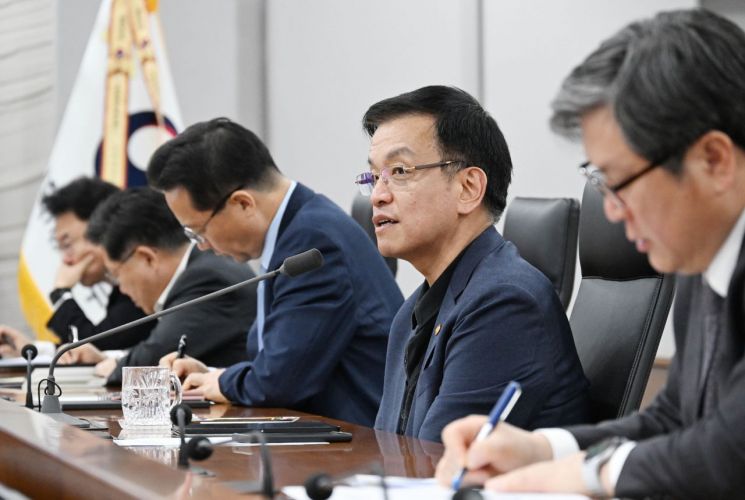
The government expressed its position that it is "difficult to accept the bill" regarding the amendment to abolish the automatic submission of the budget bill and related subsidiary bills, which was passed by the National Assembly plenary session led by the opposition party on the 28th, and stated that "if the bill is sent to the government, it will recommend the President to request reconsideration."
Choi Sang-mok, Deputy Prime Minister for Economy and Minister of Strategy and Finance, held a briefing at the Government Seoul Office on the same day regarding the "partial amendment to the National Assembly Act to abolish the automatic submission system for the budget bill and related subsidiary bills," expressing "deep regret over the unilateral handling of the bill" and pointing out the problems with the bill.
Deputy Prime Minister Choi said, "The automatic submission system was introduced as part of the so-called National Assembly Advancement Act to improve the excessive political strife in the past National Assembly and the habitual failure to meet the legal deadline for budget bill processing," adding, "If this system is abolished, the period during which the relevant standing committee of the National Assembly must complete the budget review will no longer be limited, making it highly likely to exceed the constitutional deadline (December 2)."
He also noted, "The bill justifies a situation where the constitutional deadline for the budget bill resolution is not observed, which raises a high possibility of unconstitutionality."
He continued, "If the National Assembly's resolution on the budget bill is delayed, it will be difficult not only for the government but also for local governments and government-supported agencies to adequately prepare for budget execution due to the lack of time," and pointed out, "the delay in finalizing the subsidiary bills related to the revenue budget bill will increase uncertainty in decision-making for economic agents such as employment, corporate investment, and consumption."
On the same day, the National Assembly plenary session passed the amendment to the National Assembly Act led by the Democratic Party. The amendment's main point is to prevent the automatic submission of the budget bill and related subsidiary bills to the plenary session even after the legal deadline for budget review (November 30) has passed. Concerns have been raised that if the automatic submission system is abolished, delays in budget processing could disrupt the execution of the new year's budget not only for the central government but also for local governments.
© The Asia Business Daily(www.asiae.co.kr). All rights reserved.

![User Who Sold Erroneously Deposited Bitcoins to Repay Debt and Fund Entertainment... What Did the Supreme Court Decide in 2021? [Legal Issue Check]](https://cwcontent.asiae.co.kr/asiaresize/183/2026020910431234020_1770601391.png)














