Chinese Government Faces Potential Dilemma
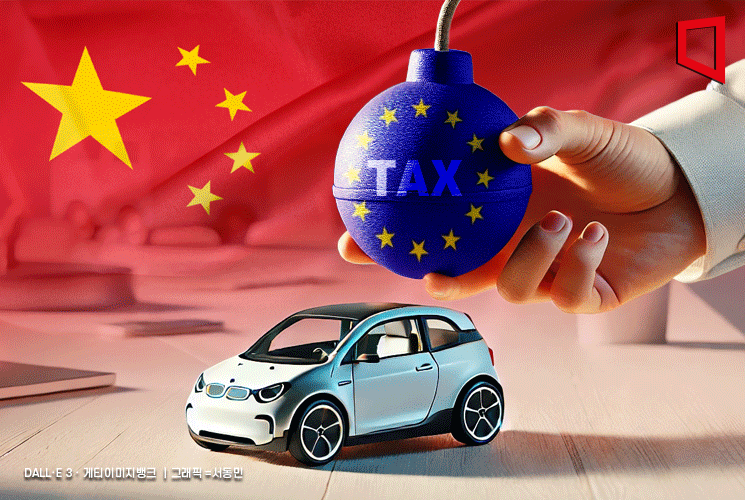
There is an analysis that the Chinese yuan could hit an all-time low next year due to tariff measures imposed by President-elect Donald Trump of the United States. Generally, a weaker yuan is seen as a way to enhance export competitiveness and offset the so-called ‘Trump tariffs.’ However, if the yuan depreciates excessively, it could worsen the domestic economic downturn. China appears to be facing a dilemma regarding its exchange rate policy.
On the 28th, the U.S. economic media outlet CNBC compiled offshore dollar-yuan exchange rate forecasts from 13 major investment banks and research institutions, concluding that the yuan is expected to fall to an average of 7.51 yuan per dollar by the end of next year. According to LSEG, this would mark the yuan’s lowest value since the Chinese government abandoned the fixed exchange rate system. The dollar-yuan exchange rate has already depreciated by more than 2% since the U.S. presidential election in May and was trading around 7.25 yuan on that day.
Capital Economics predicts the yuan will depreciate most sharply to 8 yuan per dollar by next year. BNP Paribas forecasts 7.7 yuan, UBS and Morgan Stanley expect 7.6 yuan, and Goldman Sachs predicts a decline to 7.5 yuan per dollar.
President-elect Trump announced on the 25th that he would impose an additional 10% tariff on China immediately upon taking office in January next year. This is separate from his campaign pledge to impose a 60% tariff on Chinese products.
In a scenario where the second Trump administration implements all such tariff measures against China, the yuan’s value is expected to plunge most steeply. Jonas Goltermann, Chief Market Economist at Capital Economics, stated, “U.S. tariffs will lead to a rise in the value of the dollar,” adding, “Currencies of countries closely linked to U.S. trade will experience the largest adjustments.”
During the first Trump administration in 2018, when the U.S. imposed its first tariffs on China, the yuan depreciated about 5% against the dollar. The following year, as trade tensions escalated, it fell an additional 1.5%.
Typically, when the yuan depreciates, overseas buyers can purchase Chinese products at lower prices. For this reason, some experts argue that a weaker yuan could mitigate the impact of President-elect Trump’s tariff measures.
However, the problem is that the yuan has already depreciated significantly. Further weakening could accelerate capital outflows.
There are also forecasts that it will be difficult to raise benchmark interest rates to defend the yuan. This is because such a move could burden the already fragile domestic economy. This stance also conflicts with the Chinese government’s policy of rolling out stimulus measures since September.
Senior economist Cedric Chehab of BMI stated, “The dollar-yuan rate is already close to the Chinese foreign exchange market’s defense line of 7.3 yuan. If this level is breached, volatility in China’s financial markets will increase,” but added, “The People’s Bank of China will likely be unable to raise interest rates to curb the yuan’s depreciation.”
© The Asia Business Daily(www.asiae.co.kr). All rights reserved.

















