Jeong Gi-seok, Chairman of the National Health Insurance Service, "This Year's Benefit Expenditure Decreased Amid Medical Crisis"
Completed Organization of 1,068 Non-Covered Items with 95% Tracking
Seeking to Reduce Excessive Medical Expenses through Nationwide Big Data Analysis
"We must strengthen the management of non-reimbursable items under health insurance and definitely introduce the Special Judicial Police Officer (Special Judicial Police) Act to monitor illegal medical institutions. We will also strive to improve and realize medical fees."
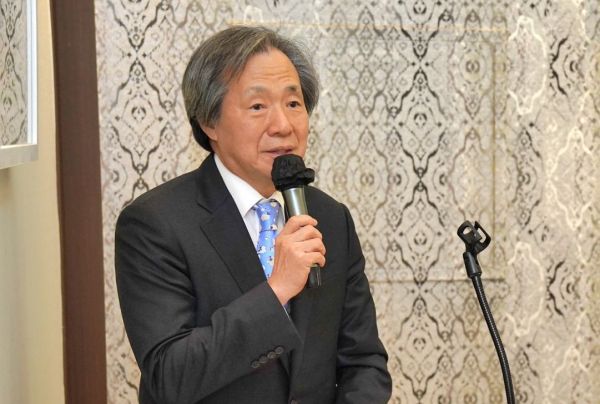 Jung Ki-seok, President of the National Health Insurance Service, is holding a press conference at a restaurant in Gwanghwamun, Seoul on the 27th. Photo by National Health Insurance Service
On the 27th, Jeong Gi-seok, the President of the National Health Insurance Service (NHIS), held a press conference and announced that despite the medical blackout caused by this year's medical-policy conflicts, the health insurance finances are being maintained stably.
President Jeong stated, "After the medical crisis, many patients flocked to secondary hospitals, but the use of tertiary general hospitals significantly decreased, offsetting this and reducing health insurance benefit expenditures. Although we advanced 1.6 trillion won to tertiary general hospitals to maintain the emergency medical system, we plan to recover this amount later," he explained.
Instead, management of non-reimbursable items, which are identified as the main cause of rising medical costs, is being further strengthened. This year, for the first time, the NHIS implemented a non-reimbursable treatment reporting system covering 1,068 non-reimbursable items, with about 95% of all medical institutions submitting data, showing a high participation rate. The NHIS plans to systematically manage the overall non-reimbursable usage by tracking the data, grouping similar treatments into single codes, and so forth.
President Jeong said, "We will organize and analyze how non-reimbursable treatments actually affect the health management of our citizens to operate a rational non-reimbursable system. Since new types of non-reimbursable items continue to emerge, there is also a need to operate this under a reporting system." He agreed that a major overhaul is necessary regarding the government's medical reform initiatives, such as essential medical fee increases and restrictions on concurrent non-reimbursable treatments becoming reimbursable.
One of the issues he has been most dedicated to since taking office is the introduction of a special judicial police system granting NHIS employees special judicial police authority to eradicate illegal medical institutions such as so-called 'Samu-jang hospitals' (office-holder hospitals) and pharmacies operating under license lending. Samu-jang hospitals, where non-medical personnel operate hospitals by borrowing doctors' licenses, are identified as the main culprits worsening health insurance finances by forcibly hospitalizing patients or fabricating fake patients on paper to generate profits. Although some consensus was reached by persuading lawmakers in the 21st National Assembly, the related bill was ultimately not passed and was automatically discarded, and opposition from the medical community remains strong.
President Jeong emphasized, "For a just society, illegal practices such as hospitals operated by non-medical personnel and pharmacies run by non-pharmacists must be eradicated from the root. This is also necessary to protect our health insurance finances and health insurance subscribers."
He is also promoting ways to utilize the NHIS's vast data and analytical capabilities to reduce excessive medical consumption by the public. The first example is a recent study by the NHIS suggesting the need to relax the Korean obesity standard of 'Body Mass Index (BMI) 25' to '27 or above.' Based on a 21-year follow-up of 8.47 million adults who underwent general health checkups from 2002 to 2023, the analysis found that the mortality risk was actually lowest in the BMI 25 range classified as obese, pointing out problems with the current obesity classification method.
President Jeong said, "As someone who has spent a lifetime in the medical field, I think we need to reduce the excessive medical consumption of our citizens. Research shows that 5 out of 100 hospitalized patients contract hospital-acquired pneumonia, and we also need to filter out unnecessary items among the tests we usually receive at hospitals."
He added, "Few countries have big data on the entire population within a single system like our health insurance. By systematizing this data and promptly and actively producing the necessary information, and through appropriate treatment, we can also contribute to reducing health insurance financial expenditures."
© The Asia Business Daily(www.asiae.co.kr). All rights reserved.

















