More Wrinkles Around the Eyes Increase Dementia Risk
Perception of Looking Older Also Linked to Cognitive Function
'Ultraviolet Exposure' Affects Skin and Cognitive Health
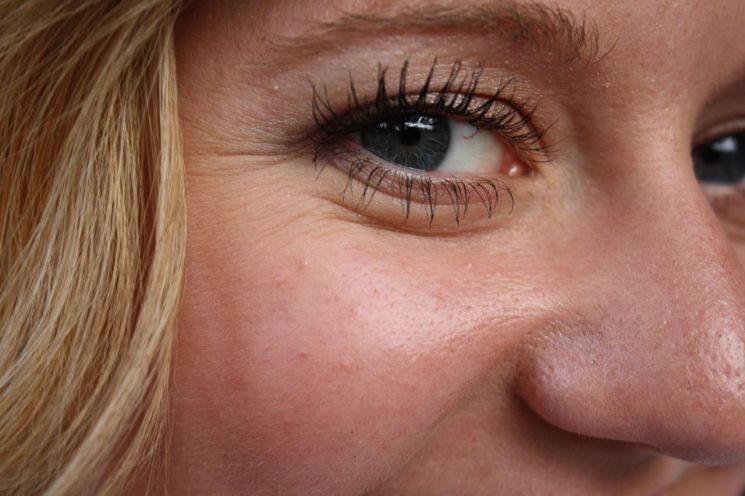 A study has found that having more wrinkles around the eyes is associated with a higher likelihood of developing dementia. Photo by Pixabay
A study has found that having many wrinkles around the eyes is associated with a higher likelihood of developing dementia. Additionally, people who perceive themselves as looking older than they actually are were found to be at greater risk of cognitive decline.
According to the British Daily Mail on the 24th (local time), recent researchers published in the journal 'Alzheimer's Research & Therapy' that "whether subjective or objective, facial aging may be an indicator of cognitive decline and dementia risk in the elderly. We found that the older the perceived facial age, the higher the association with cognitive impairment and dementia risk."
Researchers from Fudan University in China analyzed two groups: 195,329 participants aged 60 and above who underwent subjective facial age assessment (surveyed on whether they thought they looked older, their age, or younger than their actual age), and over 600 individuals aged 56 and above from the China Health and Nutrition Survey who received objective facial age assessments.
In the first group study, during a 12.3-year follow-up period, 5,659 cases of dementia were recorded. Among this group, those who perceived themselves as looking older than their actual age were found to have a 61% higher probability of developing dementia. The risk of Alzheimer's disease, one of the main causes of dementia, was 23% higher, and the risk of unspecified types of dementia was 74% higher.
The second group study involved photographing the faces of 612 men and women with an average age of 63, followed by computer analysis of age-related indicators. The analysis revealed that among various age indicators, wrinkles around the eyes had a significant correlation with cognitive impairment, with individuals having more eye wrinkles being 2.5 times more likely to experience cognitive impairment.
The researchers attributed the significant correlation between eye wrinkles and cognitive impairment to the effects of ultraviolet (UV) rays. Excessive sun exposure can negatively affect not only the skin but also cognitive function. The researchers cited previous animal studies as a basis for their hypothesis, which showed that skin aging caused by UV rays also affects the neuroimmune system that protects brain cells.
© The Asia Business Daily(www.asiae.co.kr). All rights reserved.

















