National Assembly Increase, 'Sosowi' Informal Consultative Body Holds 'Blind' Discussions
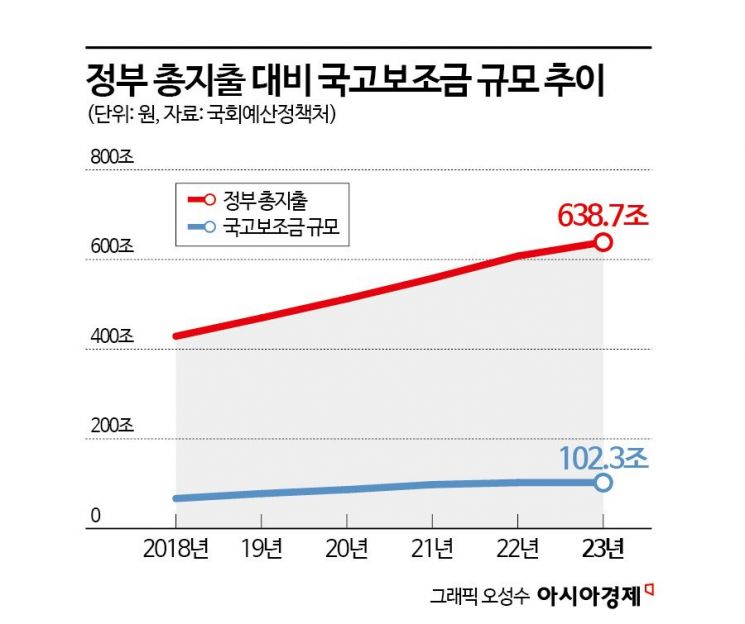
Although the government has consistently emphasized a 'sound fiscal' policy, it has been revealed that the treasury is leaking due to the improper payment of about 250 billion won in the form of national subsidies. In particular, it was confirmed that members of the National Assembly continue to secure national funds through so-called 'note budgets,' which insert constituency complaint budgets during the process of handling the government's New Year budget proposal.
On the 26th, the Board of Audit and Inspection announced in its audit report on the 'Status of National Subsidy Budgeting and Management' that 252 billion won in national funds had been allocated to 20 local transfer projects that were not eligible for national subsidies from 2021 to this year.
To promote local decentralization, the government revised the Enforcement Decree of the Subsidy Act in 2005 to distinguish between national subsidy projects and local transfer projects based on the nature of the projects. Accordingly, as of June, there are 292 projects whose authority and resources have been transferred to local governments. The intention is to hand over resources and to prevent local governments from relying on the central government for certain sector-specific projects.
Among the cases of improper national subsidy payments detected this time, 13 projects involved local governments requesting subsidy support through lawmakers' offices, and 7 projects were cases where lawmakers' offices independently allocated national subsidies. The Board of Audit and Inspection stated that these project budgets were allocated at the end of each year during the final stages of the National Assembly's budget approval process, and their validity was not properly reviewed.
In particular, when examining the National Assembly's deliberation process on the 2024 fiscal year national budget, the Board of Audit and Inspection found that the National Assembly's budget increase requests were discussed in the so-called 'small subcommittee'?an unofficial consultative body involving only a few participants such as the chairman of the Budget and Accounts Committee, ruling and opposition party auditors of the committee, and the Budget Office chief of the Ministry of Economy and Finance?in a 'black box' manner. Furthermore, the Ministry of Economy and Finance reviewed and decided on whether to agree to budget increases through internal meetings of the Budget Office, and due to the confidentiality of the budget formulation process, did not keep related records, operating opaquely and preventing the proper functioning of mutual checks and balances, the Board of Audit and Inspection pointed out.
The Board of Audit and Inspection stated, "Local government projects such as local transfer projects prohibited from receiving national subsidies are completely unknown to the public during the National Assembly's budget increase process," adding, "The Ministry of Economy and Finance initially opposed the budgeting of local transfer projects prohibited from receiving national subsidies, but when such projects continued to be included in the list of budget increase targets, it reviewed and agreed to the increases on the grounds of the inevitability of budget agreements, thus failing to effectively exercise the government's right to consent to budget increases."
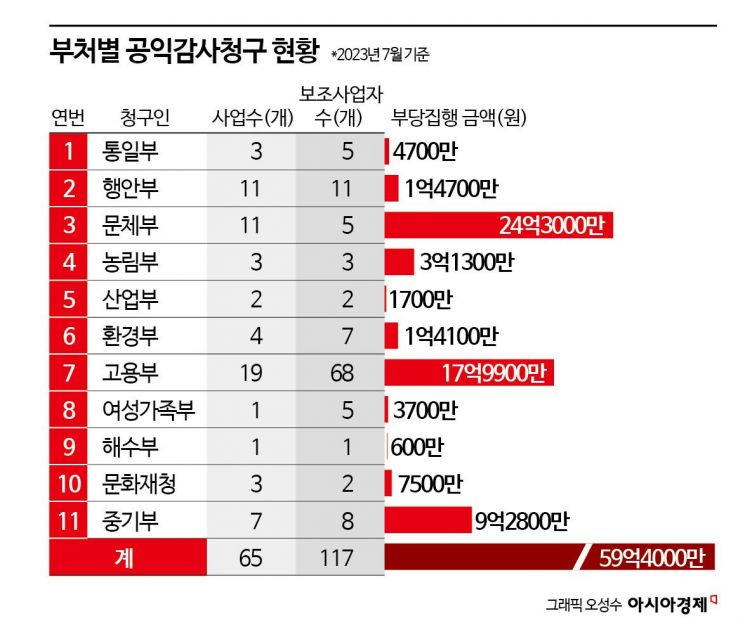
Specifically, last year, Gangwon Province promoted a project to build an opera house in Wonju City, the constituency of Democratic Party lawmaker Song Ki-heon, with a budget of 200 billion won. Ultimately, the Ministry of Economy and Finance included 100 billion won in this year's budget despite knowing it violated principles. The Board of Audit and Inspection also pointed out that Ulsan City is promoting a project to build an opera house with a budget of 360 billion won solely with city funds, which is unfair in terms of equity.
Lawmakers Yoo Ui-dong of the People Power Party and Kang Hoon-sik of the Democratic Party also requested government funding last year to build sports facilities in their constituencies, Pyeongtaek City in Gyeonggi Province and Asan City in Chungnam Province, respectively. However, when the government opposed, they ultimately succeeded in securing the budget through the 'small subcommittee.'
The Board of Audit and Inspection demanded that the Ministry of Economy and Finance "establish procedures regarding the government's consent to budget increases to ensure that National Assembly budget increase requests that do not comply with laws and regulations are reviewed in the unofficial consultative body 'small subcommittee' attended by only a few people and are not reflected in the national budget." It also notified the Ministry of Land, Infrastructure and Transport, Ministry of Culture, Sports and Tourism, Ministry of SMEs and Startups, and Ministry of Trade, Industry and Energy to prepare appropriate legal measures against companies receiving duplicate subsidies.
© The Asia Business Daily(www.asiae.co.kr). All rights reserved.
![Clutching a Stolen Dior Bag, Saying "I Hate Being Poor but Real"... The Grotesque Con of a "Human Knockoff" [Slate]](https://cwcontent.asiae.co.kr/asiaresize/183/2026021902243444107_1771435474.jpg)

















