Indonesia Struggles with Sharp Decline in Dairy Cows
'Fish Milk' Made from Fish Emerges
"Tastes Like Regular Milk" vs "Unpleasant Fishy Smell"
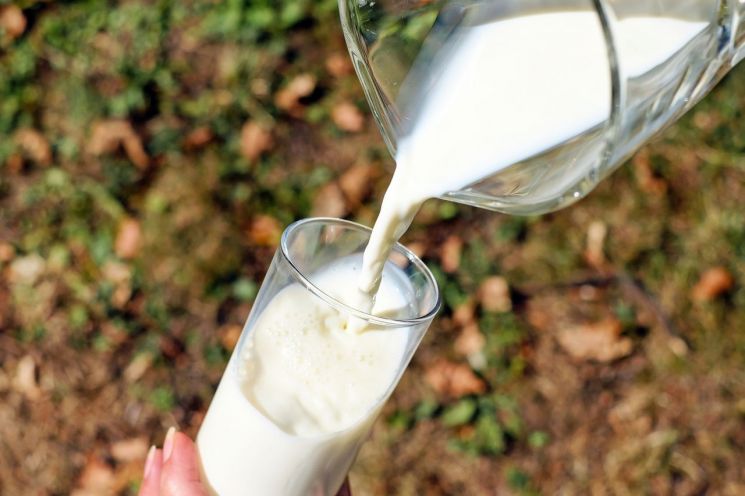
In Indonesia, which has been struggling with a shortage of dairy cows, a new product called "fish milk" produced from fish has emerged, attracting attention.
On the 26th, foreign media such as The Wall Street Journal (WSJ) and the New York Post (NYP) reported that Indonesia is manufacturing milk made from fish through the non-profit foundation "Berikan Protein Initiative." Indonesia has been facing difficulties in milk production due to a sharp decline in the number of dairy cows since last year.
According to the reports, fishermen in the coastal town of Indramayu catch fish twice a day and deliver them to the factory to start production. At the factory, fish bones are removed, and the fish undergoes a hydrolysis chemical process to separate the flesh, which is then dried to produce a white powder rich in protein. This white powder is then transferred to a separate facility where an appropriate amount of water and sugar are added. Finally, flavors such as chocolate and strawberry are added to complete the fish milk. A representative from the Berikan Protein Initiative, responsible for distributing the fish milk, told NYP, "When I tasted it, it was no different from regular milk."

Fish milk is scheduled to be included in school meal menus in Southeast Asian countries starting next year. Locally, this fish milk is being promoted as an excellent source of protein. The Indonesian government also expressed a positive view, stating, "Fish milk has a limited distribution range due to the risk of spoilage, but it has the advantage of utilizing abundant marine resources." Experts predict that with government support, the supply of fish milk could expand to produce 500,000 tons annually, leading to a business worth about $4.5 billion (approximately 6.302 trillion KRW). Furthermore, it is expected to create around 200,000 jobs.
However, some people have expressed concerns that fish milk is an ultra-processed food mixed with sugar and artificial sweeteners. They also pointed out the lingering fishy smell as a drawback, even after chemical processing. For example, 27-year-old pregnant woman Dia Rodia reportedly told WSJ, "When I first drank the chocolate-flavored fish milk, the fishy smell was so strong that it was very unpleasant." Additionally, the fact that imported milk from abroad can easily replace fish milk has been pointed out as a limitation.
© The Asia Business Daily(www.asiae.co.kr). All rights reserved.
!["The Woman Who Threw Herself into the Water Clutching a Stolen Dior Bag"...A Grotesque Success Story That Shakes the Korean Psyche [Slate]](https://cwcontent.asiae.co.kr/asiaresize/183/2026021902243444107_1771435474.jpg)

















