The 29th Korea Chamber of Commerce and Industry Mid-sized Enterprise Committee
Amid the upcoming launch of the second Trump administration, domestic mid-sized companies have been advised not to rely solely on their existing export strategies centered on the U.S. market but to simultaneously pursue export market diversification and localization strategies.
On the 27th, the Korea Chamber of Commerce and Industry (KCCI) held the "29th KCCI Mid-sized Enterprises Committee" at the Chamber of Commerce building in Jung-gu, Seoul, under the theme "Changes in the Global Trade Environment After the U.S. Presidential Election." The KCCI organized this meeting to analyze anticipated changes in the global trade order, such as the imposition of universal tariffs expected during the second Trump administration, and to explore response measures at the mid-sized enterprise level. About 20 representatives and executives from mid-sized companies attended, including Lee Jong-tae, Chairman of the KCCI Mid-sized Enterprises Committee; Park Jin-sun, President of Sempio Foods; Song Ho-geun, CEO and Chairman of YG One; and Kim Hyun-jin, Partner Lawyer at Sejong Law Firm.
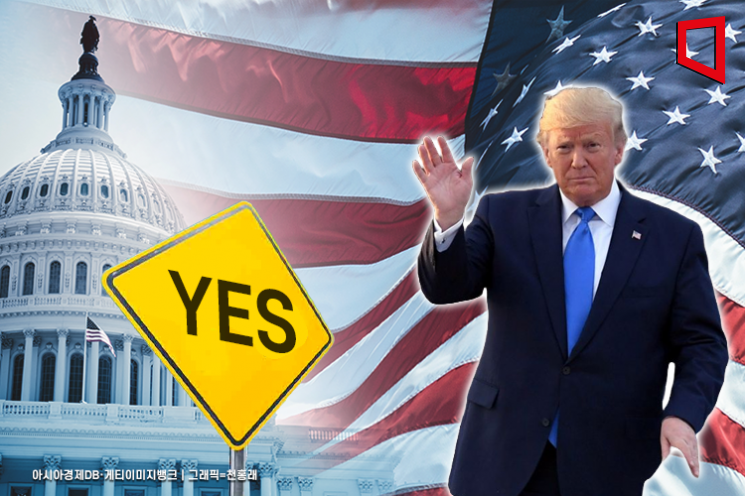
Professor Heo Yoon of Sogang University Graduate School of International Studies, who delivered the lecture, stated, "The Trump 2.0 administration will pursue trade balance by enacting a 'universal tariff' imposing a uniform 10-20% tariff on all imported goods and a 'reciprocal trade law' that applies the same import tariff rates as the counterpart country." He added, "Indiscriminate pressure is expected on countries with trade surpluses with the U.S., regardless of whether they are allies or non-aligned."
Professor Heo advised, "Since various forms of taxes and regulations are expected to be imposed on goods exported to the U.S., it is necessary to reduce dependence on exports to the U.S. and diversify export markets." He also noted, "Korean investment corporations in the U.S. have a high proportion of intermediate goods imports from Korea," and suggested, "Measures to increase local procurement rates should be considered."
Song Ui-dal, visiting professor at the University of Seoul, said, "The trade deficit with China is solidifying, and the U.S. is pursuing 'America First.'" He argued, "Korea should shift from the existing 'Anmi Gyeongjung (安美經中: security with the U.S., economy with China)' strategy to 'Anmi Gyeongmi (安美經美: security and economy with the U.S.)." He emphasized, "Strengthening cooperation with the liberal democratic international camp is essential."
Lee Jong-tae, Chairman of the KCCI Mid-sized Enterprises Committee (Chairman of Fursys), also stated in his greeting, "Uncertainties are expected across exports and trade, supply chains, and financial markets." He added, "Our mid-sized companies must proactively minimize risks and actively respond to turn the new waves brought by Trumpism into opportunities."
Park Il-jun, Executive Vice Chairman of the KCCI, said, "With the launch of the second Trump administration, we are facing major shifts in the global situation and trade order." He stressed, "For Korea, which relies on trade for its livelihood, swift and organic responses to changes in international affairs and trade risks are essential to seize these changes as opportunities to create new growth engines."
At the meeting, Song Kyung-jin, Representative of the Asia Foundation Korea Office, attended to discuss cooperation measures with mid-sized companies for partnerships in the Asian region. The Asia Foundation is a non-profit international development organization headquartered in San Francisco, USA, engaged in various activities for international cooperation and inclusive growth in Asian countries.
© The Asia Business Daily(www.asiae.co.kr). All rights reserved.

















