Do, 26th 'Gyeonggi-do Business Automation Implementation Project' Completion Report Meeting Held
8 Tasks Including Analysis of Congestion Rates by Wide-Area Bus Routes for Simple and Repetitive Tasks and Automation of Administrative Work
Maximizing Administrative Efficiency Through AI-Powered Automation
Gyeonggi Province is expected to reduce 10,000 hours of work annually with the introduction of an AI program that automatically handles simple and repetitive administrative tasks such as metropolitan bus congestion analysis and legal and ordinance comparison, known as the ‘Robotic Process Automation (RPA) system.’
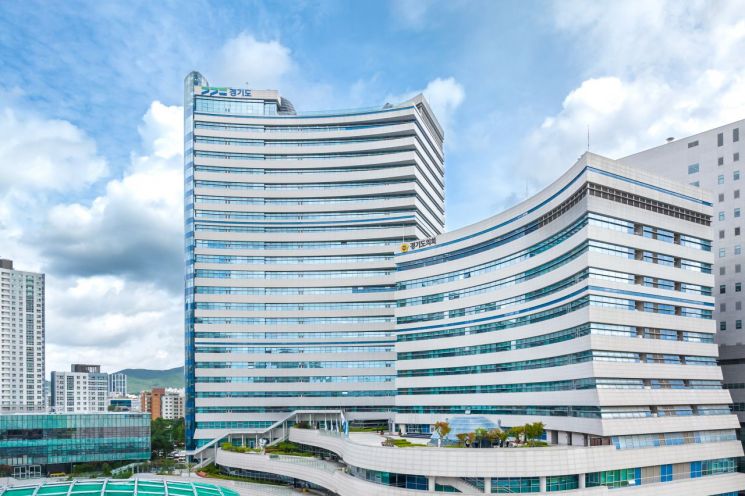
On the 26th, the province held a completion report meeting for the ‘Gyeonggi Province Work Automation System Construction Project’ at the Gyeonggi Provincial Government building, presenting results for eight repetitive administrative tasks in the fields of transportation, environment, construction, general affairs, and local administration.
The report meeting was attended by about 20 related personnel, including department staff in charge of the automation tasks, to discuss the results of the automation and explore future development possibilities. Attendees gave positive evaluations, noting that the burden of simple and repetitive tasks has been reduced, allowing focus on higher value-added work.
One of the representative tasks, ‘Metropolitan Bus Route Congestion Rate Analysis,’ automated data analysis to identify excess boarding passengers on 319 bus routes within the province. Previously, the person in charge manually processed 319 Excel data files from the Gyeonggi Bus Transport Management System every week, taking 1,382 hours annually. With RPA implementation, this was reduced to 192 hours, saving 1,190 hours per year.
There is also an automation task for general affairs that automatically calculates department overtime allowances and special duty meal expenses. During the beta test period in October and November, it was used by about 100 departments in Gyeonggi Province, and it is expected to save 4,600 hours annually in the future.
Work automation is also useful in situations where related ordinances need to be reviewed due to legal amendments. To solve the inconvenience of staff having to manually compare amended laws with current ordinances, automation was implemented so that simple repetitive tasks are performed by the system, and staff can receive comparison review items via email.
In addition, tasks prone to errors when done manually and standardized, such as monthly duty scheduling, management of environmental pollutant emission business registers, input of civil servant training performance, numbering of civilian awards, and imposition of fines for violations of comprehensive construction company regulations, have been automated to significantly reduce the burden of simple repetitive work on employees.
Kim Gi-byeong, Director of AI at Gyeonggi Province, said, “AI work automation will enhance employees’ creative work productivity and greatly contribute to policies for residents,” adding, “Next year, we plan to maximize work efficiency through the expansion of the work automation system construction project.”
© The Asia Business Daily(www.asiae.co.kr). All rights reserved.

















