Grading Based on How Well You Draw a Clock... Dementia Assessment
"Those Who Draw It Accurately Are Virtually Free from Dementia Risk"
A claim has emerged that drawing a clock test can help identify patients with neurological disorders such as dementia, attracting attention.
On the 20th (local time), the British Daily Mail reported, "Dr. Jesus Ramirez Bermudez, a prominent neurologist from Mexico, has revealed a simple drawing test to detect early signs of dementia."
Dr. Bermudez, who studies cognitive decline, shared this test on his X (formerly Twitter) account.
The test is a simple method of drawing a clock on a blank sheet of paper, placing all the numbers from 1 to 12 on the clock, and then drawing the hands to indicate a specific time.
Then, points are awarded based on the following criteria: ▲ how well the participant drew the clock shape ▲ whether the numbers were placed in the correct positions ▲ whether the two hands were drawn correctly on the clock ▲ and whether the hands pointed to the correct time, with each criterion scoring 1 point.
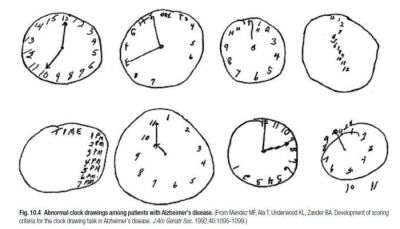
The test is known to have been used for decades by the UK's National Health Service (NHS), the largest health website in the UK, which receives over 50 million visitors monthly.
After examining the distortion of the clock’s circular shape and the time representation, if early dementia is suspected, it is necessary to consult a specialist for an accurate diagnosis. The NHS also states that drawing a clock correctly requires extensive cognitive skills, and those who draw the clock accurately can virtually exclude the risk of dementia.
Dr. Bermudez explained, "The key to this task is for the patient to remember what the clock looked like," adding, "Performing this requires executive functions such as planning, organizing, and completing tasks, which are among the cognitive abilities that decline first when dementia develops."
Meanwhile, factors such as gait and grip strength are also known to help determine dementia.
According to research from Boston Hospital, middle-aged individuals who walk slowly have a 1.5 times higher risk of developing dementia. Additionally, the American Academy of Neurology reports that people who grip hands firmly during a handshake have a 42% lower chance of developing dementia or stroke. People who do not get sufficient deep sleep also have a higher likelihood of developing dementia, as they fail to enter the deep sleep stages.
© The Asia Business Daily(www.asiae.co.kr). All rights reserved.

















