Ministry of Agriculture, Food and Rural Affairs "Deep Regret Over Opposition's Forced Passage of Controversial Bills"
Concerns Over Grain Act Amendment Leading to Overproduction Entrenchment and Massive Fiscal Burden
The government has once again clearly opposed the amendment to the Grain Management Act, which was passed solely by the opposition party in the National Assembly's Agriculture, Forestry, Livestock, Food, and Maritime Affairs Committee. The reason is that if the government is obligated to purchase surplus rice, overproduction of rice could become entrenched, ultimately leading to a decline in rice prices.
On the 22nd, the Ministry of Agriculture, Food and Rural Affairs expressed "deep regret" over the passage of four bills, including the Grain Management Act, the Act on Distribution and Price Stabilization of Agricultural and Fishery Products, the Agricultural Disaster Insurance Act, and the Agricultural Disaster Countermeasures Act, which were all passed solely by the opposition party in the Agriculture, Forestry, Livestock, Food, and Maritime Affairs Committee the previous day.
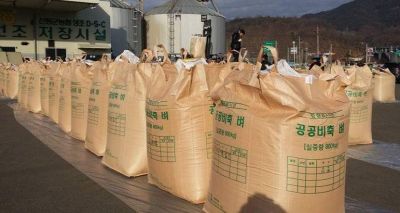
The amendment to the Grain Management Act passed by the committee the previous day mainly introduces the 'Grain Price Stabilization System,' which mandates the government to compulsorily purchase surplus rice and pay the difference if the market price of grain falls below the average price. The Ministry of Agriculture, Food and Rural Affairs expressed concerns that the amendment could further entrench the structural oversupply of rice, continuously lowering rice prices and causing a huge fiscal burden. It also criticized that the amendment would block the transition to cultivating other crops instead of rice, thus failing to fundamentally resolve the oversupply of rice.
The amendment to the Agricultural Products Price Stabilization Act, which introduces a minimum price guarantee system for major agricultural products, was pointed out to potentially cause a vicious cycle of 'overproduction of specific items → oversupply → price decline → government compensation.' The ministry's position is that this would ultimately result in a massive fiscal burden and increased price volatility of agricultural products, thereby further increasing the management burden on farmers and the consumer price burden.
Additionally, the amendment to the Agricultural Disaster Insurance Act, which excludes the application of surcharges for damages caused by natural disasters when calculating insurance rates, was criticized for issues related to fairness and sustainability. A ministry official stated, "Generally, insurance premiums should be calculated proportionally to the risk of disaster occurrence (principle of equivalence between benefits and premiums). However, the amendment imposes premiums regardless of risk, raising concerns about fairness among policyholders and hindering the sustainable operation of private insurance companies."
The government has opposed the four bills, including the Grain Management Act, pointing out their problems as promoted by the opposition party. Furthermore, to prevent repetitive and wasteful disputes such as 'opposition party's forced passage of bills → presidential request for reconsideration → bill repeal,' the government formed a public-private-academic consultative body and prepared alternatives, including the 'Korean-style Agricultural Income and Management Safety Net Establishment Plan' scheduled for September this year.
A ministry official said, "The amendment to the Grain Management Act is a legislative contradiction that harshly criticizes the government over the recent decline in rice prices while potentially entrenching overproduction and causing further rice price declines through the introduction of a new system. The government earnestly requests sufficient communication during the remaining legislative review process, including the National Assembly's Legislation and Judiciary Committee, to explain the problems and positions regarding the amendments."
© The Asia Business Daily(www.asiae.co.kr). All rights reserved.

















