According to the Wall Street Journal (WSJ) on the 19th (local time), American companies are rushing to stock up on Chinese-made products ahead of the inauguration of the second Trump administration. This is to accumulate products in advance before prices rise due to President-elect Donald Trump's policy of raising tariffs on China.
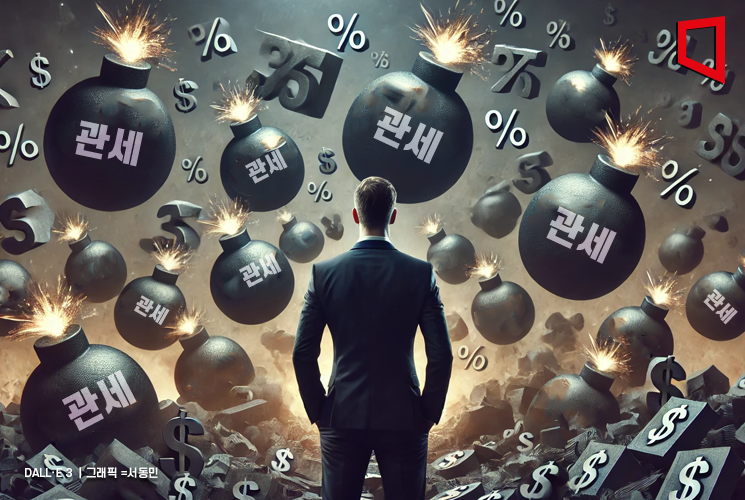
According to WSJ, Jason Juno, who runs the cosmetics company 'Bear Botanics' in Wisconsin, purchased $50,000 worth of goods from a Chinese supplier for one year’s supply after Trump's victory was confirmed on the night of the 5th. He said, "I am desperately hoping that about 30,000 body brushes and exfoliating gloves will arrive before Trump's inauguration." WSJ reported that "the movement of American companies stockpiling Chinese products before tariffs are imposed has revived since the first Trump administration."
WSJ analyzed that the uncertainty surrounding the U.S. presidential election may have partially influenced the sharp increase in Chinese exports last month. Chinese exports last month rose 13% compared to the previous month, greatly exceeding market expectations. Compared to September exports (2.4%), it increased more than fivefold. Last month was a period when the probability of Trump's victory significantly rose in various election betting markets.
WSJ predicted that "China's export growth will maintain strength due to a first-mover advantage in the coming months during the U.S. administration transition period." Wan Junhui, who is in charge of marketing at an electronics manufacturer in Guangdong Province, China, told WSJ, "Recently, inquiries from American customers have increased, and they are showing noticeable anxiety." He added, "We will focus on cost reduction to overcome this situation."
WSJ also expressed a skeptical view of the tariff increase policy of the second Trump administration. The share of China in U.S. imports decreased from 22% in 2017, the year before tariffs were implemented during the first Trump administration, to 14% last year, but this did not significantly affect the U.S. trade deficit or China's trade surplus. Rather, due to tariff increases, American companies raised the prices of imported goods, and ultimately, the final burden may fall entirely on consumers.
Accordingly, some economists predict that the 60% tariff on Chinese products promised by Trump will be impossible to implement. Goldman Sachs expects the effective tariff rate on Chinese products to increase by an average of 20 percentage points.
WSJ forecasted that while American companies will accelerate diversification of supply chains to Southeast Asian countries such as Vietnam, India, and Cambodia, it will be difficult to completely replace China.
© The Asia Business Daily(www.asiae.co.kr). All rights reserved.

















