KDCA Reports Over 150,000 Patients Last Year
Young Adults Without Cardiovascular Disease Also at Risk
The number of patients with sleep apnea has tripled over the past five years. Patients with sleep apnea have a higher risk of sudden cardiac arrest compared to the general population, and it has been found that even young people without cardiovascular disease have a high risk of sudden cardiac arrest, so caution is required.
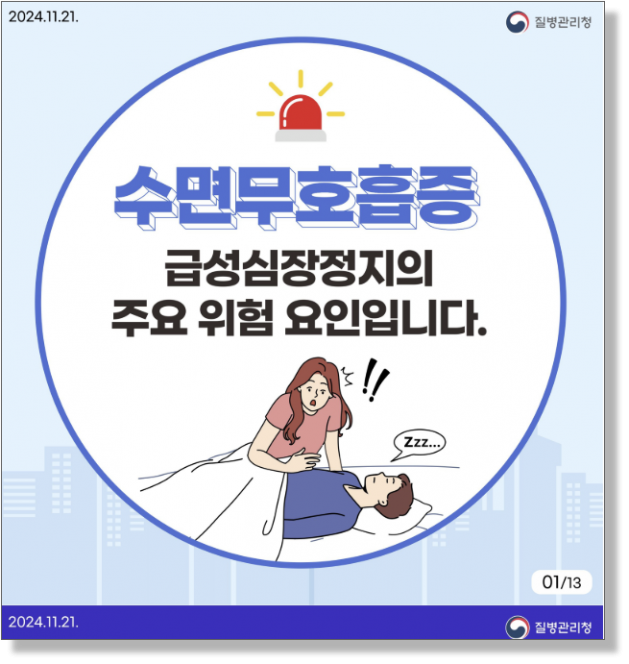
On the 20th, the Korea Disease Control and Prevention Agency (KDCA) released the results of the "Investigation into Causes and Risk Factors of Cardiac Arrest" and emphasized the importance of early detection and treatment of sleep apnea to prevent sudden cardiac arrest.
Sleep apnea is a condition where breathing repeatedly stops or becomes irregular during sleep, causing temporary cessation or shallow breathing, which lowers the quality of sleep. Major symptoms include snoring, morning headaches, daytime sleepiness, decreased concentration, and mood changes such as depression or anxiety.
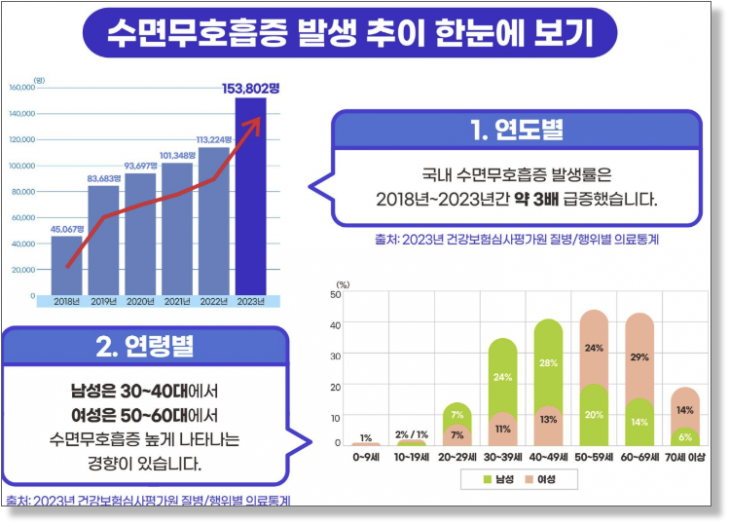
According to the Health Insurance Review and Assessment Service, the number of patients diagnosed with sleep apnea in South Korea increased approximately threefold from 45,067 in 2018 to 153,802 in 2023. In particular, men in their 30s to 40s and women in their 50s to 60s showed higher incidence rates of sleep apnea.
Sleep apnea can have serious health impacts. Studies show that people with sleep apnea have a 54% higher risk of sudden cardiac arrest compared to those without it. Especially in the 18-64 age group without cardiovascular disease, the risk of sudden cardiac arrest increased by up to 76%. This indicates that sleep apnea is one of the dangerous risk factors for sudden cardiac arrest among young people without cardiovascular disease.
Another study confirmed that the risk associated with sleep apnea (risk ratio 2.33) is lower than major causes of sudden cardiac arrest such as diabetes (risk ratio 4.10) or hypertension (risk ratio 3.63), but higher than smoking (risk ratio 2.19) and obesity (risk ratio 1.02).
Ji Young-mi, Director of the KDCA, stated, "Sleep apnea is not just a simple sleep problem but a major risk factor that increases the risk of sudden cardiac arrest. It is important to recognize this risk and receive diagnosis and treatment." She added, "Especially since obesity, smoking, and hypertension can act as causes of sleep apnea, we hope that proper health management will help prevent sudden cardiac arrest."
© The Asia Business Daily(www.asiae.co.kr). All rights reserved.


















