Ministry of Agriculture, Food and Rural Affairs Develops Smooth Transition Plan for Expanding Laying Hen Rearing Density
Implementation Delayed Amid Concerns Over Egg Supply Reduction
The government has decided to postpone by two years the implementation of the expanded rearing density for laying hens, which was originally scheduled to take effect in September next year. This measure takes into account concerns that reducing the number of hens to comply with the rearing density could lead to a decrease in egg supply.
The Ministry of Agriculture, Food and Rural Affairs announced on the 20th that the implementation date for expanding the rearing density to improve the environment for laying hens will be deferred from September 2025 to September 2027.
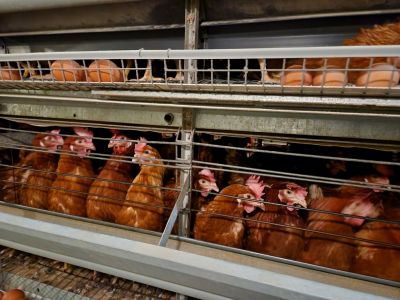
The expansion of laying hen rearing density was implemented by revising the Enforcement Decree of the Livestock Act (September 2018) to secure minimum activity space for laying hens, thereby improving animal welfare and preventing the spread of poultry mites and livestock diseases, following the detection of insecticide residues in eggs in August 2017.
Accordingly, from September 1, 2018, farms newly installing laying hen rearing facilities have been subject to the improved rearing density standards, while farms that installed facilities before September 2018 were given a seven-year grace period until September 2025 to comply with the rearing density, allowing time for facility improvements.
An official from the Ministry of Agriculture, Food and Rural Affairs explained, "Expanding the rearing density to 0.075㎡ per hen lowers the density from 20 hens per 1㎡ to 13 hens per 1㎡. This is intended to secure the minimum space necessary for hens to flap their wings to shake off mites."
Currently, among approximately 1,000 laying hen farms, about 480 still maintain existing rearing facilities, around 90 farms have upgraded their facilities to meet the improved rearing density standards, and the remaining farms have transitioned to animal welfare-type rearing environments. However, farms maintaining existing facilities will need to reduce the number of hens by September 2025 to meet the rearing density, raising concerns about a potential decrease in egg supply.
In response, since 2022, the Ministry has been diagnosing the current status and issues related to the expanded rearing density for laying hens, conducting research on overseas cases and application methods, and expert evaluations. Based on this, from 2023, the Ministry held field meetings, discussions, and workshops with producer groups, consumer organizations, animal welfare groups, and farmers to gather opinions and prepare this soft landing plan.
The soft landing plan first postpones the full implementation of the expanded laying hen rearing density from the original September 2025 to September 2027, a two-year delay. From September 2025, newly introduced laying hens will be managed to comply with the rearing density. Since laying hens typically produce eggs for about two years until 85-90 weeks of age, the application of the improved rearing density will be spread over approximately two years, minimizing sudden changes in egg supply and allowing farmers sufficient time for facility improvements, according to the Ministry. During this period, newly introduced hens will be strictly managed to comply with the rearing density, but administrative penalties such as fines will be deferred.
Additionally, to alleviate concerns about reduced egg supply due to the expanded rearing density, regulations related to rearing facilities will be relaxed and financial support for facility improvements will be expanded. Regulations on livestock building coverage will be eased from 20% to 60%, and the number of cage tiers will be increased from 9 to 12, enhancing the utilization of laying hen farm facilities. Furthermore, support such as the 'Facility Improvement Livestock Smartization Project Fund' will be expanded to facilitate smooth improvement and replacement of laying hen rearing facilities. Priority support will be given to farms replacing or upgrading outdated facilities, and support limits will be raised.
The Ministry will establish a cooperative system with local governments and organizations to support compliance with the improved rearing density standards by laying hen farms and will work to resolve on-site difficulties. It will also strengthen promotion in cooperation with consumer groups to expand consumption of eggs produced in improved rearing facilities.
Kim Jeong-wook, Director of Livestock Policy at the Ministry of Agriculture, Food and Rural Affairs, said, "Improving the cage rearing environment for laying hens is a national promise to ensure egg safety following the insecticide egg incident. While a seven-year grace period was given to minimize damage to existing facilities and to consider fairness for farms that have already improved their facilities, implementation is necessary. However, to minimize shocks to egg supply and prices, we have prepared a soft landing plan. We will actively work with producer groups to ensure a smooth transition."
© The Asia Business Daily(www.asiae.co.kr). All rights reserved.
![Clutching a Stolen Dior Bag, Saying "I Hate Being Poor but Real"... The Grotesque Con of a "Human Knockoff" [Slate]](https://cwcontent.asiae.co.kr/asiaresize/183/2026021902243444107_1771435474.jpg)
















