Advanced Equipment Procurement Disruptions... SMIC 7nm Also Affected
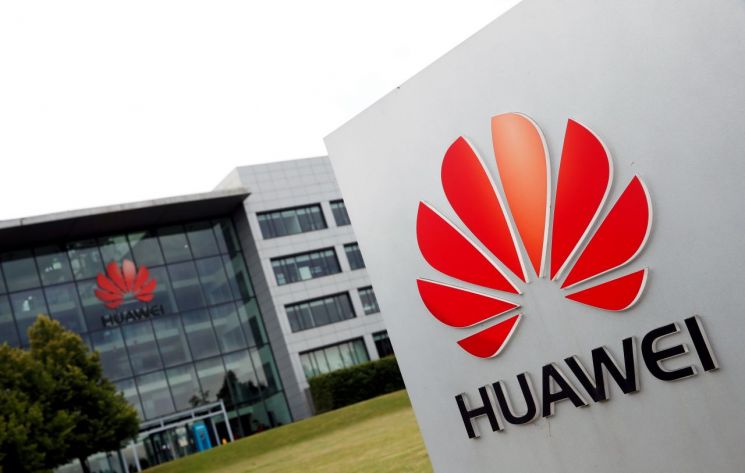
Huawei is expected to face difficulties in producing advanced chips until 2026.
Bloomberg reported on the 19th (local time) that Huawei is experiencing setbacks in chip development due to U.S. sanctions.
According to sources, Huawei is currently designing two Ascend processors, developed as rivals to Nvidia, using a 7nm (1nm = one billionth of a meter) architecture. This is because Huawei's chip manufacturing partner, SMIC, is unable to procure cutting-edge extreme ultraviolet (EUV) lithography equipment from ASML due to U.S.-led sanctions.
Sources indicated that this means key chips will remain at outdated technology levels at least until 2026. They also said that smartphone processors for Huawei Mate smartphones are facing similar issues.
Bloomberg analyzed that this affects not only Huawei's business but also China's artificial intelligence (AI) capabilities. When Taiwan's TSMC begins producing 2nm chips three generations ahead in 2025, China will fall further behind the U.S.
In recent years, Huawei has played a key role in China's policy to achieve self-sufficiency in strategic industries such as semiconductors and AI. However, despite massive research and development (R&D) investments and government support, it has struggled to catch up with the U.S.
To make matters worse, SMIC is unable to produce 7nm chips in stable quantities. Another source said SMIC's 7nm production line is facing yield and reliability issues, making it difficult for Huawei to secure sufficient smartphone processors and AI chips in the coming years.
One of the biggest challenges is the quality of Chinese-made equipment. Authorities hope that Chinese manufacturers will invigorate the semiconductor ecosystem by adopting equipment from Chinese companies. However, imports of ASML's EUV lithography equipment, essential for advanced semiconductor manufacturing, have been blocked. The same applies to equipment from other Western companies.
Huawei has tried to overcome limitations by using quadruple patterning technology with ASML's older deep ultraviolet (DUV) equipment. However, according to Liu Yingwu, an analyst at the Eoljuk Group, this approach is prone to alignment errors and yield losses compared to using EUV lithography equipment. Sources said these efforts are being hampered by poor-quality Chinese equipment used alongside ASML's DUV equipment.
Bloomberg explained that Huawei's failure to announce the processor to be installed in its flagship smartphone set to launch at the end of this month is also a sign of Huawei's difficulties. The next-generation Mate 70 smartphone is scheduled for release on the 26th, but hardware specifications were not disclosed during pre-orders. This contrasts with the global sensation caused by the Mate 60 Pro smartphone, which featured a self-designed 7nm chip despite U.S. sanctions in 2023.
Bloomberg stated that U.S. sanctions have succeeded in freezing China's technological progress at the current level and deprived leading companies of opportunities to advance to the next stage.
Analyst Liu said, "Whether through improved multi-patterning or using China's EUV equipment, China is facing significant difficulties in achieving 5nm production with profitable yields and sufficient volume."
© The Asia Business Daily(www.asiae.co.kr). All rights reserved.

















