Transmission Towers Must Also Undergo 'Landscape Review'
Choi Seoyoon, a member of the Gwangju City Council in Gyeonggi Province (People Power Party, Opo 1·2-dong, Neungpyeong-dong, Sinhyeon-dong), has announced a legislative notice for a partial amendment to the Gwangju City Landscape Ordinance. The reason for this ordinance amendment is for Gwangju City to take the initiative in managing the landscape of large structures such as ‘bridges and power transmission facilities’ installed in Gwangju. Additionally, the landscape plan now includes not only natural landscapes but also the region’s unique historical and cultural landscapes.
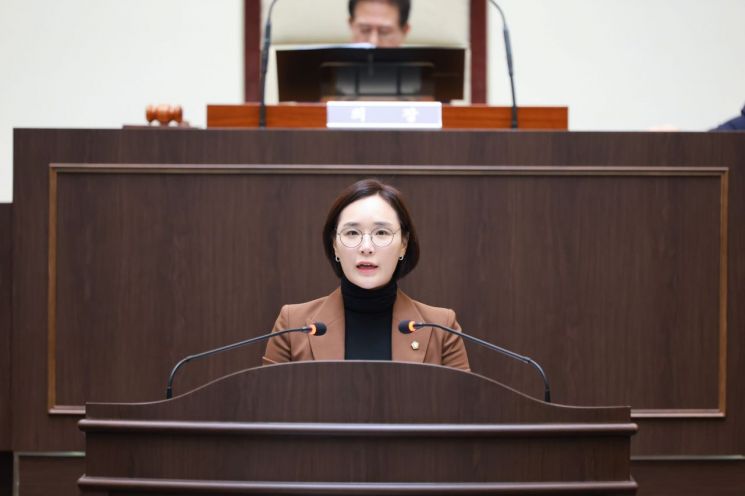
Councilor Choi Seoyoon stated, “Gwangju City is a proud region with a long and illustrious history. In particular, Namhansanseong is a UNESCO World Cultural Heritage site. It is only natural to incorporate Gwangju’s unique historical and cultural values into the city’s landscape ordinance,” explaining the reason for the amendment.
The most critical aspect of this ordinance amendment is the inclusion of ‘bridges and power transmission facilities’ within the scope of Gwangju’s landscape plan. Recently, there has been controversy over the construction of substations centered around Beoncheon, and by including power transmission facilities in the Gwangju City Landscape Ordinance amendment, the city aims to protect residents’ rights.
Councilor Choi Seoyoon said, “I understand that power facilities are essential national infrastructure and that power transmission facilities are necessary, but I firmly believe that they must never harm residents’ peaceful lives or children’s educational environments. Especially, transmission towers are imposing in height and scale and can damage the surrounding landscape, so it is only natural that they should not be installed near residential areas.”
According to the ‘Landscape Act,’ the heads of national and local governments have the duty to systematically manage the landscape of the national territory and create land and regional environments that reflect local characteristics so that citizens can live beautifully and comfortably. To this end, each local government must establish basic directions for landscape management, formulate landscape plans, and promote landscape projects. They may also establish and operate the Gwangju City Landscape Committee for landscape review. The existing ‘Gwangju City Landscape Ordinance’ included contents such as public spaces, public architecture, and nightscape, but had limitations in not including history, culture, power transmission facilities, and bridges in the landscape plan.
Based on the Landscape Act, the contents of the landscape plan can be determined by the head of the local government. With this amendment, it is expected that Gwangju City will secure leading discretionary authority in landscape management. The amended ordinance is scheduled to be reviewed at the 313th regular session of the Gwangju City Council on the 27th.
Councilor Choi Seoyoon emphasized, “The landscape is directly connected to citizens’ lives. Active intervention by the city is necessary to protect citizens’ property rights, consider regional equity, and ensure that all development projects in Gwangju do not damage excellent landscapes but harmonize with them. Although Gwangju is rapidly developing, the city has not been properly organized. Not only the city’s aesthetics but also citizens’ safety are threatened. Disorderly signage, roads without sidewalks, sidewalks without curbs, parking difficulties, and landscape maintenance, as well as overall urban maintenance, are urgently needed.”
© The Asia Business Daily(www.asiae.co.kr). All rights reserved.

















