Ministry of Health and Welfare Adds 11 Sites in 4th Selection
42 of 47 Tertiary Hospitals Nationwide Confirmed
90% of tertiary hospitals nationwide have participated in the 'Tertiary Hospital Structural Transformation Support Project,' which reorganizes large hospitals to focus on severe and emergency diseases.
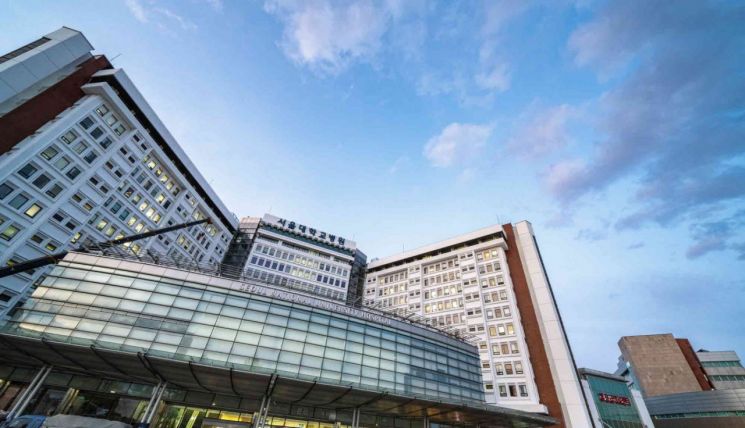 Seoul National University Hospital exterior located in Yeongeon-dong, Jongno-gu, Seoul. Provided by Seoul National University Hospital
On the 19th, the Ministry of Health and Welfare announced that a total of 11 institutions were selected as the 4th round participants in the Tertiary Hospital Structural Transformation Support Project. The hospitals selected this time are Catholic University Seoul St. Mary's Hospital, Catholic University St. Vincent's Hospital, Catholic University Incheon St. Mary's Hospital, Keimyung University Dongsan Hospital, Daegu Catholic University Hospital, Dong-A University Hospital, Samsung Changwon Hospital, Seoul National University Hospital, Yangsan Pusan National University Hospital, Chonnam National University Hospital, and Chungbuk National University Hospital.
Accordingly, 42 institutions, accounting for 89.3% of the total 47 tertiary hospitals, have begun the structural transformation.
The tertiary hospital structural transformation project, conducted as part of medical reform, is a project to reorganize the structure so that tertiary hospitals, which are at the top of the medical delivery system, can focus on treating severe, emergency, and rare diseases according to their original role. Participating hospitals will increase the proportion of severe care to 70% and reduce general beds by up to about 15%.
Among the hospitals selected this time, Seoul National University Hospital will reduce general beds from 1,541 to 1,354, a decrease of 187 beds, and Seoul St. Mary's Hospital will reduce from 1,121 to 1,010, a decrease of 111 beds. St. Vincent's Hospital will reduce 71 beds, Incheon St. Mary's Hospital 68 beds, and a total of 11 hospitals will reduce 734 beds.
Previously, combining the 1st to 3rd round participating hospitals, a total of 42 tertiary hospitals will reduce 3,186 general beds, excluding beds that need to be maintained or strengthened such as intensive care units, pediatric and high-risk delivery, and emergency beds.
These tertiary hospitals also aim to establish a system that can treat severe patients at any time based on close cooperation with cooperative medical institutions, and to provide residents with more intensive training in better working environments to develop clinical practice, training, and research in a balanced manner.
The Ministry of Health and Welfare also announced plans to conduct selection reviews while monitoring additional applications from the remaining five tertiary hospitals that have not yet participated.
Jung Kyung-sil, head of the Medical Reform Promotion Team, said, "With the majority of tertiary hospitals deciding to participate in the structural transformation, an opportunity has been created for tertiary hospitals to transform into centers focused on severe, emergency, and rare diseases and to serve as hubs for establishing cooperative medical systems among medical institutions." She added, "We will ensure that this desirable change proceeds smoothly to build a mutually beneficial medical ecosystem."
© The Asia Business Daily(www.asiae.co.kr). All rights reserved.

















