Disease Control Agency to Begin Vaccinations Starting January Next Year
Starting next year, if the 6-in-1 combination vaccine is chosen, the number of vaccinations newborns need to receive within 6 months after birth will be reduced from the existing 6 times to 4 times. The number of hospital visits for vaccinations will also decrease accordingly.
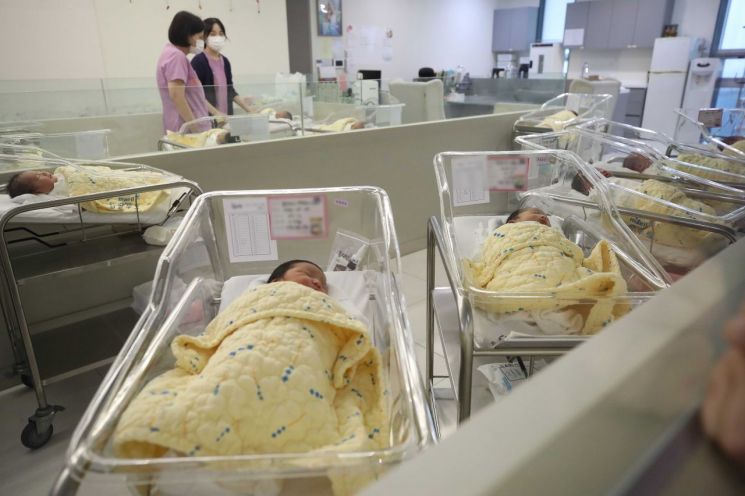
On the 19th, the Korea Disease Control and Prevention Agency announced that from January 2, 2025, free administration of the 6-in-1 combination vaccine (DTaP-IPV-Hib-HepB), which can simultaneously prevent diphtheria, tetanus, pertussis, poliomyelitis, Haemophilus influenzae type b, and hepatitis B, will begin as part of the national childhood immunization program.
The 6-in-1 combination vaccine is a new vaccine that adds hepatitis B prevention to the five infectious diseases?diphtheria, tetanus, pertussis, poliomyelitis, and Haemophilus influenzae type b?that were preventable with the existing 5-in-1 combination vaccine.
In July, through the 5th Immunization Expert Committee meeting of 2024, the Disease Control and Prevention Agency decided to introduce the 6-in-1 combination vaccine into the national childhood immunization program and start vaccinations from January 2025.
Previously, newborns had to receive a total of 6 vaccinations: 3 doses of the 5-in-1 combination vaccine at 2, 4, and 6 months of age, and 3 doses of the hepatitis B vaccine at birth, 1 month, and 6 months. However, with the 6-in-1 combination vaccine, after one dose of the hepatitis B vaccine at birth, the 6-in-1 vaccine can be administered at 2, 4, and 6 months, completing the vaccination schedule with a total of 4 doses. The Disease Control and Prevention Agency explains that shortening the vaccination schedule and reducing the number of doses will make it more convenient for infants and their caregivers to receive vaccinations and lessen the burden of hospital visits.
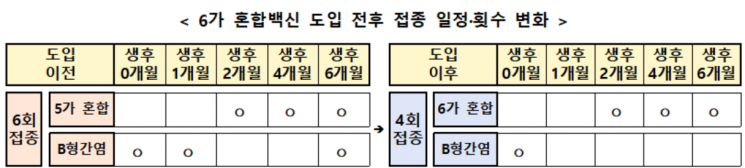
However, in the case of infants born to hepatitis B positive mothers, prevention of vertical transmission of hepatitis B is necessary, so the vaccination schedule remains the same as before, requiring 3 doses of the 5-in-1 combination vaccine and 3 doses of the hepatitis B vaccine, totaling 6 doses. Also, in the early stages of vaccination, vaccine availability may vary by medical institution, and for infants born in November to December of this year who wish to receive the 6-in-1 combination vaccine, the vaccination schedule and number of doses will differ, so it is advised to consult the medical institution in advance regarding vaccine availability and the vaccination schedule before visiting.
For example, if an infant born this month wishes to receive the 6-in-1 combination vaccine, they should receive the hepatitis B vaccine at birth (November 2024), the BCG vaccination at 1 month of age (December 2024), and then start the 6-in-1 combination vaccine from 2 months of age (January 2025 or later).
Ji Young-mi, Director of the Disease Control and Prevention Agency, said, "We expect that the introduction of the 6-in-1 combination vaccine in the national immunization program will improve vaccination convenience for children and their parents," and added, "We will thoroughly prepare to ensure that the new vaccine administration proceeds smoothly before the start of vaccinations in January next year."
© The Asia Business Daily(www.asiae.co.kr). All rights reserved.
![Clutching a Stolen Dior Bag, Saying "I Hate Being Poor but Real"... The Grotesque Con of a "Human Knockoff" [Slate]](https://cwcontent.asiae.co.kr/asiaresize/183/2026021902243444107_1771435474.jpg)

















