KDCA Launches Antibiotic Resistance Prevention Campaign This Week
Low Awareness of Proper Antibiotic Use Among Both Public and Physicians
The Korea Disease Control and Prevention Agency (KDCA) announced on November 18 that it will run a campaign to raise public awareness of antibiotic resistance in recognition of the World Health Organization (WHO)-designated "World Antimicrobial Awareness Week" (November 18-24).
Antibiotic resistance refers to the phenomenon in which bacteria survive and multiply despite the presence of antibiotics (therapeutic agents), making treatment difficult. When antibiotic resistance occurs, the number of available treatment options decreases, and it poses a serious threat, particularly to immunocompromised individuals and patients with severe infections.
 The main cause of antibiotic resistance is the misuse and overuse of antibiotics. The amount of antibiotics used in South Korea is about 1.2 times higher than the average of the Organization for Economic Cooperation and Development (OECD) countries (as of 2021), and approximately 30% of antibiotics prescribed in medical institutions are known to be inappropriate prescriptions. Getty Images
Global antibiotic consumption has surged, rising from 15.6 DID (Defined Daily Dose per 1,000 inhabitants per day) in 2020 to 15.9 DID in 2021, and to 18.9 DID in 2022. After the WHO identified antibiotic resistance as one of the top ten public health threats facing humanity in 2019, the increase in global antibiotic use following the COVID-19 pandemic has led the international community to call for strengthened efforts in each country to prevent and manage antibiotic resistance. In particular, at the UN General Assembly held in September, a political declaration on antibiotic resistance emphasized the ongoing need to educate the public to raise awareness, and highlighted the importance of school-based education on antibiotic resistance for adolescents, who are the core of future generations.
The main cause of antibiotic resistance is the misuse and overuse of antibiotics. The amount of antibiotics used in South Korea is about 1.2 times higher than the average of the Organization for Economic Cooperation and Development (OECD) countries (as of 2021), and approximately 30% of antibiotics prescribed in medical institutions are known to be inappropriate prescriptions (2019, KDCA). The WHO also noted that, due to the impact of the COVID-19 pandemic, only 8% of hospitalized COVID-19 patients actually required antibiotics, yet antibiotics were used in 75% of these cases, raising concerns that the risk of antibiotic resistance will increase in the future.
To overcome antibiotic resistance, the KDCA points out that both the medical community and the general public must recognize the seriousness of the issue and use antibiotics properly. Physicians should prescribe antibiotics appropriately according to guidelines, while the public should take prescribed medications correctly and avoid requesting unnecessary antibiotic prescriptions from doctors.
According to the "Antibiotic Resistance Awareness Survey" conducted by the KDCA last year, physicians had a slightly higher awareness of the seriousness of antibiotic resistance than the general public, but both groups were found to need improvement in their understanding of the proper use (prescription) of antibiotics. Among the general public, about half of respondents (52.9%) recognized antibiotic resistance as a serious problem, while fewer than 30% correctly understood the meaning and purpose of antibiotics. Among physicians, about 7 out of 10 respondents (69.6%) considered antibiotic resistance a serious issue, and they mainly attributed the rise in resistance to excessive antibiotic prescriptions by doctors (55.9%) and patients arbitrarily discontinuing their antibiotic regimen (22.1%).
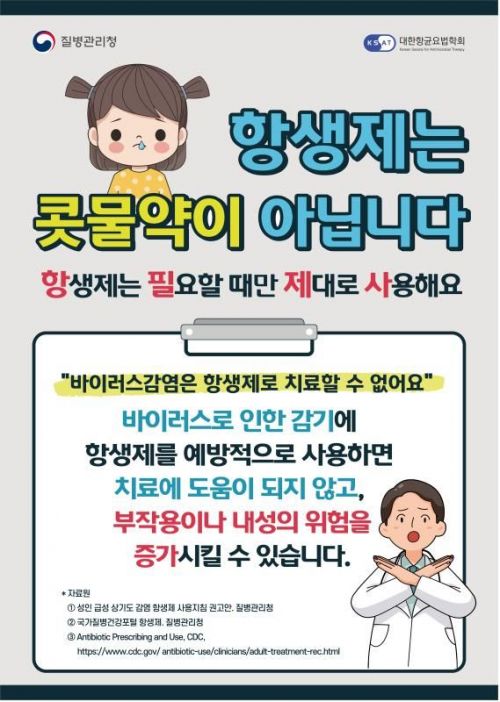
During this awareness week, the KDCA is developing and distributing a variety of content under the campaign slogan "Antibiotics: Use them properly only when needed" to emphasize the importance of appropriate antibiotic use. The agency is also working to raise awareness among adolescents and parents about antibiotic resistance through school activities and newsletters. In addition, on November 18 and 19, the KDCA will host an event for the "Second National Antibiotic Resistance Management Plan," attended by government agencies and medical experts in the field of antibiotic resistance.
Ji Youngmi, Commissioner of the KDCA, stated, "Since November 1, we have been conducting a pilot project to manage appropriate antibiotic use in medical institutions," and emphasized, "To solve the problem of antibiotic resistance, it is important not only for medical institutions but for all of us to cultivate correct awareness of antibiotic resistance and adhere to preventive measures."
© The Asia Business Daily(www.asiae.co.kr). All rights reserved.


















