AP reported on the 17th (local time) that Muhammad Afif, the chief spokesperson of the Lebanese militant group Hezbollah, was killed in an Israeli military airstrike on Beirut, Lebanon.
AP cited an anonymous Hezbollah official stating that Afif died during the Israeli military's attack on the Beirut office of the pan-Arab political party Baath. Hezbollah has not made any official statement regarding the incident.
 Mohammad Afif, Hezbollah's media promotion chief, was killed in an Israeli airstrike in Ras al-Nabaa, Beirut, Lebanon. Photo by Reuters Yonhap News
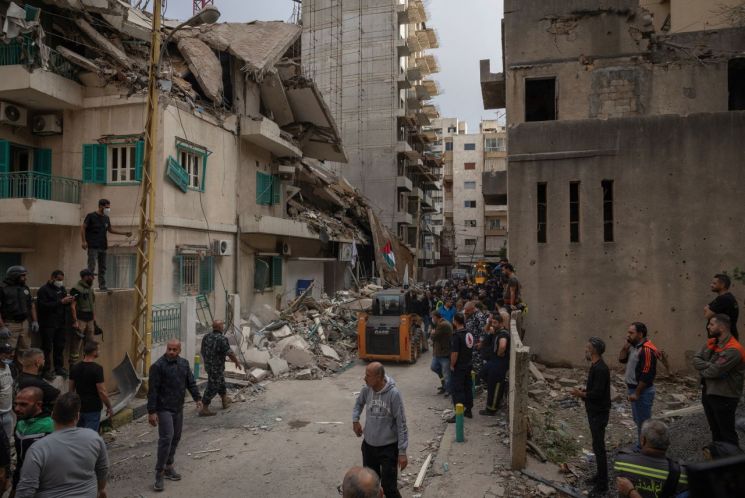
The Lebanese Ministry of Health announced on the night of the 17th that two people were killed and 13 injured in the airstrike in central Beirut. According to the Israeli media Times of Israel, the Israeli military targeted the Ras al-Nabaa area in downtown Beirut, rather than the southern suburbs of Beirut, which is a major Hezbollah stronghold. Unusually, no prior evacuation order was issued. This airstrike in central Beirut is the first in over a month since October 10.
Spokesperson Afif was a close aide to Hezbollah leader Hassan Nasrallah, who died in an explosion at the end of September. In a press conference on the 11th, Afif claimed that the Israeli military had not occupied Lebanese territory and that Hezbollah possessed sufficient weapons and supplies for a prolonged conflict.
Foreign media including The Guardian reported that it is unusual for Israel to target a figure who is neither a Hezbollah military commander nor a senior official.
While the Lebanese government is reviewing a ceasefire proposal presented by the United States, Israel continues military operations targeting Hezbollah and Hamas. The Israeli military announced that from the morning of the previous day, it conducted airstrikes on over 200 military targets in Lebanon, including weapons depots and command centers in Dahieh.
The Lebanese Ministry of Health reported that 29 people were killed and 122 injured the previous day. The Gaza Civil Defense stated that they recovered 34 bodies from a five-story residential building that collapsed due to bombing in Beit Hanoun, northern Gaza.
Israeli Prime Minister Benjamin Netanyahu is facing political pressure as his residence was attacked with flares the previous day, and further details emerged regarding the so-called 'BibiLeaks' incident involving the deliberate leak of confidential documents.
Israeli police arrested three suspects who fired two flashbang grenades at Netanyahu’s residence in Caesarea, a coastal city north of Tel Aviv, the previous day. According to authorities, Netanyahu and his family were not at home at the time. Police have not disclosed information about the suspects, but AP reported that according to officials, all three have been leading anti-government protests.
Israeli media Haaretz reported that in connection with the BibiLeaks incident, Prime Minister’s Office spokesperson Eli Feldstein received confidential documents from a reservist and leaked them to German media outlets such as Bild through a third party. Feldstein reportedly asked domestic media to publish the story once it was released. Haaretz suggested that the deliberate leak of confidential documents was intended to create favorable public opinion amid rising criticism during hostage release negotiations.
On the same day, ultra-Orthodox Jewish 'Haredi' communities protested by blocking roads in opposition to the government's conscription orders.
© The Asia Business Daily(www.asiae.co.kr). All rights reserved.

















