Israel Claims "Must Withdraw as Hezbollah Cannot Be Driven Out"
International Community Emphasizes Expanding Role to Implement UN Resolution Toward Ceasefire
The United Nations Interim Force In Lebanon (UNIFIL), stationed in Lebanon, is continuously being attacked by both Israel and the Lebanese armed group Hezbollah.
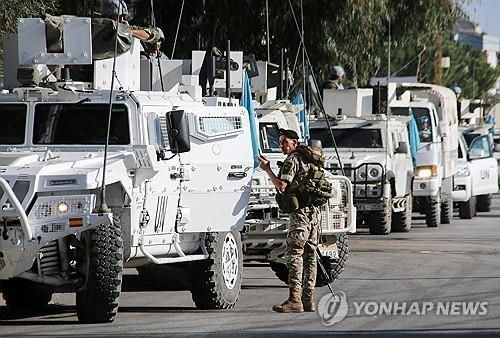
According to the British daily Financial Times on the 17th (local time), UNIFIL has been under attack by the Israeli military since early last month when Israel launched a ground offensive in southern Lebanon, the base of Hezbollah's activities.
At least seven people have been injured due to attacks by the Israeli military on UNIFIL bases. Last month, 15 personnel were injured by smoke suspected to be from white phosphorus shells detonated by the Israeli military. UNIFIL also reported that the Israeli military opened fire after witnessing UNIFIL demolishing houses in a village in southern Lebanon. The international community condemned Israel’s acts of threatening UN forces, including bringing tanks into UNIFIL bases and damaging surveillance cameras.
However, Israeli Prime Minister Benjamin Netanyahu demanded the withdrawal of UNIFIL. He claimed that UNIFIL is a powerless force that only wastes money and that Hezbollah is using UNIFIL as a human shield. Hezbollah has also attacked UNIFIL using rockets and other means, resulting in eight injuries so far. On the 14th, UNIFIL reported that "two to three unidentified individuals" fired shots at patrolling personnel.
UNIFIL is a UN force deployed in the border area between Israel and Lebanon to maintain peace since Israel first invaded Lebanon in 1978 while fighting Palestinian armed groups. Currently, 10,000 troops from 48 countries are stationed there. South Korea’s Dongmyeong Unit is also assigned to monitor and conduct reconnaissance of armed groups in the Tyre area of southern Lebanon.
The United Nations Security Council passed Resolution 1701 in 2006 to end the war between Israel and Hezbollah in Lebanon. The resolution called for the complete withdrawal of Israeli forces from Lebanon and stipulated that only the Lebanese army and UN forces would be stationed south of the Litani River, about 30 km from the Israeli border. According to the resolution, UNIFIL assists the Lebanese army in inspecting southern villages and borders and locating Hezbollah’s military facilities such as rocket launchers and tunnels.
However, since the ceasefire, Hezbollah has not withdrawn from the border area and has instead expanded its influence, rendering the resolution ineffective. Military experts believe that because the Lebanese army is weak and UNIFIL lacks clear authority, Hezbollah has been able to integrate into local communities and secure support, making it impossible to break this structure.
Nevertheless, the international community judges that the full implementation of Resolution 1701 is the only solution to the decades-long conflict between Israel and Hezbollah, raising the possibility of expanding UNIFIL’s operational scope. Lebanese Prime Minister Najib Mikati told an Iranian envoy visiting Lebanon on the 15th that UNIFIL will play an important role in bringing peace to Lebanon, and the government’s top priority is "a ceasefire and the full implementation of Resolution 1701." The Financial Times reported last month that Israel also proposed an idea for a much-expanded mission for UNIFIL, including authority to investigate all borders of Lebanon.
© The Asia Business Daily(www.asiae.co.kr). All rights reserved.

















