Public Briefing on the 3rd Excavation of Gochon-ri Tumuli Cluster at 2 PM on the 18th
Concentration and Construction of Tombs, Traces of Funeral Rites in Construction Process... Important Data for Gaya Society Ritual Studies
Busan Museum will hold an on-site public briefing session for the "3rd Excavation of Gochon-ri Burial Mounds" at 2 p.m. on the 18th at the excavation site of the Gochon-ri Burial Mounds in Cheolma-myeon, Gijang-gun.
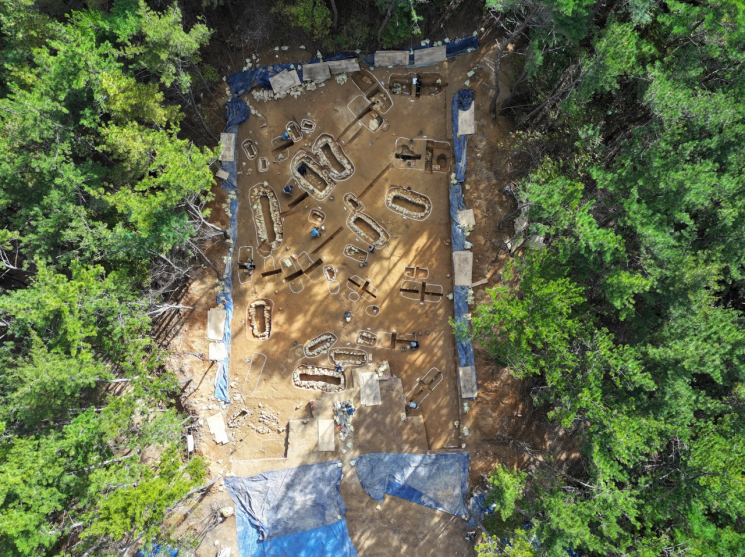
This on-site public briefing session was prepared to disclose the results of the "3rd Excavation of Gochon-ri Burial Mounds" conducted by Busan Museum to the citizens.
The Gochon-ri Burial Mounds are burial sites from the Three Kingdoms period located in Cheolma-myeon, Gijang-gun. They are situated on a hill between the eastern end of Unbongsan Mountain (258.5m above sea level), the road leading up to Siloam Park, and the Gochon New Town.
They were first discovered in the late 1960s by local history club students of Busan Dongnae High School, and through several surface surveys, it was reported to academia in the 1990s that these are burial mounds from the Three Kingdoms period, continuously constructed from the late 4th century to the late 6th century.
The first official excavation was conducted by Busan Museum in 2021, confirming the existence of Gaya burial mounds around 400 AD. Since then, annual excavations have been carried out to investigate the historical significance and value of the Gochon-ri Burial Mounds.
The 3rd excavation is being conducted with national funding as part of the "2024 Important Historical and Cultural Site Excavation" project by the Cultural Heritage Administration.
During the 3rd excavation, Busan Museum confirmed that various types of tombs were densely constructed within a narrow investigation area of 500㎡.
They discovered 35 tombs, including 13 wooden chamber tombs (Mokgwakmyo), 9 stone chamber tombs (Seokgwakmyo), 9 small stone chamber tombs, 3 jar tombs (Onggwanmyo), and 1 pit tomb (Togwangmyo).
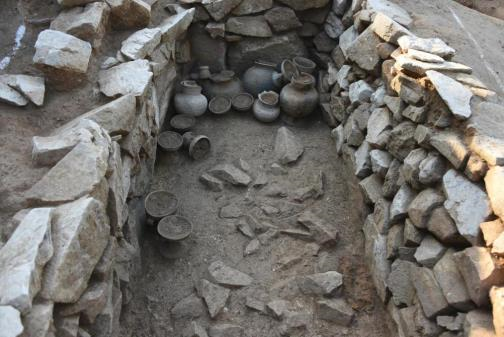
Along with this, various traces of funeral rites performed during the tomb construction process were found.
Inside the tombs, acts of destruction (Hwegi) such as removing the legs of tall cups (Gobaek) or breaking the handles of cups were confirmed.
In the wooden chamber tombs, iron axes were placed on the soil filling the space between the tomb pit and the wooden chamber.
In the small stone chamber tombs, traces of red paint on the inner walls were discovered. The color red has symbolized warding off evil and life since ancient times. The act of painting the walls red can be seen as an intention to protect the remains and souls of the deceased.
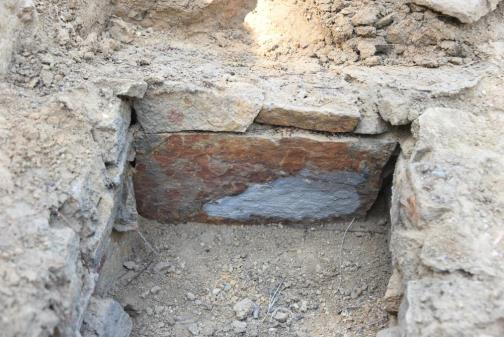
Hwegi (毁器) refers to the intentional destruction of vessels or weapons by breaking or bending them during funerals before placing them in the tomb.
Byeoksa (벽사, ?邪) means driving away evil spirits or malevolent ghosts.
Busan Museum explained that through this excavation, important materials were obtained for studying the ritual concepts held by Gaya society during the Three Kingdoms period.
Additionally, at 10 a.m. on the 18th, an expert advisory meeting to review the results of the Gochon-ri Burial Mounds excavation will be held at the excavation site.
Director Jeong Eun-woo stated, "Through continuous excavations, we have confirmed that the Gochon-ri group was a strong yet small power capable of constructing a large-scale burial mound cluster, revealing the historical significance of the Gochon-ri Burial Mounds. We are pleased to shed light on this." He added, "We expect the Gochon-ri Burial Mounds to become a place for historical education where people can closely observe and experience the process of uncovering the region’s archaeological history."
© The Asia Business Daily(www.asiae.co.kr). All rights reserved.



















