2025 Global Economic Outlook Report
Global Economic Growth Rate Forecasted at 3.0%
The Korea Institute for International Economic Policy (KIEP), a government-funded research institute, has forecasted the global economic growth rate for next year at 3.0%. This is 0.2 percentage points lower than the previous forecast and represents a slight slowdown of 0.1 percentage points compared to this year. Amid expectations that growth disparities will deepen due to strengthening Trumpism, factors such as the prioritization of domestic interests, shocks to China's economic growth, and increased financial market volatility due to shifts in monetary policy are anticipated to act as downward pressures on growth.
In its '2025 World Economic Outlook' report released on the 14th, KIEP stated, "As the relative growth advantage of the United States continues, growth rates among major advanced economies will diverge," and projected that "the global economy will record a growth rate of 3.0% next year, 0.1 percentage points lower than this year."
KIEP's forecast for next year's global economic growth rate is 0.2 percentage points lower than its previous estimate and is also below the projections of the Organisation for Economic Co-operation and Development (OECD, 3.2%) and the International Monetary Fund (IMF, 3.2%). According to KIEP's forecast, the global economy will maintain a similar growth rate of 3.1% in both last year and this year, before slowing to 3.0% next year.
Strong Growth in the US... Relatively Weak Advanced Economies like the Eurozone and Japan
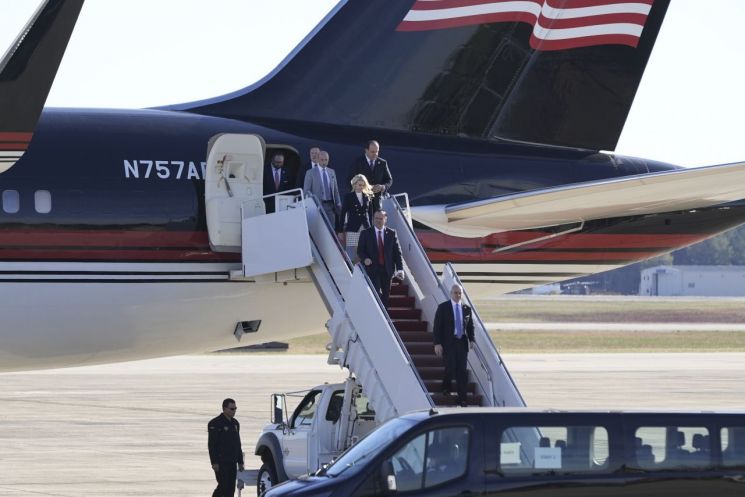
KIEP's downward revision reflects attention to uncertainties related to the global economy and trade caused by the inauguration of the second Trump administration. The United States is expected to lead steady growth driven by consistent private consumption, with the growth forecast for next year raised by 0.4 percentage points to 2.1%. The Eurozone, excluding Germany, continues to experience moderate growth, but persistent high interest rates have led to sluggish investment, resulting in a weak growth rate of 1.3%. Japan is expected to achieve only about 1% growth due to declining exports and weakening corporate performance.
Despite the rise of Trump-related risks, China's economy is not expected to enter a sharp downturn. KIEP stated, "If the Chinese government presents aggressive and effective economic stimulus measures, such as significant consumption expansion and strengthened fiscal policies, at the Central Economic Work Conference next month, the economy could achieve a growth rate in the low 4% range," and set the economic growth forecast for next year at 4.1%.
India is expected to record robust growth of 6.8% driven by expanded private investment and increased private consumption. KIEP noted, "While the Trump administration's protectionist and anti-immigration policies may negatively impact exports and the IT sector, these effects will be partially offset by benefits from supply chain restructuring and lower oil prices."
High Exchange Rate Trend Continues... "Additional Interest Rate Cuts Could Ease Strong Dollar"
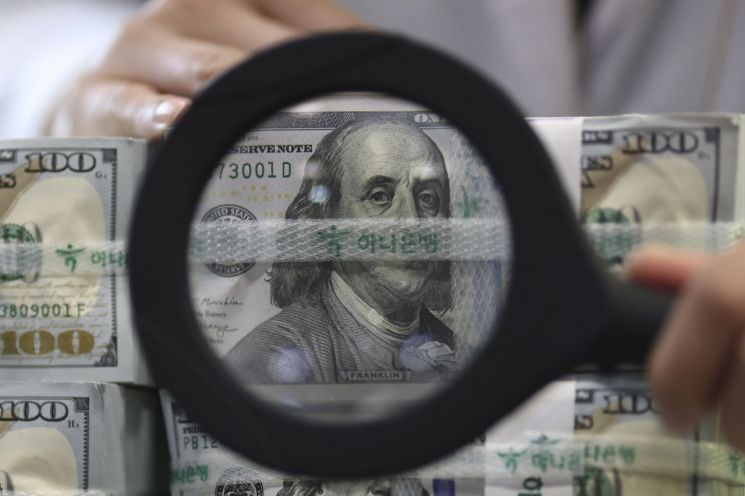
Although concerns over Trump's re-election around the US presidential election have significantly increased pressure on the strong dollar, the strong dollar trend is expected to gradually ease after peaking in the fourth quarter of this year. KIEP forecasted, "The strong dollar trend will continue for a while due to expectations for policy implementation by the second Trump administration, but will ease with policy adjustments amid growth slowdown concerns and additional interest rate cuts."
Tariff increases, illegal immigration restrictions, and tax cuts by the new US administration may raise expectations for renewed inflation and higher government bond yields in the US, which could strengthen the dollar. However, given the existing restrictive interest rate levels, labor market slowdown factors, and the potential rise in bond yields due to new government policies, concerns over economic slowdown may prompt policy adjustments.
KIEP expects the won-dollar exchange rate to remain high for the time being, reflecting the dollar's trend, but to shift to a downward trend when the US adjusts its policy stance and expectations for interest rate cuts rise. Previously, major investment banks forecasted the won-dollar exchange rate to decline to 1,340 won in the fourth quarter of this year, and further to 1,310 won and 1,300 won in the first and second quarters of next year, respectively.
Oil Prices to Remain in the $65?$85 Range
Oil prices are expected to stay within the $65?$85 range, excluding factors related to Middle East conflicts. KIEP stated, "The direction of Middle East conflicts will be a critical variable in next year's oil price outlook," adding, "In extreme cases such as severe disruptions to transportation through the Strait of Hormuz, oil prices could exceed $120."
Furthermore, "Excluding uncertainties in the Middle East, long-term demand growth slowdown and increased production by the OPEC+ consortium of major non-OPEC oil-producing countries will keep prices within the $65?$85 range, maintaining a gradual downward trend," KIEP forecasted.
The International Energy Agency (IEA) predicts that next year's oil demand growth rate will remain below 1%, similar to this year, while supply is expected to grow strongly by 2.04%, resulting in a daily surplus of 1.2 million barrels.
© The Asia Business Daily(www.asiae.co.kr). All rights reserved.
![Clutching a Stolen Dior Bag, Saying "I Hate Being Poor but Real"... The Grotesque Con of a "Human Knockoff" [Slate]](https://cwcontent.asiae.co.kr/asiaresize/183/2026021902243444107_1771435474.jpg)

















