Seoul City Approves Revision of Wolgye 2 District Unit Plan
Linked to Development of Gwangwoon University Station Logistics Site
From Type 3 General Residential Area to Semi-Residential Area... Height Restrictions Eased
The mammoth-scale reconstruction complex in Wolgye-dong, Nowon-gu, a northern district of Seoul, known as MimiSam (Miseong, Miryung, Samho 3rd Apartment Complex), is being reborn as a 6,700-unit residential complex. The zoning area has been upgraded and height restrictions relaxed in connection with the nearby Gwangwoon University Station area development. This is the first piece of the 'Northern Seoul Renaissance Era' residential complex overhaul announced by Seoul Mayor Oh Se-hoon.
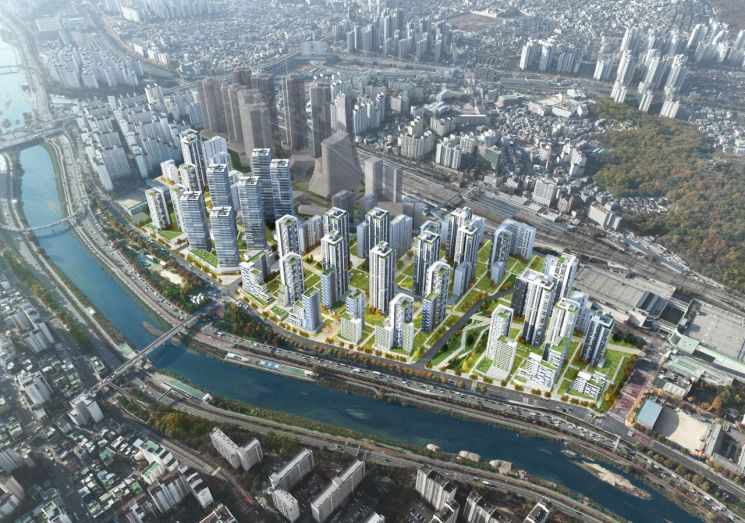 A bird's-eye view of Wolgye 2 District, including Miseong, Miryung, and Samho 3rd Complex (MimiSam) in Nowon-gu, Seoul. (Provided by Seoul City)
On the 13th, the Seoul Metropolitan Government held the 15th Urban and Architectural Joint Committee meeting and announced on the 14th that the 'Wolgye 2 District Land Development Zone Unit Plan Designation and Plan Decision' was approved with modifications.
The Wolgye-dong area has served as the gateway to northeastern Seoul since Seongbuk Station (now Gwangwoon University Station) opened in 1930. The Wolgye 2 District utilized the wide and flat geographical features of Wolgye-dong to develop a large-scale apartment complex in the 1980s. The city noted that the reconstruction period for the large apartment complexes MimiSam had arrived, and with the ongoing development of the Gwangwoon University Station logistics site nearby, it began establishing a district unit plan reflecting these changes. The Wolgye Seogwang Apartment, completed in 1994 and also due for reconstruction, was prioritized for inclusion in this district unit plan area.
This district unit plan includes development plans that consider spatial changes such as the Gwangwoon University Station logistics site development and environmental factors like the Jungnangcheon Stream and Gyeongchun Line forest trail. Above all, the city emphasized linking the Gwangwoon University Station logistics site development with the Wolgye 2 District. Until now, Wolgye 2 District was isolated like an island, separated by Line 1 railway to the west and Dongbu Expressway and Jungnangcheon Stream to the east. The plan includes connecting the newly established and expanded road infrastructure crossing from Gwangwoon University Station to Dongbu Expressway with Wolgye 2 District. The intention is to widen east-west roads and establish a circular road system to overcome regional disconnection.
Additionally, considering the changes in the area, the zoning within the mixed-use land will be upgraded from the 3rd general residential area to a semi-residential area. While strengthening commercial functions, public contributions resulting from the zoning upgrade will be used to improve the road system. The height limit is set at 120 meters for the 3rd residential area and about 170 meters for the semi-residential area. The complex will be specialized with waterfront-friendly residential design.
Furthermore, streets crossing Line 1 railway and Jungnangcheon Stream will be designated as commercial centers, with public pedestrian pathways set as shared living streets and connecting streets within the complex to create a seamless community. A waterfront street will be installed along Jungnangcheon Stream, and waterfront-specialized residential buildings will be designed.
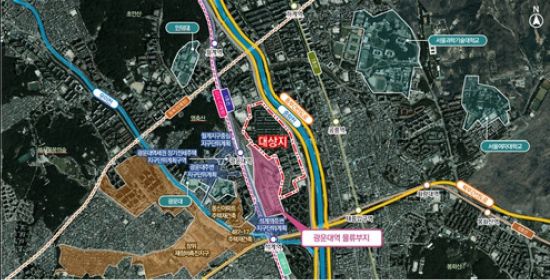
If reconstruction proceeds according to this district unit plan, the Wolgye 2 District, currently consisting of about 5,000 households, will be reborn as a large-scale residential complex with 6,700 households. Combined with the Gwangwoon University Station logistics site mixed-use development, approximately 10,000 households will benefit from improved residential environments.
As large-scale development in the area accelerates, the overhaul of northern Seoul is expected to gain momentum. The city has announced plans to relax regulations on aging residential and commercial areas and transform large idle sites into hubs for advanced industries and job creation, aiming to reopen the 'Northern Seoul Renaissance Era.'
Seoul plans to issue a re-notification for public review as early as next month and finalize the district unit plan announcement by the end of the year. Cho Nam-jun, Director of the Urban Space Headquarters, said, "We will spare no support and effort until the remaining procedures are completed," adding, "We hope Wolgye 2 District, along with Sanggye and Junggye, will breathe new life into the northern area and be reborn as a new hub centered around Gwangwoon University Station."
© The Asia Business Daily(www.asiae.co.kr). All rights reserved.


















