Press Conference at Government Complex Sejong on the 13th
Review of Agricultural Achievements and Future Plans of the Yoon Seok-yeol Administration
'Rural Stay-type Rest Area' Selected as the Most Popular Policy Among the Public
Song Mi-ryeong, Minister of Agriculture, Food and Rural Affairs, announced on the 13th that "we will focus on reducing rice cultivation areas, establishing a stable supply base in response to climate change, and addressing the crisis of rural disappearance going forward."
At a press conference held at the Government Complex Sejong on the same day, Minister Song said, "Although there have been many achievements in agricultural policy over the past two and a half years, structural problems persist, and many supplementary tasks remain."
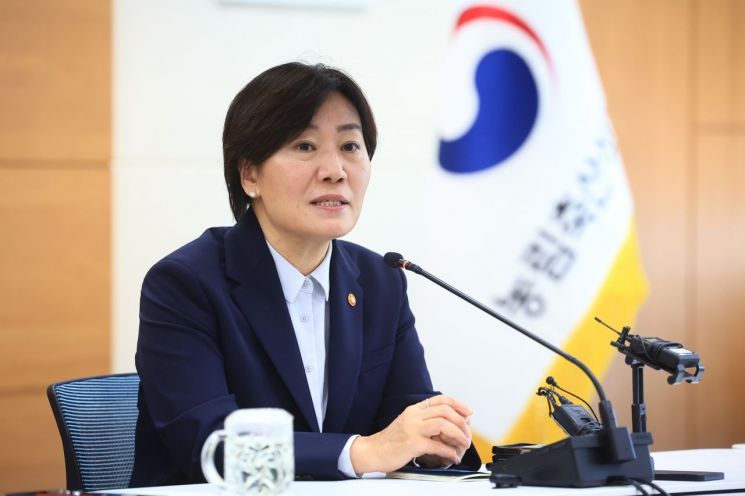 Song Miryeong, Minister of Agriculture, Food and Rural Affairs, is explaining the achievements and future plans in the agricultural sector at a press briefing held at the Government Sejong Complex on the 13th.
First, Minister Song emphasized, "There have been consistent criticisms such as 'Why leave rice paddies as they are when there is a surplus of rice but shortages of wheat and soybeans?'" and added, "We need to fundamentally change the rice industry. We will promote the reduction of rice cultivation areas." Earlier, at the end of last month, Minister Song expressed regret, saying, "We should have strongly reduced the cultivation area, but we failed to do so," and announced, "Next year, we plan to strongly push for a reduction of 80,000 hectares in cultivation area."
She assessed that prices of agricultural and livestock products are stabilizing. Minister Song explained, "There were difficulties in the supply and demand of agricultural products due to abnormal weather this year, but by mobilizing all available resources such as stockpiles and contract farming supplies, and thoroughly managing growth through a growth management council involving producers, prices of agricultural and livestock products are showing a stabilization trend." According to the Ministry of Agriculture, Food and Rural Affairs, the consumer price inflation rate for agricultural and livestock products decreased from 9.8% in May this year compared to the previous year, to 6.2% in July, 2.2% in September, and 1.1% in October.
As the greatest achievement during the two years since the launch of the Yoon Seok-yeol administration, agricultural and food exports were highlighted. Agricultural and food exports reached a record high last year and increased by 8.9% year-on-year to $8.2 billion by the end of October this year, approaching the $10 billion target for this year. Ramen exports grew by about 30% compared to last year, surpassing $1 billion for the first time. Frozen gimbap, which became a craze in the United States last year, also led exports with about 70% growth. Minister Song explained, "We established the K-Food Export Expansion Headquarters to promote export growth, branded K-Food and K-Food+, and exports are progressing smoothly."
Regarding the impact of the second Trump administration in the United States on Korea’s agricultural and food exports, she expected it to be limited. She said, "There are talks not only about raising tariffs on Korean products but raising them across the board, so it will ultimately be a situation where everyone competes on the same footing. There may be pressure to import more American agricultural products, but since imports to the U.S. are almost fully open, the impact will not be significant."
Among policies that have received strong public support, she cited the 'Rural Stay-type Rest Area.' Minister Song said, "To meet public demand for weekend and experiential farming and to expand the influx of residents into rural areas, we allowed the installation of rural stay-type rest areas in the form of temporary structures on farmland, and extended the usage period to 12 years, which can be further extended by local government ordinances. Next year, through amendments to the Farmland Act, we plan to try a method where local governments lease these areas as complexes."
The Ministry of Agriculture, Food and Rural Affairs plans to prepare and announce fundamental structural reform measures to reform rural areas within this year. Minister Song stated, "What we need to respond to are climate change and rice issues, but ultimately, we need to change the structure of agriculture and rural areas. Instead of responding to recurring supply and demand instability every year as it happens, we will present the fundamental direction of measures through agricultural and rural structural reform policies."
© The Asia Business Daily(www.asiae.co.kr). All rights reserved.

















