Ground Fire Support Aircraft Introduced in the 70s... "F-16 Replacement"
According to the modernization strategy of the U.S. Air Force, the A-10 'Thunderbolt' attack aircraft, which had been deployed to U.S. Forces Korea and other locations, will be retired.
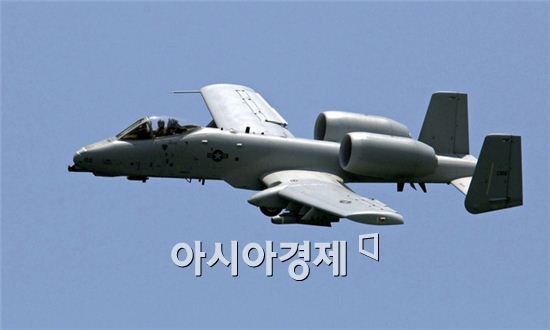
On the 12th (local time), the U.S. Air Force announced, "To upgrade 4th generation fighters and strengthen the integration of 4th and 5th generation aircraft in key regions including Korea, the A-10 will be retired." David Iverson, commander of the U.S. 7th Air Force in Korea, stated, "By introducing improved 4th and 5th generation aircraft to the Pacific region, we will significantly enhance air combat capabilities in the Korean theater."
Accordingly, the U.S. Air Force plans to sequentially retire 24 A-10s deployed at Osan Air Base starting from January next year. The gap left by the A-10 will be filled by upgrading the existing F-16 fleet deployed to U.S. Forces Korea.
The retirement of the A-10 was also a scheduled step in the U.S. mainland. The aircraft, produced and deployed in the 1970s, is an aging airframe and was designed specifically for close air support (CAS) and other ground fire support roles, limiting its function. However, in Korea, which faces North Korea with its large ground forces, the A-10 had some utility and was deployed until now.
However, in the early stages of war or similar emergencies, most Air Force aircraft must focus all efforts on pre-designated target attacks according to the pre-Air Tasking Order (pre-ATO), and the A-10 has been criticized for having a limited role in this process, occupying aircraft numbers without significant contribution.
Additionally, as fighter aircraft roles such as ground attack and air combat have evolved, aircraft like the F-16 can sufficiently perform CAS and other ground support roles when necessary, which was also reflected in the decision to retire the A-10.
The U.S. military, seemingly aware of concerns about the reduction of U.S. Forces Korea following the election of President Donald Trump, emphasized that the A-10 retirement is part of a long-planned strategy and that there is no disruption to the combined defense posture between South Korea and the U.S.
The U.S. Air Force stated, "This is a strategy to strengthen deterrence against North Korea and reinforce the combined defense posture between South Korea and the U.S., reaffirming America's ironclad security commitment to the ROK-U.S. alliance. The U.S. Air Force will continue to enhance interoperability through close cooperation with the Republic of Korea Air Force."
© The Asia Business Daily(www.asiae.co.kr). All rights reserved.
![Clutching a Stolen Dior Bag, Saying "I Hate Being Poor but Real"... The Grotesque Con of a "Human Knockoff" [Slate]](https://cwcontent.asiae.co.kr/asiaresize/183/2026021902243444107_1771435474.jpg)















