Although he retained the position of Prime Minister, the road ahead is not smooth. This is the story of Shigeru Ishiba, who was re-elected as Japan's Prime Minister just over 40 days after his inauguration. Amid concerns that he might remain a powerless figurehead prime minister in a minority government, it is diagnosed that thorny challenges lie ahead, including the passage of next year's budget, political reform, and parliamentary management.
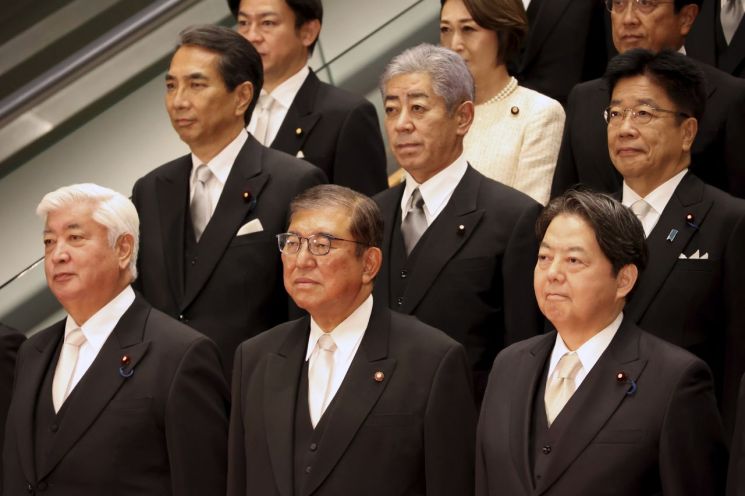
The Nihon Keizai (Nikkei) newspaper reported on the 12th that although Prime Minister Ishiba launched his second cabinet after securing first place in the prime ministerial election the previous day, three major hurdles await in governing the administration.
First is the 2025 budget, for which opposition cooperation has become crucial. In last month's early general election, the ruling Liberal Democratic Party (LDP) and Komeito failed to secure a majority, making it difficult to pass the budget without bringing in opposition parties such as the Democratic Party for the People. Regarding the 2024 supplementary budget, which includes provisions for recovery from the Noto Peninsula earthquake and heavy rain disasters, the opposition is unlikely to oppose it easily, but the situation is different for the 2025 budget, Nikkei analyzed.
Yuichiro Tamaki, leader of the Democratic Party for the People, which has emerged as a political kingmaker, appeared on Radio Nikkei and declared regarding the so-called "1.03 million yen annual income threshold" pledge, "If there is no response, it will be difficult to support the 2025 budget." This pledge, a core campaign promise in the general election, aims to raise the income tax threshold from the current 1.03 million yen to 1.78 million yen. However, this would inevitably reduce tax revenue, prompting cautious views mainly from the Ministry of Finance.
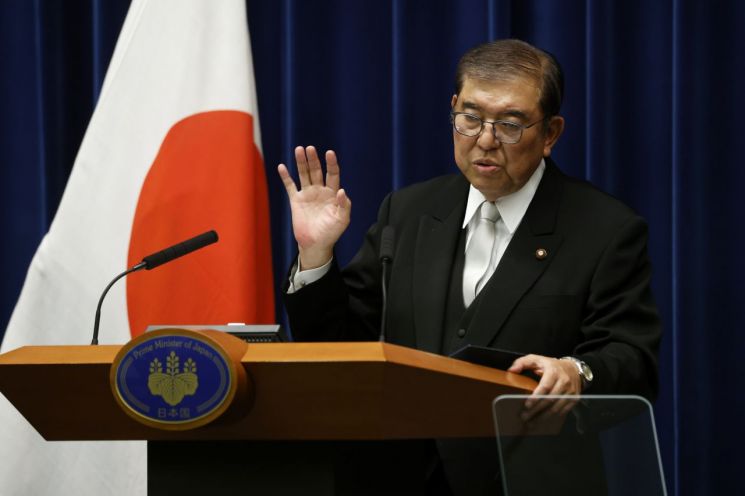
The second hurdle is political reform. After being re-elected as the "103rd Prime Minister" the previous night, Ishiba held a press conference expressing his determination for political reform, saying, "The LDP must be reborn this time." On the same day, before the special Diet session opened, he also met with Yoshihiko Noda, leader of the main opposition Constitutional Democratic Party, and Nobuyuki Baba, leader of the second opposition Japan Innovation Party, requesting their participation in this political reform. Specifically, there are plans to promptly revise the Political Funds Control Act, including abolishing policy activity allowances paid to lawmakers. Through this, the LDP aims to break free from the slush fund scandal that led to its electoral defeat and create an opportunity for a turnaround.
However, it is uncertain whether this political reform will proceed smoothly as Ishiba envisions. The opposition, including Noda, is currently using the slush fund scandal as a major political attack card. It is expected that the reform process will inevitably hamper the Ishiba administration and the LDP.
The final hurdle is managing a "minority government with a majority opposition" Diet. Ishiba, who took office on the 1st of last month, took a gamble by dissolving the House of Representatives early on the 9th and holding a general election just one month after forming his cabinet. However, the LDP and Komeito secured only 215 seats, not even a majority in the parliament, and 64 seats fewer than before. They lost control of the Diet. Consequently, the 17 standing committee chair positions in the House of Representatives were divided between the ruling coalition of the LDP and Komeito with 10 chairs and the opposition, including the Constitutional Democratic Party, with 7 chairs.
Particularly painful for Ishiba and the LDP is that the Budget Committee chairmanship, held by the ruling party for 30 years, went to the main opposition Constitutional Democratic Party. The Budget Committee is a key standing committee responsible for reviewing government budget proposals, and its chair can pressure the cabinet through committee meetings and voting decisions. The chairmanship of the Constitution Review Committee, which oversees constitutional amendment deliberations, also went to the Constitutional Democratic Party. This blocks the LDP's long-cherished project to explicitly mention the existence of the Self-Defense Forces in the constitution, while increasing the likelihood of active discussions on introducing optional separate surnames for married couples. Nikkei assessed, "If the opposition holds the chairmanship, it will be difficult to deliberate or adopt schedules proposed by the government and ruling party," concluding that "they have lost the initiative."
In another article, Nikkei pointed out that cabinets formed under minority government conditions often have weak political foundations and tend to be short-lived. The 1994 Tsutomu Hata cabinet is a representative example, which resigned after just 64 days. The media noted, "Since the ruling party alone cannot pass bills or budgets, cooperation from the opposition is necessary," adding, "Governance tends to become unstable. If the opposition submits a no-confidence motion against the cabinet to the Diet, it is likely to gain majority support, and if passed, the administration will be forced to resign, dissolve the House of Representatives, and hold an early general election." Japan is also facing the House of Councillors election in the summer of 2025.
Meanwhile, in a press conference the previous night, Ishiba expressed his intention to embark on full-scale diplomatic activities starting this week. This is understood to indicate his plans to attend the Asia-Pacific Economic Cooperation (APEC) summit in Peru on the 15th and 16th, and the Group of Twenty (G20) summit in Brazil on the 18th and 19th. Currently, South Korea, the United States, and Japan are reportedly coordinating plans to hold a trilateral summit during the APEC summit. He said, "I want to have frank discussions about the international situation with leaders including U.S. President Joe Biden and South Korean President Yoon Suk-yeol." He also emphasized that the priorities for the second cabinet include strengthening security, responding to public safety and disaster prevention, and revitalizing the economy, pledging to provide over 10 trillion yen (approximately 90 trillion won) in public support for the semiconductor and artificial intelligence (AI) sectors.
© The Asia Business Daily(www.asiae.co.kr). All rights reserved.

![Clutching a Stolen Dior Bag, Saying "I Hate Being Poor but Real"... The Grotesque Con of a "Human Knockoff" [Slate]](https://cwcontent.asiae.co.kr/asiaresize/183/2026021902243444107_1771435474.jpg)
















