Concerns Over Liquidity Decline in Real Estate Fractional Investment Platforms
Following 'Casa' at the End of Last Year, 'Funble' and 'LucentBlock' in April Next Year
"Public Offerings Sold Out So Far, but Market May Contract"
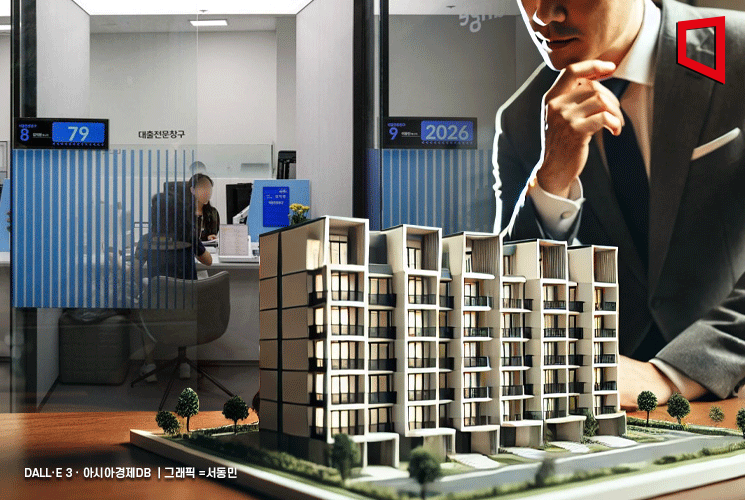
The real estate fractional investment market, which allowed investors to buy and sell shares anytime like listed stocks to realize profits, is facing a crisis that could lead to its disappearance. Real estate fractional investment had gained attention among alternative investment products due to its ease of trading, but with the government's regulatory grace period ending, investors now have to find buyers and sellers directly. There are concerns that the public offerings of real estate fractional investments, which had repeatedly sold out during subscription, may also shrink.
Regulatory Sandbox for Real Estate Fractional Investment Industry Nears Expiration
According to the industry on the 12th, starting from April next year, the financial regulatory sandbox period for real estate fractional investment platforms 'LucentBlock' and 'Funble' will end. Once this period expires, trading fractional shares within each platform will become more complicated. In the past, securities could be traded easily like stocks, but going forward, investors will have to find demanders for their held securities on a one-to-one basis. 'VBrick,' which is subject to the Busan Blockchain Regulatory Free Zone sandbox, will also see its sandbox period end at the end of this year.
Each real estate fractional investment platform gained market attention as the Financial Services Commission allowed simultaneous issuance and distribution of fractional investment securities. Real estate fractional investment involves dividing ownership of expensive real estate into fractions held by multiple investors. Investors receive dividends through building operation profits and can also gain capital gains when the invested building is sold in the future.
During the regulatory sandbox period, platforms issued and distributed securities simultaneously, enabling real estate fractional investments to repeatedly achieve full subscription during investor recruitment stages. Kasa has so far fully sold out nine public offerings, including the 'Korea Technology Center' in Yeoksam-dong, Gangnam-gu, Seoul, and has sold three properties. LucentBlock successfully recruited investors for 10 properties, including 'Pinpoint Tower No. 3' in Sindorim-dong, Guro-gu, Seoul, and Funble succeeded in recruiting investors for three properties, including 'Hyundai Terra Tower DMC No. 1' in Hyangdong-dong, Deogyang-gu, Goyang-si, Gyeonggi-do. Additionally, VBrick is preparing to recruit investors for an 8-story academy building in Gamcheon-dong, Saha-gu, Busan, on the 13th.
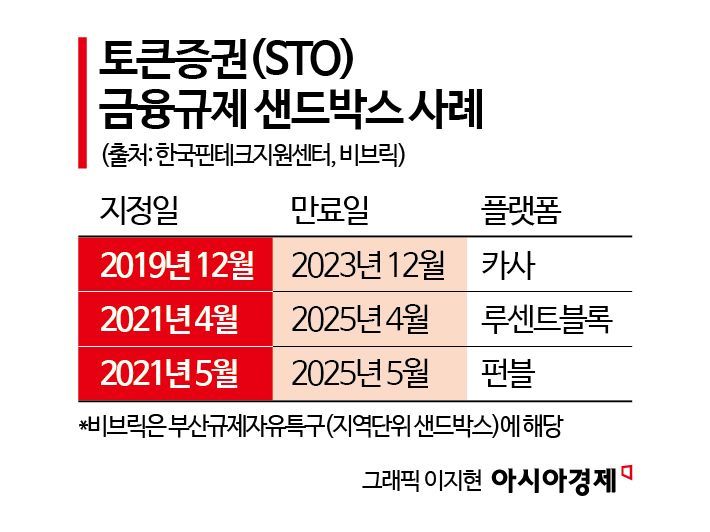
A platform official said, "There have been recent discussions about the legalization of token securities (STO), but specific details will come out as the Financial Services Commission drafts subordinate laws or enforcement ordinances," adding, "The current stance of financial authorities is to separate the issuance and distribution markets, so platforms must choose one of the two." The regulatory sandbox period lasts a total of four years, and once it ends, real estate fractional investment platforms will only be able to operate using either securities issuance or distribution (trading) methods.
Industry Warns of Possible Contraction in Real Estate Fractional Investment Market
Within the industry, voices of concern are emerging that the real estate fractional investment market may disappear. A B platform official said, "The market is not yet mature, and if share trading becomes difficult, there is a high possibility that the market will shrink." He added, "One of the main reasons fractional investment products attracted attention was their liquidity among alternative investment products. If this liquidity decreases, the incentive to invest will also decline."
Especially since most platforms are startups, the impact of the authorities' separation policy is expected to be greater. A C platform official said, "Platforms are not yet very large," and added, "If STO legalization proceeds without at least minimal protective measures or institutional grace periods, the competitiveness of platforms will disappear."
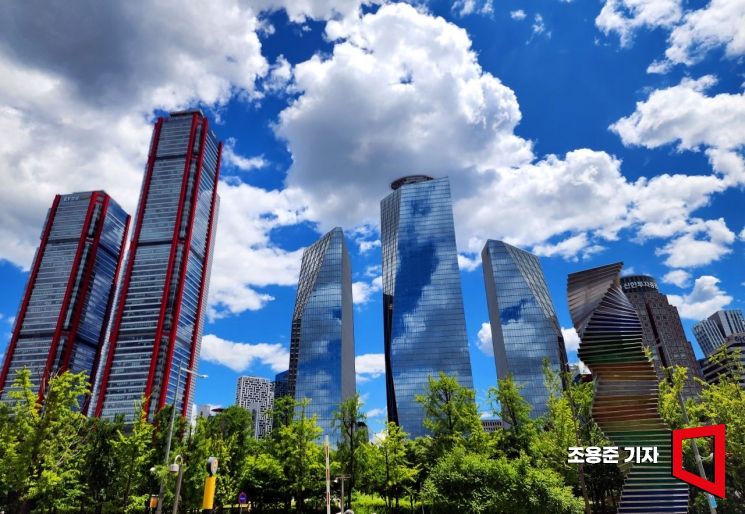 On the 28th, with clear weather, the high-rise buildings and sky viewed from Yeouido, Seoul, look as beautiful as a watercolor painting. Photo by Jo Yongjun jun21@
On the other hand, some real estate fractional platforms succeeded in fully selling out subscriptions even after their regulatory grace periods ended. Kasa, whose regulatory sandbox period ended in December last year, achieved a 100% subscription rate last month for investor recruitment for the '235 Building' in Sangam-dong, Mapo-gu, Seoul. According to Kasa, share trading for the 235 Building is only possible on a one-to-one basis, but they have supplemented this by distinguishing sellers and buyers through securities accounts linked within the platform to facilitate transactions.
The industry describes this case as exceptional. Unlike other platforms, Kasa has a securities firm as its parent company, so even if securities issuance and distribution are separated, it can continue its business. Daishin Financial Group acquired Kasa in March last year, and Kasa's securities accounts are linked with Daishin Securities.
© The Asia Business Daily(www.asiae.co.kr). All rights reserved.