Samjeon, Foreign Investors Continue Selling for 9 Days
Concerns Over US Protectionism and Disappointment in China's Stimulus
Cryptocurrency Surpasses Stock Market Trading Funds
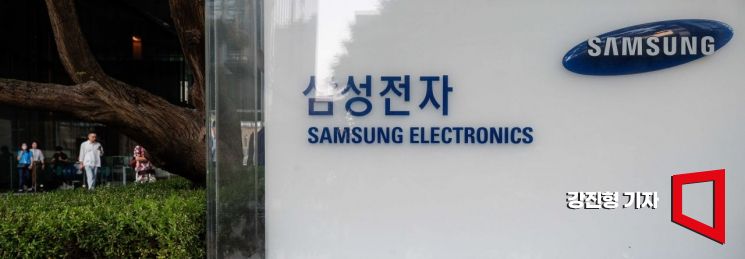
The KOSPI index closed lower amid concerns over the return of protectionism following the second term of Trump's administration. Samsung Electronics experienced foreign capital outflows for the ninth consecutive trading day, hitting a 52-week low.
On the 11th, the KOSPI started higher but fell due to simultaneous selling by foreigners and institutions, closing at 2,531.66, down 29.49 points (1.15%) from the previous trading day.
Looking at investor trends, foreigners and institutions led the decline by net selling 536 billion KRW and 238 billion KRW respectively, while individuals took a buying position with net purchases of 737.3 billion KRW.
By sector, most sectors closed lower, with textile and apparel (-5.35%), medical precision (-4.63%), and transportation and warehousing (-3.22%) showing significant declines. However, telecommunications (3.99%) and transportation equipment (2.98%) performed well and held up.
Among the top market cap stocks, Samsung Electronics closed at 55,000 KRW, down 3.51%. The 55,000 KRW level marks a 52-week low. The semiconductor industry as a whole is believed to be on alert due to concerns over protectionism under Trump's second term. SK Hynix (-3.94%) also saw a large drop, and Samsung Electronics Preferred Shares (-2.54%) declined as well. Celltrion (-4.08%), KB Financial Group (-0.54%), and Shinhan Financial Group (-0.53%) also experienced notable declines. LG Energy Solution rose 4.39% on positive news of supplying batteries for spacecraft to the US company SpaceX. Hyundai Motor (3.69%) and Kia (1.72%) also increased.
Among individual stocks, Isu Petasys (-22.68%) plunged sharply after receiving positive announcements during trading hours but negative announcements after market close. The Born Korea also widened its intraday decline, falling more than 10% to 41,400 KRW.
In today's KOSPI market, 730 stocks declined, while 187 stocks rose, including 3 stocks hitting the upper price limit.
Meanwhile, the KOSDAQ index, despite opening higher in the morning, failed to maintain its gains and closed down 14.54 points (1.96%) at 728.84 compared to the previous day.
In terms of investor trends, individuals and institutions net bought 87 billion KRW and 4.2 billion KRW respectively, but foreigners led the index decline with net selling of 84.4 billion KRW.
By sector, most sectors declined, including chemicals (-5.18%), non-metallic minerals (-3.65%), and machinery and equipment (-3.56%), with only other services (0.35%) showing a slight increase.
Among the top market cap stocks, declines were prominent. EcoPro BM (-4.92%), EcoPro (-3.77%), HLB (-1.15%), Hugel (-5.07%), Enchem (-5.01%), Samchundang Pharmaceutical (-1.33%), Classys (-2.58%), and HPSP (-6.18%) all fell. However, Alteogen (1.95%) and Rigachem Bio (7.20%) rose.
Lee Jaewon, a researcher at Shinhan Investment Corp., noted, "We are helpless against foreign capital outflows caused by Trump trading, high interest rates, and a strong dollar, and the disappointment over China's economic stimulus measures also played a role. Besides the mentioned beneficiary sectors, there were theme-based fluctuations such as Ukraine reconstruction."
He advised, "With a lack of clear rebound triggers, it is necessary to pay attention to the Consumer Price Index (CPI) and coincident indicators this week, which will determine the extent of the rate cut at the December Federal Open Market Committee (FOMC) meeting." The CPI is a key price indicator used to check the level of inflation.
The impact of some domestic stock market funds flowing out to the virtual asset market, considered a beneficiary asset under Trump, is also reflected. Kim Jiwon, a researcher at KB Securities, said, "With Bitcoin reaching new highs, domestic virtual asset trading volume rose to 19.8 trillion KRW, acting as a factor for supply and demand dispersion. On this day, the trading volume of the KOSPI and KOSDAQ markets was 17.9 trillion KRW."
© The Asia Business Daily(www.asiae.co.kr). All rights reserved.
![Clutching a Stolen Dior Bag, Saying "I Hate Being Poor but Real"... The Grotesque Con of a "Human Knockoff" [Slate]](https://cwcontent.asiae.co.kr/asiaresize/183/2026021902243444107_1771435474.jpg)
















