Budget Proposal Submitted to City Council with an Increase of 87.2 Billion KRW Compared to This Year... Focus on Smooth Implementation of Education Policies
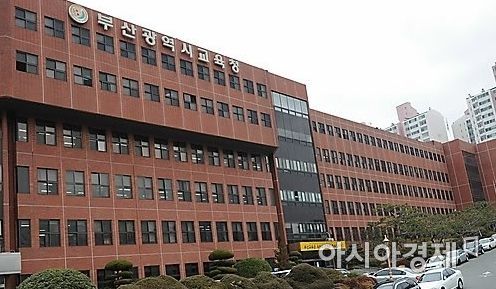
The Busan Metropolitan Office of Education submitted the ‘2025 Busan Metropolitan City Education Special Account Budget Plan’ amounting to 5.3351 trillion KRW, an increase of 87.2 billion KRW (1.7%) compared to this year, to the City Council.
Although there were difficulties in budget formulation due to a decrease in revenue resources caused by the expiration of laws related to free high school education, the budget plan was prepared to ensure the smooth implementation of major education policies by reorganizing education policy projects and replenishing 300 billion KRW in funds.
Unnecessary and non-urgent projects were boldly reduced or abolished, and the budget was intensively allocated to policies tailored to the needs of education consumers, such as improving basic academic skills, operating Neulbom Schools, and enhancing the educational environment of special schools.
The revenue budget plan was composed of 3.7906 trillion KRW in local education finance grants, 891.1 billion KRW in decreased local government transfer income by 144.9 billion KRW, and 84.4 billion KRW in net surplus funds, an increase of 64.5 billion KRW. Internal transactions, such as fund transfers, increased by 150 billion KRW.
The key directions for the Office of Education’s expenditure budget plan for next year are ▲ customized learning support to guarantee and improve basic academic skills ▲ fostering core talents with proper character through Busan-style character education ▲ nurturing future talents and regionally tailored human resources ▲ welfare support to provide fair educational opportunities ▲ creating safe schools for both students and staff.
First, 39.9 billion KRW will be invested to realize responsibility for guaranteeing basic academic skills and provide customized learning support for students.
24 billion KRW was allocated for operating the Busan Academic Achievement Support System (BASS), 600 million KRW for implementing the Busan-style Academic Achievement Evaluation (BEST), 1.9 billion KRW for operating the WeCanDo weekend and seasonal schools, 4.5 billion KRW for Busan-style internet lectures, and 2.4 billion KRW for the Character, Math, and Science Camp.
To realize character education that can be practiced anywhere?school, home, or community?4.9 billion KRW was allocated for the Morning Change program, and 55.7 billion KRW for various physical activities, cultural and arts education, alternative education, and reading education.
To normalize Morning Change activities, which lead the transformation from ‘sleeping classrooms’ to ‘awake classrooms,’ various events including campaigns are planned. Starting next year, all schools will be required to participate in Morning Change (體仁智), and family empathy change programs, weekend, and vacation camps will also be operated.
Additionally, 77.1 billion KRW will be invested to nurture future talents equipped with digital capabilities and to cultivate customized talents linked to regional industries.
146 billion KRW was reflected for supporting digital textbooks, which will be introduced from next year, and preparations are underway to smoothly implement digital textbooks (AIDT), including teacher training.
The system of specialized high schools will be reorganized to meet the demands of Busan’s core strategic industries and consumers, including Busan Port Logistics High School, Busan Naval Science and Technology High School, Ujangchun Smart Farm High School, Global K-POP School, and Nuclear Power High School.
The (tentatively named) Busan Environmental Experience Education Center, being established on the site of the former Banyeo Elementary School, will partially open in the first half of 2025 to conduct ecological and environmental education linked to the curriculum. Scheduled for completion in 2027, the center will play a pivotal role in spreading a culture of carbon neutrality practice.
4.006 trillion KRW was also allocated to provide educational welfare that empowers everyone and to offer fair educational opportunities.
1.6 billion KRW was allocated to support commissioned educational institutions for preventing school dropout, 3.6 billion KRW for education support for multicultural and North Korean defector students, and 200.2 billion KRW for the Nuri Curriculum support. To stabilize the integrated childcare system piloted in 2024, 5.3 billion KRW was reflected, and 63.8 billion KRW was allocated for operating Neulbom Schools to strengthen the state’s responsibility for education and care.
6.478 trillion KRW was allocated to create a safe educational environment for both students and staff.
49 billion KRW will be invested in improving children protection zones, a project jointly promoted by the Office of Education, Busan City, and district and county governments; 5.2 billion KRW for safety support such as school route safety surveys; and 300 million KRW for customized safety education.
In addition, resources were evenly distributed to lifelong education and education policy planning by collecting diverse opinions from the educational community and staff.
One of the key projects of the Busan Metropolitan Office of Education in 2025 is Neulbom Schools, with plans to expand Neulbom-exclusive schools in areas with high demand or poor educational environments. Following the opening of Myeongji Neulbom-exclusive School in September, Neulbom-exclusive schools will be established in Jeonggwan and in each of the five support offices to provide high-quality programs.
The Office of Education will also undertake comprehensive improvements to the educational environment of special schools. Various measures will be explored, such as expanding convenience facilities for the disabled and securing additional school transportation so that all special education students can commute within 30 minutes.
Furthermore, 106.4 billion KRW will be invested to improve the health and safety of cafeteria workers by completely replacing kitchen ventilation systems, promoting cafeteria modernization projects, and replacing electric kitchen equipment, significantly enhancing cafeteria environments.
Ha Yun-su, Superintendent of Busan Metropolitan Office of Education, said, “We faced many challenges in the budget formulation process due to deteriorating educational financial conditions. Despite the difficult situation, we will do our best to nurture future talents and create a safe educational environment.”
The 2025 budget plan will be finalized at the plenary session on December 12 after preliminary review by the Education Committee and comprehensive review by the Budget and Accounts Special Committee during the 325th regular session of the Busan City Council.
© The Asia Business Daily(www.asiae.co.kr). All rights reserved.

















