"Difficulty Discussing Restructuring" Plea
Government Says "Unprecedented"
Experts Urge "Swift Restructuring"
Concerns Over Missing the Right Timing Remain
The domestic petrochemical industry, trapped in a "swamp of stagnation," has demanded a relaxation of regulations under the Monopoly Regulation and Fair Trade Act (Fair Trade Act) to facilitate business restructuring, but the government appears reluctant. The reason cited is that exceptions cannot be made for specific industries. Amid suspicions of collusion making it difficult to gather consensus within the industry, concerns are rising that the golden time for restructuring may be missed. Executives of Lotte Group’s petrochemical affiliates, such as Lotte Chemical and Lotte Fine Chemical, are voluntarily returning part of their salaries starting this month as a measure of responsible management, reflecting the worsening industry situation.
According to industry sources on the 12th, the petrochemical sector has repeatedly requested the government to ease the Fair Trade Act, which is hindering corporate restructuring. However, the Ministry of Trade, Industry and Energy, which serves as the communication channel with the industry, and the Fair Trade Commission, the main agency responsible for the Fair Trade Act, have effectively rejected the requests, citing concerns over fairness issues.
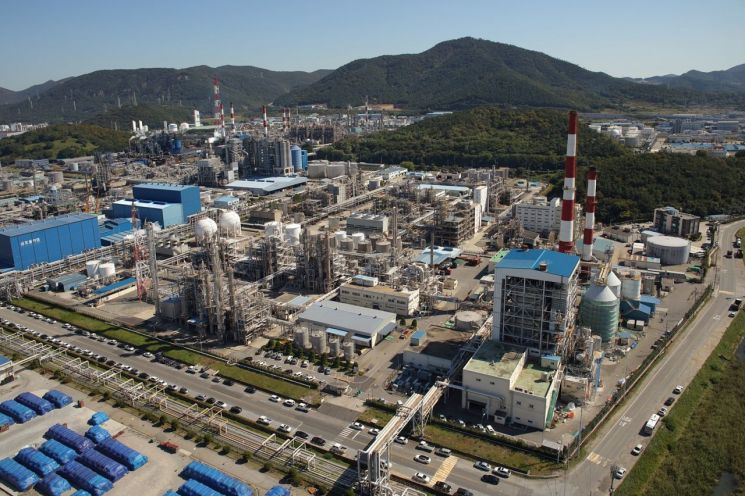
An official from the Ministry of Trade, Industry and Energy said, "Since the 2000s, there have been no cases worldwide where the Fair Trade Act was waived for recession-hit industries," adding, "Considering the scale of our economy, it is necessary to follow international standards." A Fair Trade Commission official also expressed opposition, stating, "Although there have been no specific requests yet, there have been no recent cases of regulatory relaxation for specific industries."
The Fair Trade Act is considered a key obstacle blocking restructuring discussions among petrochemical companies. Even if they try to reorganize production structures, cooperation and mergers between companies are restricted by antitrust regulations. According to Article 9, Chapter 3 of the current Fair Trade Act, if a company holds the number one market share in a specific transaction field or meets the criteria of a market-dominant business operator (market share of 50% or more), mergers between companies are regarded as monopolistic acts and may be subject to corrective measures by the Fair Trade Commission.
For example, in the case of ethylene, known as the "rice of petrochemicals," LG Chem and Lotte Chemical hold domestic production shares of 26% and 18%, respectively. Even if they attempt to integrate facilities to achieve economies of scale, their combined market share would rise to 44%, which could trigger oligopoly regulations.
An industry insider said, "What companies need most is business restructuring, but they cannot take a single step forward due to regulations."
The petrochemical industry’s request for exceptions to the Fair Trade Act is based on the Japanese example. In the 1970s, when the petrochemical industry’s profitability declined due to the oil shock, the Japanese government temporarily waived the application of the Fair Trade Act specifically for the petrochemical industry to support restructuring through a "recession cartel." At that time, the operating rate of Japan’s naphtha cracking centers (NCC) recovered from the 60% range in the 1980s to the 90% range.
Seoyeon Kim, a researcher at NICE Credit Rating, said, "Restructuring the petrochemical business is essential to strengthen future business competitiveness and maintain profit-generating capacity," emphasizing that "gradual facility restructuring is necessary." Janggeun Nam, a research fellow at the Korea Institute for Industrial Economics & Trade, also stressed, "Through mergers and acquisitions (M&A) among domestic companies, it is necessary to secure economies of scale by enlarging company size and reducing the number of firms, thereby carrying out bold and swift restructuring to enhance fundamental competitiveness."
The industry has little expectation for the government’s petrochemical competitiveness enhancement plan scheduled for the end of this year. Although financial support such as tax benefits and new business infrastructure development like plastic recycling and regulatory relaxation measures are being discussed, the industry believes these are not fundamental solutions to improve competitiveness.
Rather, concerns are growing that missing the optimal timing for restructuring could lead to a situation where recovery becomes difficult. In the third quarter of this year, the petrochemical divisions of LG Chem, Lotte Chemical, and Hanwha Solutions all recorded losses. Executives at Lotte Chemical are voluntarily returning 10-30% of their salaries. The duration of this voluntary salary return has not been determined.
© The Asia Business Daily(www.asiae.co.kr). All rights reserved.
![Clutching a Stolen Dior Bag, Saying "I Hate Being Poor but Real"... The Grotesque Con of a "Human Knockoff" [Slate]](https://cwcontent.asiae.co.kr/asiaresize/183/2026021902243444107_1771435474.jpg)
















