Hankyung Association Hosts Roundtable with Former Trade Negotiation Chiefs
"Top Concern is Resolving Trade Deficit"
"IRA and Semiconductor Act Likely to Reduce Subsidies Rather Than Cause Major Changes"
"KORUS FTA Not Easily Abolished or Fully Revised"
"Considering Elevated Status of Korean Firms Over 8 Years, Turning Crisis into Opportunity"
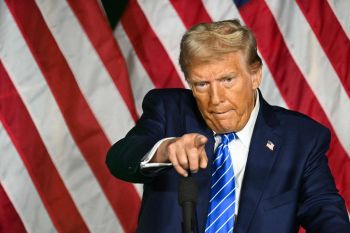
In the recent U.S. presidential election, former President Trump succeeded in securing re-election, signaling a further strengthening of America's America First policy. With the future of key Biden administration policies such as the Inflation Reduction Act (IRA) becoming uncertain, experts are increasingly concerned about the global trade environment.
The Korea Economic Association (KEA) held a roundtable discussion on the 11th, inviting former chief trade negotiators to explore the outlook for trade policies under the new Trump administration and to seek strategic responses from the Korean business community. All participants have direct negotiation experience with the U.S. and were involved in responding to major policies during Trump’s first term and the Biden administration.
Ye Han-gu, Senior Research Fellow at the Peterson Institute for International Economics and former Chief Trade Negotiator (2021?2022), delivered the keynote presentation via video link from the U.S., vividly conveying local reactions to the election results. He forecasted, "Contrary to initial expectations, President Trump brought a red wave and won decisively, so the economic and trade agenda of the second administration is expected to be pursued strongly and swiftly within the first 100 days of the inauguration."
Regarding future policy directions, he stated, "The second Trump administration is expected to drive forward its vision under three main goals: reducing the trade deficit, revitalizing U.S. manufacturing, and securing an advantage in U.S.-China hegemonic competition, using trade policies such as tariffs as key tools. We must operate a nimble public-private crisis response system in preparation." Drawing on his experience as U.S. Commercial Attach? during Trump’s first term, directly involved in the Korea-U.S. FTA renegotiations and Section 232 steel tariffs, he added, "Compared to eight years ago, Korean companies’ status in investment and other areas has risen, so the crisis can certainly be turned into an opportunity."
Following the keynote, a panel discussion moderated by Chung Chul, President of the Korea Economic Research Institute, covered various topics including ▲ utilization and future of the Korea-U.S. FTA ▲ possibility of universal tariffs ▲ trade policy issues such as the IRA and the CHIPS Act ▲ and foreign policy including U.S.-China relations, discussing the new U.S. administration’s policy directions and implications for Korean companies.
Kim Jong-hoon, former lawmaker and Chief Trade Negotiator (2007?2011), who served as the lead negotiator in the 2006 Korea-U.S. FTA talks, predicted that "both the height of borders and market barriers will increase" under Trump’s second term. Regarding the introduction of universal tariffs and the possibility of renegotiating the Korea-U.S. FTA, he said, "Since the U.S. has FTAs with Korea and several other countries, scrapping or fully revising existing FTAs through universal tariffs would not be an easy choice for the U.S., considering the overall impact on foreign relations and the U.S. economy. Nonetheless, if renegotiations occur, it is important that the interests of both sides are balanced."
Park Tae-ho, Director of the International Trade Research Institute at the law firm Bae, Kim & Lee and former Chief Trade Negotiator (2011?2013), commented on the new administration’s trade policy, stating, "If universal tariffs are actually applied to Korea, it should be made clear that this violates the principle of mutual tariff elimination under the Korea-U.S. FTA." He added, "Since many Republican regions benefit from the IRA, sudden changes such as subsidy cuts are unlikely, and while the CHIPS Act may not see major changes, there is a possibility of reduced subsidy support." Regarding the intense U.S.-China conflict during Trump’s first term, he forecasted, "The second Trump administration will maintain the China containment measures taken by the Biden administration while imposing additional pressure such as tariffs up to 60% on Chinese imports. However, the possibility of attempting a major compromise with China, as seen in the latter part of Trump’s first term, cannot be ruled out."
Yoo Myung-hee, Professor at Seoul National University Graduate School of International Studies and former Chief Trade Negotiator (2019?2021), shared her experience participating in negotiations during Trump’s first term, explaining, "The Trump administration judged bilateral relations primarily based on trade deficits." She continued, "As the 8th largest trade deficit country, Korea may not be the top priority for the Trump administration, but following countries like China and Mexico, it could become a target. Calm and thorough preparation is necessary."
Specifically, regarding negotiations with Robert Lighthizer, a key figure in Trump’s first-term trade policy, she noted, "At that time, the U.S. government’s characteristics were: ① alliances did not matter, and trade deficits were the main criterion; ② violations of WTO or Korea-U.S. FTA rules were disregarded, and any measures to reduce trade deficits could be introduced; ③ if progress was not made within one or two months after negotiation requests, swift imposition of measures was possible." She added, "For President Trump, tariffs were both a means to resolve trade deficits and leverage for negotiations. If we respond quickly and effectively to unilateral U.S. measures, tariff exemptions or reflection of our demands may be possible. This presents both a challenge and an opportunity for the government negotiation team."
Regarding the future of the WTO under the second Trump administration, she described it as "the greatest crisis in the WTO’s 30-year history," noting, "The WTO system began to shake with Trump’s emergence eight years ago, and there has been little change under the Biden administration over the past four years. With Trump’s return, the administration is expected to pursue trade policies outside the WTO system with even greater conviction." She concluded, "If the WTO does not undergo thorough reform and renewal, we will enter a new era where the rules-based multilateral trading system no longer functions."
© The Asia Business Daily(www.asiae.co.kr). All rights reserved.

















