Scotland City Council Warehouse Door Lock
Turns Out to Be a Bust Created by a Famous Sculptor
Worth Up to 4.5 Billion KRW... Proceeds to Become Public Asset
A statue that was once used as a doorstopper in a Scottish city council has been valued at ?2.5 million (approximately 4.521 billion KRW), attracting attention. On the 10th (local time), the UK Daily Mail reported, "A marble bust stored in the Highland Council warehouse in Scotland will soon be auctioned at Sotheby's, expected to sell for up to ?2.5 million."
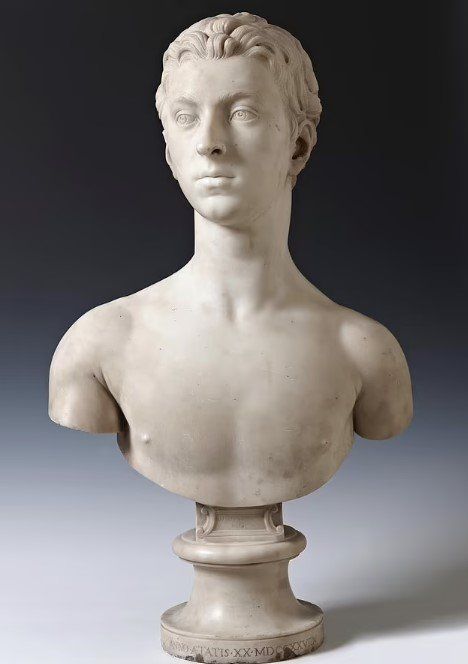
The statue is a bust of Sir John Gordon, an 18th-century Highland Member of Parliament and landowner, created in 1728 by French sculptor Edm? Bouchardon, who made garden sculptures for the Palace of Versailles. The bust was kept for generations by Sir Gordon's descendants at Invergordon Castle and survived a fire at the castle in the 19th century. Later, Invergordon City purchased the bust for ?5 in 1930 to display it in the city hall. However, during administrative district reorganization, the whereabouts of the statue became unknown.
Then, in 1998, the bust was discovered in an industrial complex in Highland City, about 23 km from Invergordon City. At the time, Councilor Maxine Smith, investigating artifacts related to Invergordon City Council, heard that artifacts were stored in a warehouse and went there. When Councilor Smith opened the warehouse door, there was another door inside, but he did not recognize the doorstop supporting the inner door. At that moment, a companion with him discovered the bust, and it was later revealed that the bust was of Sir Gordon.
Subsequently, Invergordon City and Highland City engaged in years of dispute over the ownership of the bust, which has been kept in the Highland City storage after its value was discovered. Recently, both parties agreed to use the proceeds from the bust's sale as public assets, resolving the ownership issue.
According to Sotheby's, the bust of Sir Gordon is estimated to be worth up to ?2.5 million. The initial estimate was ?1.25 million, but it is reported to have nearly doubled since then. The ?5 paid by Invergordon City to purchase the bust in the 1930s is estimated to be about 2 million KRW today, but even so, the value has increased tremendously.
Some argue that instead of auctioning the bust, it should be displayed in a museum as a Scottish artifact. However, Councilor Smith stated, "The interest on the proceeds from the bust sale could reach up to ?125,000 (approximately 226 million KRW) annually," and added, "It should be used to support the development of Invergordon City, which has been neglected compared to other cities."
© The Asia Business Daily(www.asiae.co.kr). All rights reserved.

















