Top 100 Delinquents Owe a Total of 31.5 Billion
Long-Term Nonpayment Difficult to Penalize, Leading to Abuse
The cumulative amount of unpaid fines owed by the person with the largest outstanding fine debt nationwide was found to exceed 1.6 billion KRW.
According to data recently submitted by the National Police Agency to the office of Yoon Gun-young, a member of the Democratic Party of Korea, the total unpaid fines of the top 100 defaulters amounted to 31,493,212,260 KRW. Among them, the person ranked first, Mr. Im, was caught speeding 19,651 times alone. Violations of signals or instructions were recorded 1,236 times, with a total outstanding fine amounting to 1,614,848,900 KRW. Following Mr. Im, the second highest defaulter, Mr. Kim, was caught speeding 12,037 times, with unpaid fines totaling 1,096,673,960 KRW.
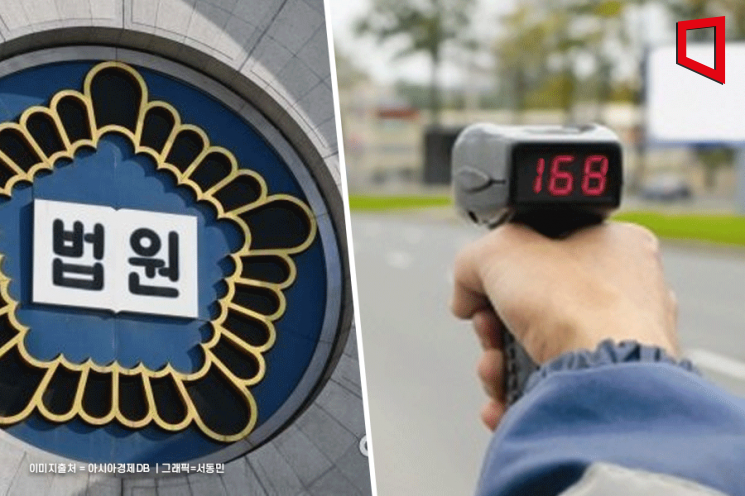
Unlike penalties such as fines, traffic fines are not criminal punishments, and even habitual or high-value defaulters are rarely forcibly detained, nor do these offenses leave a criminal record. Because of this, cases of abuse have been increasing. Previously, it was revealed that Dahye, the daughter of former President Moon Jae-in, habitually failed to pay fines after causing a drunk driving accident, which sparked controversy.
Vehicle seizure due to unpaid fines is also a common issue during confirmation hearings. Previously, Minister of the Interior and Safety Lee Sang-min had his vehicle seized 11 times due to unpaid fines and automobile taxes.
The proportion of traffic fines actually paid among those imposed by the police was only 53.6% as of last year. This contrasts sharply with the payment rate for on-the-spot fines issued after identifying drivers at the scene, which reaches 90%. Failure to pay on-the-spot fines can result in criminal penalties such as license suspension.
As of the end of last year, unpaid traffic fines amounted to 1.04 trillion KRW, with more than half?about 660 billion KRW?being long-term arrears of over five years. When traffic violations are detected by surveillance cameras or reported by others, the driver cannot be identified, so fines are imposed on the vehicle owner. If unpaid, the vehicle’s license plate can be confiscated, or habitual high-value defaulters owing more than 10 million KRW can be detained for a certain period. However, it is rare for small fines to accumulate to over 10 million KRW, and the police lack sufficient manpower to locate vehicles and confiscate license plates individually.
© The Asia Business Daily(www.asiae.co.kr). All rights reserved.
![Clutching a Stolen Dior Bag, Saying "I Hate Being Poor but Real"... The Grotesque Con of a "Human Knockoff" [Slate]](https://cwcontent.asiae.co.kr/asiaresize/183/2026021902243444107_1771435474.jpg)











