[US Election 2024]
As former President Donald Trump, the Republican candidate, was confirmed as the owner of the White House for the next four years, congratulatory messages poured in from around the world. However, the underlying intentions behind showcasing their relations with the U.S. vary. Immediate uncertainties over support for Ukraine and Middle East diplomatic policies have revealed divisions in Europe and confusion in the Middle East. Even China, which is bracing for a large-scale trade war, finds it difficult to fully celebrate. Observers predict that Trump's return to the White House, emphasizing a stronger 'America First' policy, will once again shake the world.
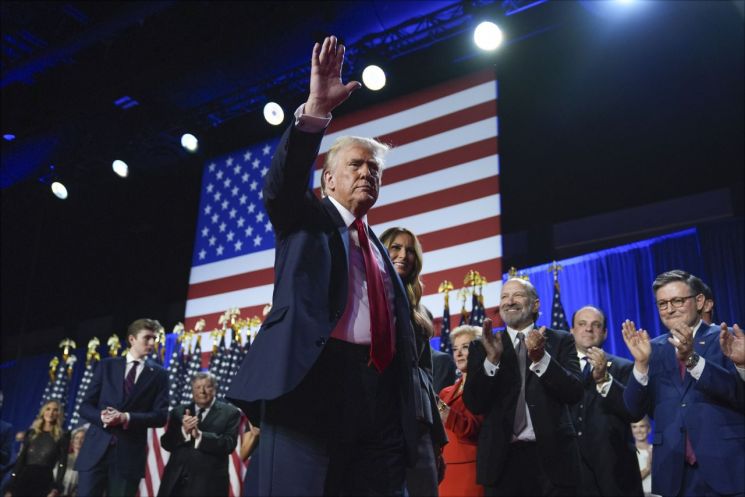
Congratulatory Calls and Statements Pour in for the Next U.S. President
According to local media including CNN, Chinese President Xi Jinping called President-elect Trump on the 6th (local time) to personally congratulate him on his election victory. This call took place as leaders from various countries tried to contact President-elect Trump through multiple official and unofficial channels. Prior to this, Israeli Prime Minister Benjamin Netanyahu and French President Emmanuel Macron also had official calls with President-elect Trump. Notably, the Israeli Prime Minister's Office and the French ?lys?e Palace highlighted that these leaders were among the first world leaders to call President-elect Trump after the election results were confirmed. Both leaders had shown a relative 'bromance' with former President Trump during his first administration.
Among European Union (EU) member states, far-right political leaders who have shown a tailored rapport with former President Trump also expressed delight. Italian Prime Minister Giorgia Meloni emphasized, "Italy and the United States are an unshakable alliance," while Hungarian Prime Minister Viktor Orb?n called it "the greatest comeback in U.S. political history." Even British Prime Minister Keir Starmer, whose Foreign Secretary in the past had reportedly insulted former President Trump as a 'sociopath,' issued a statement congratulating him on his "historic victory" and emphasizing the "closest alliance" between the two countries. Starmer, a member of the Labour Party, had shown efforts to build relations by dining with former President Trump during his visit to New York last September.
President Yoon Suk-yeol also spoke with President-elect Trump for about 12 minutes, sincerely congratulating him on his great victory and discussing trilateral cooperation among South Korea, the U.S., and Japan, the U.S.-South Korea alliance, and the situation in Ukraine regarding North Korea. Japanese Prime Minister Shigeru Ishiba also stressed the importance of meeting early to elevate U.S.-Japan relations to a higher level. Brazilian left-wing President Luiz In?cio Lula da Silva, who had supported Democratic candidate Vice President Kamala Harris until a few days ago, congratulated former President Trump on his X (formerly Twitter) account, stating, "Democracy must always be respected by the voice of the people." CNN reported, citing sources, that world leaders are congratulating Trump and that President-elect Trump and his close aides are closely monitoring who contacts them and when.
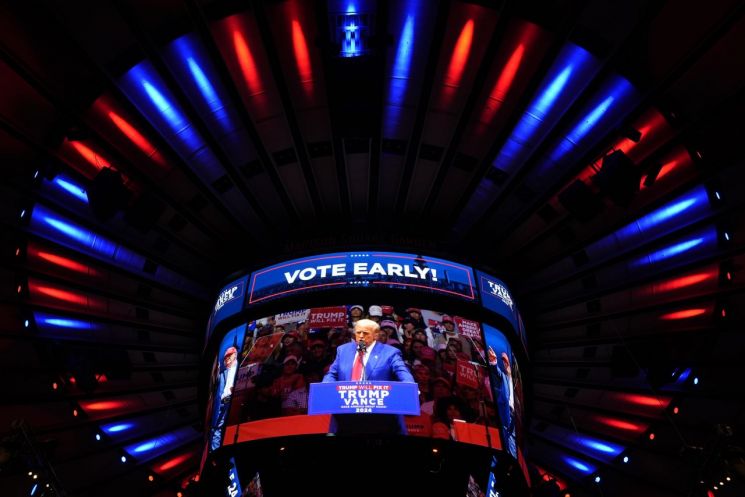
Divided Europe, Anxious Ukraine, and Confused Middle East
Although world leaders are showcasing bilateral relations along with congratulatory messages, analyses suggest their true feelings are uneasy. The Associated Press (AP) stated, "Trump's first term insulted and alienated America's long-standing allies," and predicted that "he will shake the world once again." Former President Trump had already announced a large-scale tariff war during his campaign. He is poised to once again wield the tariff card that unsettled not only China, which was defined as a 'strategic competitor' during his tenure, but also the long-standing Atlantic alliance with Europe.
Moreover, within the EU, there are differences in positions between major leaders and President-elect Trump on key issues such as support for Ukraine, NATO burden-sharing, and climate change. Leslie Vinjamuri, head of the Chatham House think tank, said, "Europeans' existential concerns are about what will happen to Ukraine, what will happen to European security, and what will happen to the U.S. NATO defense commitments," questioning, "Will the U.S. be there for Europe?"
President Macron, who had sought to strengthen relations during the first administration, emphasized the importance of the EU's role in the call and urged cooperation on these issues. Considering President-elect Trump's skepticism toward the Atlantic alliance, Macron has advocated for 'self-reliance,' strengthening sovereignty and defense. AP noted, "NATO is tense and Ukraine is anxious," highlighting "deep divisions" as some European leaders celebrated more enthusiastically. Ukrainian President Volodymyr Zelensky, whose country faces the immediate threat of losing support, welcomed President-elect Trump's 'peace through strength' approach but emphasized principles that could bring a fairer peace closer to Ukraine.
The Middle East is even more chaotic. While Prime Minister Netanyahu immediately welcomed the result, Hamas in Palestine, which is at war with Israel, and Hezbollah in Lebanon indicated their intention to continue fighting. This situation is also unwelcome for Iran, the key force behind these groups and a core of the 'axis of resistance.' During his first term in office in 2018, President-elect Trump accepted Israel's claim that Jerusalem is its capital and moved the U.S. embassy from Tel Aviv to Jerusalem. He also unilaterally withdrew from the Iran nuclear deal (JCPOA - Joint Comprehensive Plan of Action) after three years and imposed heavy economic sanctions on Iran.
Accordingly, the second Trump administration is expected to strengthen cooperation with Israel and adopt a tougher stance on Iran. The ongoing Gaza Strip war lasting over a year and the war phase with Lebanon's Hezbollah may see the next U.S. administration providing even more robust support to Israel.
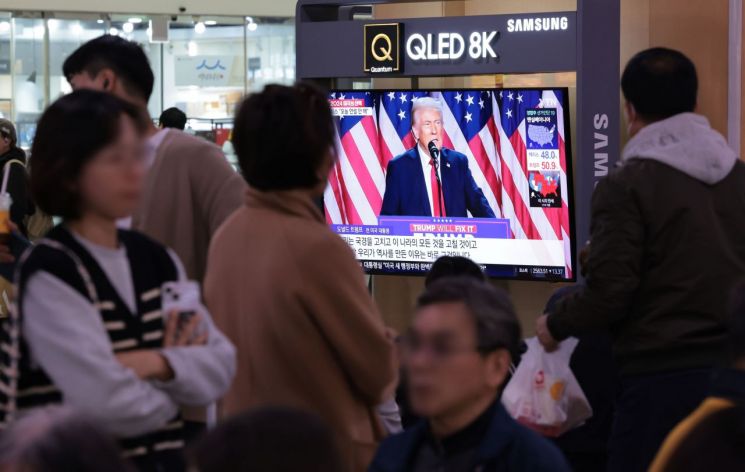
Concerns Over the Impact of Protectionism Worldwide
Additionally, tariff-induced trade wars and cross-strait tensions over Taiwan are cited as factors unsettling countries worldwide. Dawei, director of the International Security Strategy Center at Tsinghua University in Beijing, diagnosed the situation as "more challenges than opportunities." Philip O'Brien, a professor at the University of St Andrews, pointed out that U.S. allies in the Indo-Pacific region such as Japan, South Korea, Taiwan, and Australia "can no longer expect the U.S. to be a reliable partner on defense issues."
North and South American countries are also not free from threats of tariffs stemming from protectionist trade policies. Mexico, which has emerged as a base for evading U.S.-imposed tariffs, has already faced threats from President-elect Trump regarding renegotiation of the U.S.-Mexico-Canada Agreement (USMCA) and large-scale tariff impositions upon his inauguration. However, Mexican President Claudia Sheinbaum acknowledged these facts but reassured her people, saying, "There is no reason to worry." Canadian Prime Minister Justin Trudeau, who had previously been criticized by President-elect Trump as "weak" and "dishonest," wrote on X, "I believe we will work together for more opportunities, prosperity, and security for both countries."
AP reported that "neighboring countries affected by protectionism during Trump's first term are preparing for uncertainty." The outlet also noted that no congratulatory message has yet come from Russian President Vladimir Putin, mentioning that his spokesperson Dmitry Peskov described bilateral relations as "at their lowest point in history."
© The Asia Business Daily(www.asiae.co.kr). All rights reserved.