Three Consecutive Years of Tax Revenue Deficit... Deepening 'Economic Crisis and Public Hardship'
"Overestimated Next Year's Tax Revenue, Reassessment Needed" Urged
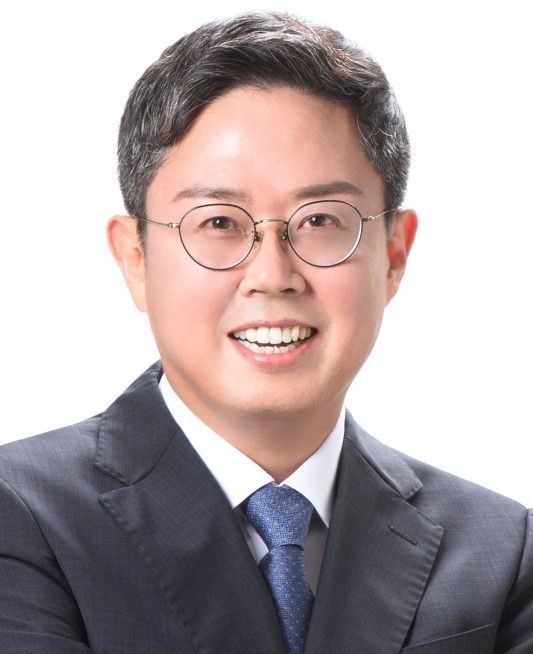
Democratic Party of Korea lawmaker Ando-geol (Gwangju Dongnam-eul) criticized the next year's budget proposal at the full meeting of the National Assembly's Budget and Accounts Committee held on the 6th, calling it a '4-give-up budget' that has abandoned the government's role in fiscal management. He stated that it is a budget that gives up on all four aspects: ▲economic response ▲achieving target tax revenue ▲compliance with fiscal rules ▲economic, livelihood, and regional revitalization through national finances.
Lawmaker An pointed out problems in detail from the perspectives of expenditure, revenue, fiscal soundness, and resource allocation. First, he noted that next year's budget is a contractionary budget that does not align with the economic trend.
He said, “Despite concerns about an economic downturn next year and the demand for expansionary fiscal policy, the government has prepared a contractionary budget with an expenditure growth rate (3.2%) lower than the nominal growth rate (4.5%), which is countercyclical.”
He analyzed that the background of the contractionary budget is due to 'fiscal soundness.' In a situation where finances are insufficient due to tax cuts for the wealthy, and with the fiscal rule (managed fiscal balance within 3%) being violated for two consecutive years, the government set the expenditure growth rate for next year's budget at 3.2% to prevent further violations. According to this figure, the managed fiscal balance will barely remain at 2.9%.
Lawmaker An forecasted, “However, if there is a tax revenue shortfall next year as well, the managed fiscal balance is expected to exceed 3% for three consecutive years.”
He also expressed concern about the possibility of a 'tax revenue shortfall' for three consecutive years.
He diagnosed, “The revised estimate of this year's tax revenue shortfall is already 29.6 trillion won, and considering this, there are concerns that next year's revenue may have been overestimated.” He added, “The Budget Office also forecasts a 3.9 trillion won tax revenue shortfall next year, but the projections for corporate tax, capital gains tax, value-added tax, customs duties, and fuel tax have high uncertainty.” He continued, “A tax revenue shortfall of 8 to 10 trillion won could occur,” and urged, “To reduce errors in tax revenue estimation, please re-estimate next year's tax revenue by November and report it to the National Assembly.”
He further stated, “The problem is the economic hardship and livelihood difficulties caused by contractionary fiscal policy. The discretionary expenditure growth rate is only 0.8%, greatly reducing the room for budget operation.” He added, “When finances are insufficient, spending in economic and livelihood sectors should be prioritized, but the Yoon Seok-yeol administration has increased budgets for defense and diplomacy while cutting regional economic budgets, which is likely to deal a direct blow to domestic demand stimulation and regional economic revitalization.”
Meanwhile, Lawmaker An said, “Given the difficult state of our economy, the public will not understand the increase in overseas aid projects.” He added, “While the regional love gift certificates that help self-employed people are completely cut, the government is increasing budgets for weapons projects and overseas aid. Where else is there a government like this? I will closely scrutinize this part during the Budget Committee review process.”
© The Asia Business Daily(www.asiae.co.kr). All rights reserved.

















