Electric Vehicle, Battery, and Steel Industries Concerned... Aviation Industry 'Rejoices'
Hyundai Motor Revises US Strategy... Hybrid Mixed Production
Aviation Industry Anticipates Resolution of Russia-Ukraine Geopolitical Risks
Battery AMPC Abolishment in Focus with 2 Trillion Won This Year
As the likelihood of former President Donald Trump winning the U.S. presidential election increases, significant impacts are expected on domestic industries. In particular, the automobile and battery sectors, which are sensitive in U.S. trade, have been engulfed in concerns. Since Trump advocates for the repeal of eco-friendly policies, business strategies in the U.S. market?where a substantial portion of sales and investments are concentrated?are expected to face setbacks. In the short term, the Inflation Reduction Act (IRA), a flagship policy of the Biden administration, is likely to be repealed or scaled back, causing a setback in electric vehicle production and exports. Indirect damage is also feared in the steel sector due to the strengthening of protectionist trade policies.
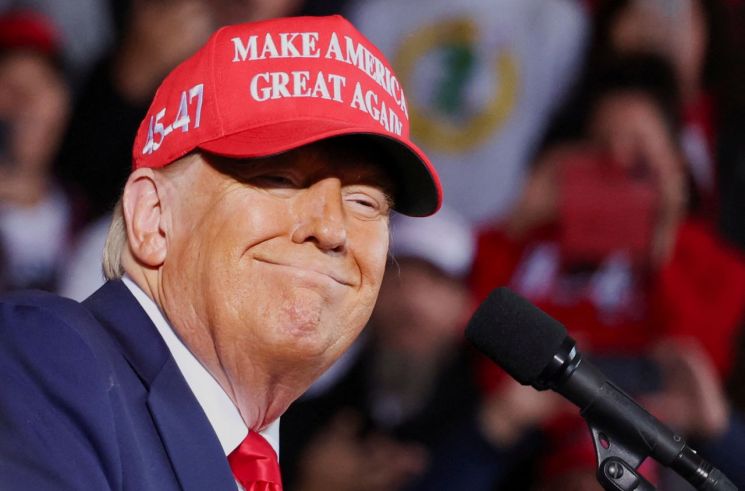
◆Hyundai Motor's U.S. Strategy Revision Inevitable=Looking at the automobile industry-related pledges made by Trump, he mentioned repealing the electric vehicle mandate and the IRA, and actively reclaiming unspent funds from related budgets. He also announced a strong anti-China policy, planning to impose a high tariff of 60% on Chinese imports and a general tariff of 10-20% on all imports.
The automobile industry expects the electric vehicle market to shrink under a Trump administration, while the share of internal combustion engine and hybrid markets is expected to expand. With additional tariffs on imported cars increasing, production and investment within the U.S. are also expected to rise. Hyundai Motor has invested over $12 billion (approximately 16 trillion KRW) to establish a dedicated electric vehicle plant (HMGMA) in the U.S., which began operations in October. Hyundai plans to respond to changes in U.S. policy by strengthening mixed production at HMGMA.
Yoon Tae-sik, Hyundai Motor's IR team leader, said, "Although it was built as a dedicated electric vehicle plant, production can be switched to hybrids (HEV) where there is market demand," adding, "We will revise our strategy and respond by focusing on models that consumers want."
There is also an expectation of indirect benefits. This is because the Trump administration is likely to strengthen its stance against China. However, the increase in U.S. trade barriers also means that additional tariff hikes could occur at any time. To mitigate tariff increase risks, the industry points out the need to form alliances with countries such as Japan and Germany, which are running surpluses in the U.S. automobile market, to block further U.S. tariff impositions.
The aviation industry is expected to benefit from Trump’s presidency. There is hope for the lifting of U.S. sanctions against Russia. This expectation arises because Trump, skeptical of support for Ukraine, is anticipated to pressure for an "early end" to the conflict. If the war ends and sanctions are lifted, Russian air routes could reopen. This would reduce flight times and fuel costs, potentially improving airline profitability.
Uncertainty in U.S.-China relations is also a positive factor for the aviation industry. Due to conflicts between the two countries, direct flights between the U.S. and China have sharply decreased, increasing passengers transiting through South Korea and benefiting domestic airlines. Under a second Trump term, the plan announced by the Biden administration to increase direct flight routes for Chinese airlines to the U.S. is likely to be withdrawn.
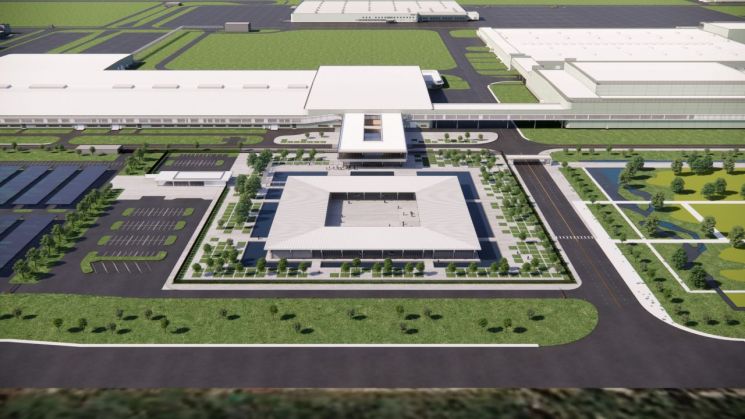 Aerial view of Hyundai Motor Group's dedicated electric vehicle plant in the United States (HMGMA). Provided by Hyundai Motor Company.
◆Close Watch on Battery AMPC Repeal, Worth 2 Trillion KRW This Year Alone=The battery industry fears falling into long-term demand slumps beyond the current "chasm" (temporary demand downturn). Furthermore, the repeal or adjustment of the AMPC (Advanced Manufacturing Production Tax Credit) is considered inevitable.
Domestic battery companies, including LG Energy Solution, have been able to endure this year thanks to the Inflation Reduction Act (IRA). Without the multi-trillion won tax credit benefits from the U.S. government, they would have faced accounting losses. Up to the third quarter, LG Energy Solution received 1.1027 trillion KRW, and SK On received 211.1 billion KRW in refunds. If former President Trump alters the IRA after taking office, battery companies will inevitably be hit.
However, some believe that the IRA will not be immediately cut. SK On recently stated in its earnings report, "Even if Trump is re-elected, a full repeal of the IRA will be difficult," noting that investments driven by the IRA are concentrated in Republican-led states and that 18 Republican House members and the Speaker have expressed opposition to repealing the IRA.
The steel industry also expects further contraction in exports to the U.S. due to intensified protectionism. Lee Jae-yoon, a researcher at the Korea Institute for Industrial Economics & Trade, said, "In 2018, during President Trump's administration, the U.S. imposed general tariffs of 25% on steel and 10% on aluminum imports under Section 232 of the Trade Expansion Act. The domestic steel industry is subject to quotas (2.63 million tons annually) instead of tariffs, but there is a high possibility of quota reductions through renegotiations of Section 232." He added that as the U.S. tightens import regulations on low-priced Chinese steel products, a large volume of Chinese steel is expected to flood European and Asian markets outside the U.S., intensifying sales competition.
© The Asia Business Daily(www.asiae.co.kr). All rights reserved.


















