19 Billion for TK Special City Launch
Fire Department Meal Cost Jumps to 7,425 Won
Daegu City has prepared a 2025 budget totaling 10.9247 trillion KRW, an increase of 3.2% (337.5 billion KRW) compared to the previous year, and submitted it to the Daegu City Council on the 6th.
The total budget size is 10.9247 trillion KRW (an increase of 337.5 billion KRW, 3.2% compared to the previous year), of which the general account is 8.7695 trillion KRW (an increase of 424.4 billion KRW, 5.1% compared to the previous year), and the special account is 2.1552 trillion KRW (a decrease of 86.9 billion KRW, -3.9% compared to the previous year).
Despite difficult fiscal conditions due to tax revenue shortages, Daegu City is the only city among nationwide metropolitan cities and provinces to maintain a sound fiscal policy without issuing new local bonds for three consecutive years.
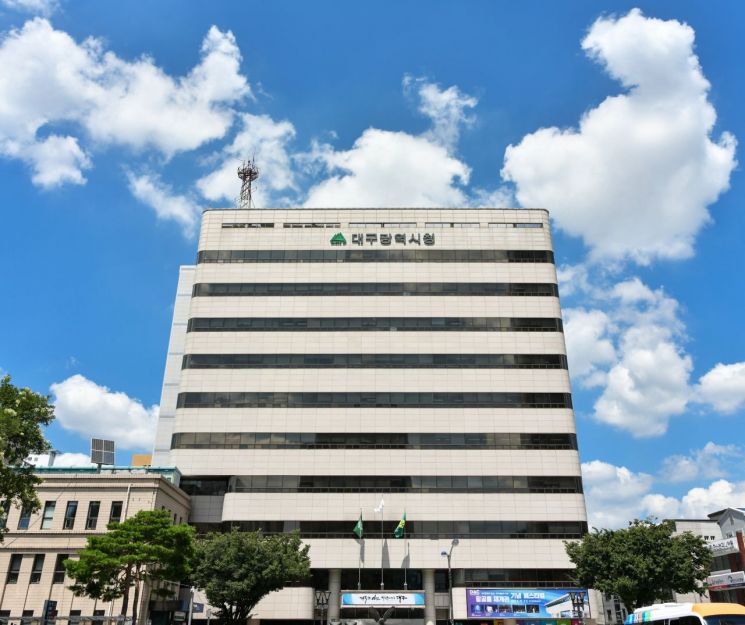
This strategy aims to minimize the burden on future generations by securing fiscal soundness while thoroughly promoting the completion of ‘Daegu Innovation 100+1’ and welfare for low-income citizens, reflecting Daegu City's responsible fiscal management and strategy to enhance growth potential.
Although the global economy's high inflation and high interest rate trends have eased in the second half of this year and the domestic economy is recovering centered on exports, Daegu City expects local tax revenue to decline for the third consecutive year due to a sharp drop in acquisition tax income caused by a decrease in the supply of apartment move-ins next year (a decrease of 94.4 billion KRW compared to the previous year).
Despite these difficult fiscal conditions, Daegu City has maximized the efficiency of fiscal management by strategically allocating resources according to strict priorities to ensure a virtuous cycle of growth and distribution without issuing local bonds.
Through this, Daegu plans to thoroughly promote the ‘Daegu Innovation 100+1’ and strengthen welfare for low-income citizens, which will be the driving force for prosperity over the next 50 years.
The three main principles for the 2025 budget formulation are, first, to prioritize fiscal investment in completing ‘Daegu Innovation 100+1.’ To achieve a new leap for Daegu’s next 50 years, 645.5 billion KRW has been allocated to complete the innovation tasks of ‘Daegu Innovation 100+1,’ including establishing a foundation for future industrial innovation such as Daegu-Gyeongbuk integration, new airport construction, and the National Robot Test Field; improving citizens’ lives through welfare innovation such as veterans’ honor and senior transportation welfare; spatial innovation from waterfront to downtown; and global innovation to raise international status such as the Daegu Marathon.
Notable allocations include 500 million KRW for the Daegu-Gyeongbuk Integration Special City Comprehensive Development Plan research, 5 billion KRW for preliminary surveys for the military airport relocation site, 15 billion KRW for the National Robot Test Field, 2.1 billion KRW for establishing a regional digital innovation hub, 14.2 billion KRW for veterans’ honor allowances, 31.1 billion KRW for loss compensation for free senior bus rides, 6.6 billion KRW for the Sincheon Proposal water park, 11.2 billion KRW for activating the Diark cultural tourism project, 102.6 billion KRW for supporting regional innovation-centered universities (RISE), 2.2 billion KRW for the Daegu Marathon, and 1.4 billion KRW for the Chimaek Festival.
Second, to strengthen welfare for low-income citizens and eliminate welfare blind spots, Daegu City has allocated a total of 5.6116 trillion KRW to expand investments for livelihood support for vulnerable groups, infant care, senior employment, strengthening essential local medical functions, and alleviating housing cost burdens for victims of rental fraud and youth, despite difficult fiscal conditions.
Third, Daegu City has drastically reduced habitual and inefficient projects. By carefully analyzing the urgency and effectiveness of projects, priorities were reset, and habitual and inefficient projects were cut back, implementing a rigorous expenditure restructuring. This has maintained fiscal soundness while reinvesting resources necessary for core projects.
Key investments in the 2025 budget include 22.4 billion KRW allocated to build the foundation for core projects leading Daegu’s next 50 years, such as preparing for Daegu-Gyeongbuk integration and constructing the Daegu-Gyeongbuk New Airport. This includes 500 million KRW for the Special City Comprehensive Development Plan research for the successful launch of the ‘Daegu-Gyeongbuk Special City,’ 400 million KRW for organizational diagnosis in preparation for integration, and 1 billion KRW to foster public consensus on Daegu-Gyeongbuk integration.
To promote the timely opening of the Daegu-Gyeongbuk New Airport by 2030, 5 billion KRW has been allocated for preliminary surveys on the military airport relocation site and 500 million KRW for the relocation of the Daegu military airport US facilities. Additionally, 3.2 billion KRW has been allocated to connect the disconnected 3rd ring road on the returned Camp Walker US military base site, creating new momentum for urban development.
To secure a definite future food source through restructuring five future new industries, create a business-friendly city, and strengthen regional economic competitiveness, 480.9 billion KRW will be invested. For strengthening the robot industry’s competitiveness, 15 billion KRW has been allocated for land acquisition necessary for the National Robot Test Field groundbreaking, and 1.5 billion KRW for the Future Innovation Technology Expo (FIX 2025), which demonstrated the growth potential of Daegu’s future new industries through its successful hosting this year.
Budgets for fostering future new industries include 2.1 billion KRW for establishing the Suseong Alpha City digital innovation hub, 2.5 billion KRW for commercializing AI-based wireless power transfer convergence technology, 600 million KRW for supporting semiconductor-specialized universities, 500 million KRW for building the UAM industry foundation, 1 billion KRW for constructing the powerful ABB demonstration factory to introduce ABB technology to local manufacturing sites, and 300 million KRW for ABB testbed demonstration support projects such as voice recognition kiosks.
To attract domestic and foreign corporate investments and revitalize the regional economy, 1 billion KRW has been allocated for supporting local venture startups, 3.2 billion KRW for growth-driving projects for excellent companies such as star companies and powerful enterprises, 43.8 billion KRW for subsidies to attract domestic and foreign corporate investments, and 300 million KRW for the one-stop corporate support expo, the nation’s only comprehensive corporate support fair.
To enhance citizens’ living environment and urban dignity, 1.0678 trillion KRW will be invested to maximize urban competitiveness from waterfront to downtown. This includes 6.4 billion KRW for creating a premium river environment along the Kumho River near Dongchon Amusement Park, 11.2 billion KRW for the Diark cultural tourism activation project to install a landmark tourist pedestrian bridge, and 1.3 billion KRW for operating the Kumho River water leisure facility scheduled to open in July next year.
In Sincheon, 6.6 billion KRW has been allocated for creating the Sincheon Proposal water park in the city center and 1.2 billion KRW for installing streetlights to enhance nighttime safety.
To revitalize the stagnant heart of Daegu, 600 million KRW has been allocated for the new construction of the old Central Police Station and the creation of a plaza and alleyways as part of the Dongsung-ro Renaissance project, 800 million KRW for supporting the Dongsung-ro commercial district revitalization project, 300 million KRW for establishing the Dongsung-ro Renaissance foundation, and 200 million KRW for the youth busking activation project.
For urban scale expansion and balanced development, budgets have been allocated for infrastructure expansion including 20.4 billion KRW for the construction of subway line 4, 24 billion KRW for the construction of the Dasan-Waegwan metropolitan road, 31 billion KRW for the construction of the Joya-Dongmyeong metropolitan road, and 30 billion KRW for the Sanghwa-ro grade separation project.
To enhance Daegu citizens’ pride and strengthen the city’s international status, 294.7 billion KRW will be invested in culture and tourism.
The Daegu Marathon has been allocated 2.2 billion KRW to advance to one of the world’s seven major marathons, 1 billion KRW for successful preparations for the 2026 World Masters Athletics Championships, 1 billion KRW for facility improvement projects to upgrade the Daegu International Shooting Range to international competition standards, and 100 million KRW for the Daegu FC-Longcheng FC friendly soccer match commemorating the 10th anniversary of the sister city relationship with Chengdu, China.
The Daegu Opera House, the nation’s only opera-dedicated theater entering its 21st year since opening, will invest a total of 19.7 billion KRW, including 1.1 billion KRW for design fees to remodel aging stage facilities and other overall facilities, aiming for reopening in October 2027.
Additionally, 5.8 billion KRW will be provided to support the operation of the Daegu Kansong Art Museum, which became a new cultural landmark in Daegu with 70,000 visitors within a month of its opening last September, and 1.4 billion KRW for the Chimaek Festival, which has grown into Daegu’s representative global festival, to further enhance the quality of Daegu’s culture and festivals.
To protect low-income citizens and vulnerable groups and maintain citizens’ daily lives through closely related policies, 5.3002 trillion KRW will be invested in welfare.
For integrated free transportation support for seniors, 31.1 billion KRW has been allocated for loss compensation for free senior bus rides, and 1.3 billion KRW has been reflected to expand demand-responsive transport (DRT) from 3 to 5 locations.
To honor and improve welfare for veterans, the veterans’ honor allowance has been significantly increased from 130,000 KRW to 200,000 KRW, with 14.2 billion KRW allocated, and 700 million KRW has been allocated for relocation and livelihood support for victims of rental fraud.
For emergency medical institution support due to emergency medical system operation at medical sites, 600 million KRW has been allocated; Daegu Medical Center will receive 16.6 billion KRW for building an integrated outpatient clinic center, 2.5 billion KRW for innovation support projects, and 5 billion KRW for reinforcing 20 specialized personnel to strengthen public medical capacity and prevent medical service gaps.
For infertility treatment support, the largest nationwide with 1.7 million KRW per session, 5.3 billion KRW has been allocated; 2.4 billion KRW for education vouchers for children from low-income families (200,000 KRW per person); and 3.5 billion KRW to expand the agricultural food voucher pilot project, which was conducted in Dalseong-gun this year, to all nine districts and counties.
For future talent development, 102.6 billion KRW has been allocated for the full implementation of the Regional Innovation-centered University Support System (RISE), and 1 billion KRW for training IB education experts to successfully pilot the education development special zone.
In the safety sector, which serves as a reliable support for citizens, 494.7 billion KRW will be invested.
To improve the treatment of firefighters working on the front lines of disaster sites, 1.1 billion KRW has been invested to raise meal support costs to the highest nationwide level of 7,425 KRW. The Daegu City meal unit cost (per meal) jumped from 4,110 KRW in 2024 to 7,425 KRW in 2025, while the average unit cost for metropolitan cities was 5,656 KRW.
For expanding firefighting infrastructure, 5.8 billion KRW has been allocated for relocating the 119 comprehensive situation room of the Fire Safety Headquarters, which moved to an independent building for the first time in 26 years, and 6.6 billion KRW for relocating and rebuilding the East Fire Station and constructing the Daegu Fire School, scheduled for completion in June 2025.
For citizen safety, 900 million KRW has been allocated for citizen safety insurance covering 17 disaster safety accidents including natural disasters, explosions, fires, and public transportation accidents; 16.2 billion KRW for disaster risk area maintenance; and 10 billion KRW for comprehensive flood and wind disaster living area maintenance.
Daegu Mayor Hong Joon-pyo stated regarding this budget proposal, “To avoid burdening future generations, we have strictly adhered to the principle of ‘fiscal management without issuing local bonds’ for three consecutive years and prepared a responsible budget.”
Mayor Hong emphasized, “We have further enhanced the completeness of the core projects of ‘Daegu Innovation 100+1,’ the growth engine for Daegu’s prosperity over the next 50 years, and expanded the welfare budget to embrace vulnerable groups. When the ‘Daegu-Gyeongbuk Special City,’ which will be reorganized into a two-major-special-city system together with Seoul Special City, is launched, it will secure more than 2 trillion KRW annually through new fiscal special provisions such as the tentative metropolitan integration grant, marking a groundbreaking turning point to leap forward as Korea’s second major special city.”
Meanwhile, the 2025 Daegu City budget proposal is scheduled to be finalized on December 12 after deliberation at the 313th regular session of the City Council.
© The Asia Business Daily(www.asiae.co.kr). All rights reserved.
![Clutching a Stolen Dior Bag, Saying "I Hate Being Poor but Real"... The Grotesque Con of a "Human Knockoff" [Slate]](https://cwcontent.asiae.co.kr/asiaresize/183/2026021902243444107_1771435474.jpg)











