Non-Capital Regions Show Relatively Low Financial Supply Compared to Demand
Financial Services Commission Holds 3rd Financial Industry Competitiveness Evaluation Committee Meeting
Over the past five years, competition intensity among savings banks, loan companies, and card loans has increased in the personal credit loan market for low-credit borrowers. Among bank SME loans, the credit loan market experienced relatively low competitive pressure, and in non-metropolitan areas, the scale of financial supply from banks, savings banks, and mutual finance was relatively insufficient compared to demand.
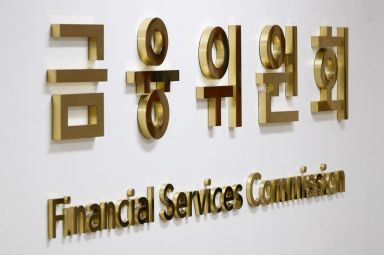
On the 6th, the Financial Services Commission announced that it held the 3rd Financial Industry Competition Evaluation Committee meeting on the previous day (the 5th) to discuss the evaluation results of competition in the SME loan and personal credit loan markets, as well as the competition status related to regional financial supply. Eleven competition evaluation committee members, including Lee Hang-yong, President of the Korea Institute of Finance, participated in the meeting.
According to the research results by Sujin Lee, Head of the Financial Consumer Research Office, and Hyun-yeol Kim, Research Fellow at the Korea Institute of Finance, since 2021 until the end of last year, rising funding costs due to interest rate hikes led to a narrowing of loan interest rate differences among savings banks, loan companies, and card loans in the low-credit personal credit loan market, resulting in increased competitive pressure. The average interest rate based on loan balances for loan companies decreased from 25.0% at the end of June 2019 to 21.5% at the end of December 2021 and 18.4% at the end of December last year. Savings banks saw a decline from 20.4% to 16.0% and then 15.9% during the same period. Card loans fell from 14.0% to 13.0% and then 12.9%.
In this market, despite the maintenance of a high-interest rate trend since 2021 and the fact that loan companies and savings banks, for which loan interest rates below the legal maximum of 20% per annum were unprofitable, reduced the scale of personal credit loan operations leading to increased market concentration, competition intensified. Typically, an increase in market concentration leads to a relaxation of competition.

The research team viewed the competitive pressure in the SME credit loan market, considering both banks and savings banks over the past five years, as low. In evaluating the competition status related to regional financial supply, the team judged that outside the metropolitan area, financial supply was relatively insufficient compared to financial demand nationwide.
Specifically, among non-metropolitan regions, Daejeon, Chungnam, Chungbuk, and Sejong were identified as areas where financial supply was relatively low compared to their share of national financial demand. To meet the financial demand in these regions, the research team suggested considering measures to activate credit loans by deposit-taking institutions.
Regarding this, the evaluation committee expressed the opinion that, given the characteristics of the evaluation period from 2019 to 2023, which was significantly influenced by external factors such as COVID-19 and interest rate hikes, a long-term evaluation of over 10 years is necessary to examine more in-depth changes in competition.
Additionally, the committee noted that since the SME loan market mainly focuses on secured and guaranteed loans, the SME credit loan market could become a new competitive field within the financial sector. The need for policy support to expand SME credit loans was also raised. Concerning the concentration of financial supply in Seoul and the metropolitan area, the committee suggested further investigation into whether this is due to companies primarily borrowing in Seoul, where their headquarters are located, while using funds in non-metropolitan regions where production facilities are situated.
The Financial Services Commission plans to review whether there are additional supplementary measures related to the promotion of competition activation policies, such as those outlined in the 'Banking Sector Management, Business Practices, and System Improvement Plan' announced in July 2023, based on this evaluation result.
A Financial Services Commission official explained, "Going forward, we plan to accumulate data for functional competition evaluations like this one and analyze the overall structure of the deposit and loan market to utilize it in establishing licensing policies and role definitions for deposit-taking and lending institutions such as regional banks, savings banks, mutual finance, and specialized credit finance companies."
© The Asia Business Daily(www.asiae.co.kr). All rights reserved.
![Clutching a Stolen Dior Bag, Saying "I Hate Being Poor but Real"... The Grotesque Con of a "Human Knockoff" [Slate]](https://cwcontent.asiae.co.kr/asiaresize/183/2026021902243444107_1771435474.jpg)

















