Kim So-young "We Must Move Beyond Unconditional Fear and Trust
and Consider the Future of Virtual Assets to Meet Public Awareness and Expectations"
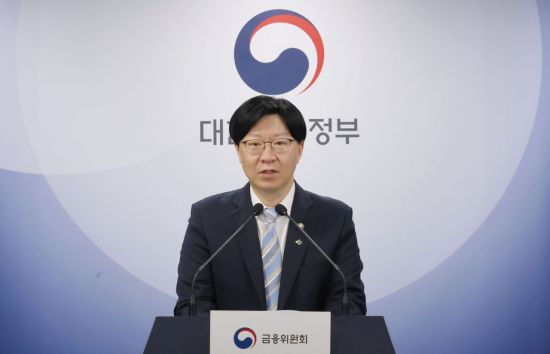
Kim So-young, Vice Chairman of the Financial Services Commission, stated on the 6th, "It is now time to move beyond unconditional fear or belief and consider the future of virtual assets in response to public awareness and expectations."
Kim So-young, who serves as the chairperson of the Virtual Asset Committee, held the first meeting of the 'Virtual Asset Committee' at 2 p.m. at the Government Seoul Office Building, saying, "I hope the members will lead 'responsible innovation' so that new technologies benefit the public and contribute to our economy."
The Virtual Asset Committee was introduced in line with the enforcement of the 'Virtual Asset User Protection Act' in July this year as an advisory body on virtual asset policies under the Financial Services Commission. The committee consists of 15 members, including Kim So-young, Vice Chairman of the Financial Services Commission, the Director-General of Economic Policy at the Ministry of Economy and Finance, the Legal Affairs Officer at the Ministry of Justice, the Information and Communication Policy Officer at the Ministry of Science and ICT, the Deputy Governor of the Financial Supervisory Service, as well as legal professionals, professors, and private experts related to consumer protection and information security.
At the meeting, the main agenda items included the direction for the second phase of legislation concerning the issuance of real-name accounts to corporations, regulations on the entry and business activities of virtual asset service providers, the establishment of self-regulatory organizations, and improvements in virtual asset transaction support.
Issuing real-name accounts to corporations means allowing virtual asset investments. Recently, the use of blockchain and virtual asset technologies has increased, and in Korea, there is a growing demand for various businesses such as issuing non-fungible tokens (NFTs), building mainnets, and virtual wallets. In the United States, the European Union (EU), and Japan, corporate-centered virtual asset ecosystems have also been established. Since the market is showing signs of stabilization after the law's enforcement domestically, there have been calls to consider the changed domestic and international policy environment.
The committee members also discussed the acquisition routes of virtual assets by corporations and the necessity of cashing out. They exchanged opinions on considerations needed when corporations participate in the virtual asset market, such as the possibility of financial market risk transmission and concerns about money laundering risks.
The Virtual Asset Committee plans to broadly discuss future topics including blockchain ecosystem development plans, industrial policy issues such as market monopolies, stablecoins, cross-border virtual asset transactions, and other intergovernmental collaboration tasks. Detailed discussion topics and priorities will be decided through consultations within the Virtual Asset Committee. To support the committee's discussions, a 'Working Group' composed of officials from related ministries and external experts will also be operated.
Meanwhile, based on the discussions held on this day, the Financial Services Commission plans to review policy directions together with related ministries in December.
© The Asia Business Daily(www.asiae.co.kr). All rights reserved.


















