Annual Tax Investment Expected to Reach Tens of Millions of Won
Controversy Over Public Funds Used for Monitoring Heinous Criminals
Child sex offender Jo Doo-soon recently completed his move, and it has been revealed that Ansan City has leased a house opposite Jo Doo-soon's residence. Police officers are stationed permanently in front of Jo Doo-soon's house. This reflects active administrative efforts to resolve public safety concerns. On the 5th, News1 reported that on the 4th, Ansan City signed a monthly rental lease contract for a multi-family house opposite Jo Doo-soon's residence in Wadong, Danwon-gu. It was confirmed that the Ministry of Justice kept the address confidential until just before Jo Doo-soon's move, and the lease contract was secured the day before. It is expected that more than 7 million KRW of Ansan City’s tax funds will be spent on this.
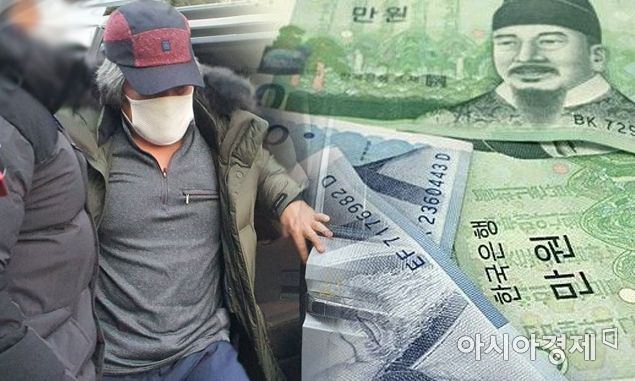 The Ministry of Justice kept the address confidential until just before Jo Doo-soon's release, and it was confirmed that a lease contract was secured the day before. It is expected that more than 7 million won in taxes from Ansan City will be invested in this.
 [Photo by Asia Economy DB]
The city rented the monthly rental room to strengthen surveillance and crime prevention activities and to improve the working conditions of on-site workers. In fact, on-site workers were unable to escape the heat and cold until just before Jo Doo-soon's move, and they could not properly attend to physiological needs. A city official stated, "Until now, physiological needs were addressed at a nearby senior center," adding that this measure was taken to reduce the fatigue of on-site workers caused by climatic conditions and to allow them to meet basic physiological needs.
As of 2022, the monthly rent for the multi-family house opposite Jo Doo-soon's residence was about 600,000 KRW. When electricity and water bills are added, the cost is expected to increase further. Considering the police force that should be deployed for general public safety, the 'Jo Doo-soon surveillance cost' is projected to exceed tens of millions of KRW. When Jo Doo-soon was released in December 2020, there were criticisms about the monthly budget of tens of millions of KRW spent on surveillance costs. At that time, the police set up a post near Jo Doo-soon's residence and installed additional closed-circuit television (CCTV) cameras.
'Korean-style Jessica Law' Still Fails to Pass the National Assembly
Controversy over the use of public funds whenever heinous criminals like Jo Doo-soon move is expected to continue. To reduce such public spending, some argue that a 'Korean-style Jessica Law' should be established. The official name of the 'Korean-style Jessica Law' is the 'Act on Designation of Residence for High-Risk Sex Offenders.' This bill allows the court to issue a 'residence designation order' requiring high-risk sex offenders to reside compulsorily in facilities operated by the government or local governments after their release.
 In January, the Ministry of Justice selected the 'Korean-style Jessica Act' as one of its five core initiatives. In October of the same year, then-Minister of Justice Han Dong-hoon personally held a legislative notice briefing.
 [Photo by Yonhap News]
The law applies to high-risk sex offenders who have committed sexual crimes against children under 13 years old or those who have been sentenced to more than 10 years for three or more sexual offenses. If they wish to leave the designated residence for more than one day, they must obtain permission from the probation office chief. Leaving the residence without justifiable reason can result in imprisonment for up to three years or a fine of up to 30 million KRW.
The Korean-style Jessica Law was inspired by the Jessica Law in the United States. The Jessica Law is named after Jessica Lunsford, a victim of child sexual abuse in Florida in 2005. The law’s core provisions include a minimum sentence of 25 years imprisonment for offenders who commit sexual crimes against children under 12, permanent attachment of tracking devices, and prohibition from residing within 3,000 feet (610 meters) of schools or parks. It is currently enforced in more than 30 states, including Florida.
On the other hand, the Korean-style Jessica Law was discarded with the end of the 21st National Assembly’s term in May this year. Among these developments, in January last year, the Ministry of Justice selected the Korean-style Jessica Law as one of its five key initiatives. In October of the same year, then-Minister of Justice Han Dong-hoon personally held a legislative briefing. Although it passed the Cabinet meeting in January, it ultimately failed to pass the subcommittee of the National Assembly’s Legislation and Judiciary Committee. The reason cited was that it excessively infringed on the constitutional right to 'freedom of residence and movement' guaranteed by Article 14 of the Constitution. However, in the 22nd National Assembly, 11 lawmakers including Kim Young-jin of the Democratic Party of Korea newly proposed a bill with the same name in July. Lawmaker Kim pointed out, "The Ministry of Justice submitted the bill too late during the 21st National Assembly, so no substantial discussion took place," and added, "The state needs to take a more active role to ensure the safety of the people."
© The Asia Business Daily(www.asiae.co.kr). All rights reserved.
![Clutching a Stolen Dior Bag, Saying "I Hate Being Poor but Real"... The Grotesque Con of a "Human Knockoff" [Slate]](https://cwcontent.asiae.co.kr/asiaresize/183/2026021902243444107_1771435474.jpg)

















