Financial Authorities Hold Public Hearing on ELS Measures... Virtually the Final Step
Discussing Total Ban on Bank Sales, Sales at Specific Hub Branches, and Separate Counters in Branches
"Securities Firms Can Sell" VS "Reduction of Consumer Choice"
Vice Chair Kim So-young: "Three Plans to Be Finalized After Gathering Opinions from All Sectors"
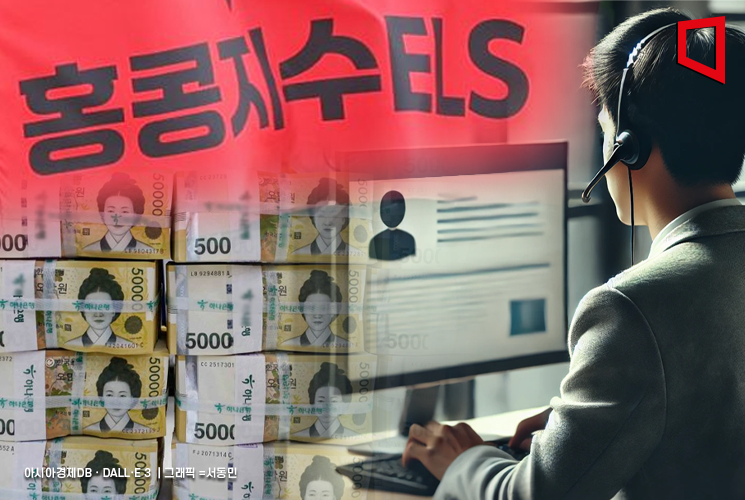
The financial authorities have put three measures on the discussion table to prevent a recurrence of the massive loss incident involving Hong Kong H Index (Hang Seng China Enterprises Index·HSCEI) equity-linked securities (ELS) amounting to 4.6 trillion won: a complete ban on bank sales, operation of designated sales branches, and separation of counters within branches. Since this issue directly conflicts with the values of consumer choice and consumer protection, the financial authorities are expected to enter the final coordination process to enhance the effectiveness of the policy.
On the 5th, the Financial Services Commission (FSC) held a public seminar titled "Measures for ELS Based on the H Index" at the Financial Security Education Center, attended by the Financial Supervisory Service, academia and research institutions, financial sector, and consumers, effectively concluding the public discussion process. A financial authority official said on the 6th, "Based on the proposals presented at the public hearing, we plan to prepare measures related to Hong Kong ELS," adding, "We will review various options, including a complete ban on bank sales and mixed forms, at the regularly held task force (TF) meetings and announce the final plan."
Dr. Lee Jeong-du from the Korea Institute of Finance, who presented at the public hearing, revealed three measures in his presentation titled "Improvement Measures for Financial Consumer Protection Regarding Banks' Sales of Complex Financial Investment Products." Although the Korea Institute of Finance took the lead in the presentation, the financial authorities' direction is believed to be reflected. Dr. Lee first proposed banning banks from selling complex products with complicated structures and principal losses of up to 20%. While sales of ELS tracking major global indices were allowed even after the 2019 derivative-linked fund (DLF) incident, this proposal suggests a complete ban on such sales.
The Korea Federation of Banks expressed concerns about the complete ban on bank sales. Lee In-gyun, head of the federation, said, "A complete ban has side effects on consumer choice and accessibility," adding, "It would be helpful to prepare supplementary measures such as counter separation and sell only to consumers who have completed prior education." Lee Hyo-seop, director of the Korea Capital Market Institute, also mentioned, "It is difficult to find cases overseas where banks are banned from selling high-risk products."
On the other hand, Professor Ahn Dong-hyun of Seoul National University dismissed the idea, saying, "ELS products that close the upside profit and open the downside risk should be sold by securities firms." The argument is that it is inappropriate for banks to sell high-risk products where the upside return is capped at around 6%, but the downside risk can lead to a 100% loss. Professor Shin In-seok of Chung-Ang University said, "Considering the current specific monetary regulation system, banks should not handle ELS products." Jung Ji-yeon, secretary-general of the Korea Consumer Federation, also argued that "there is a difference in consumer perception regarding banks selling high-risk products" and insisted that sales should be suspended for the time being.
The second proposal is to designate regional key branches to sell ELS on a limited basis. This is an idea to establish a so-called Chinese Wall between deposit and savings counters and high-complexity financial investment product sales channels. The key branches must be located in separate buildings, and the sales staff must have a certain level of experience in selling complex products. General bank branches would be divided into deposit and savings-only counters and non-complex product sales counters.
The third proposal is to separate counters within bank branches to sell complex products, based on strengthening internal controls to prevent incomplete sales. Products would be classified into complex, non-complex, and deposit/savings, with complex products sold in separate offices. Non-complex products would also be sold only at dedicated counters. This is an idea to establish a firewall between deposit/savings counters and complex financial investment product sales channels.
Lee Hyo-seop, director of the Korea Capital Market Institute, and Dr. Lee Jeong-du, who presented the proposals, support allowing sales at designated key branches, while the Korea Federation of Banks favors the counter separation approach. Director Lee said, "If bank sales are banned, there could be a shift toward other high-risk product sales," adding, "We should allow sales at key branches by supplementing accountability structures and performance evaluation systems (KPIs)." However, he pointed out that if key branches are mainly established in Seoul and the metropolitan area, regional disparities would arise as an issue.
Dr. Lee Jeong-du proposed allowing sales at key branches while strengthening post-sale sanctions. He said, "It is necessary to allow sales focused on key branches while enhancing supervision," adding, "We can consider banning sales if the system is not complied with through post-sale sanctions."
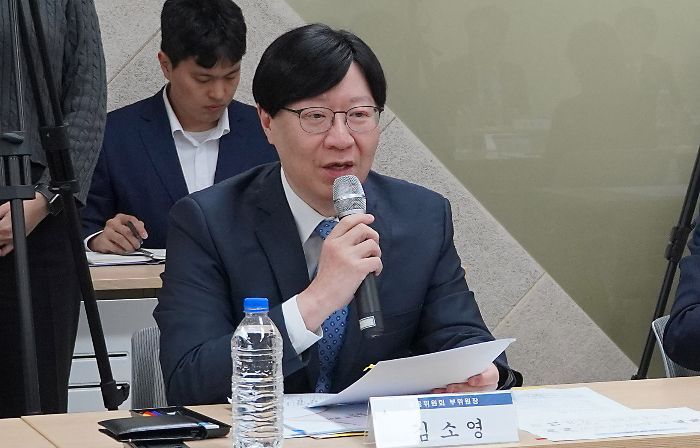
The financial authorities plan to continue discussions in the task force by collecting the proposals presented that day and opinions from various experts. In particular, they plan to improve sales systems and practices to ensure that sales regulations work effectively and establish internal control systems to prevent incomplete sales simultaneously. Kim So-young, vice chairman of the FSC, explained, "The final plan may come out in a modified form based on the three proposals presented at the public hearing," adding, "We will comprehensively review opinions from various experts and those collected through YouTube and reflect them in the final measures."
© The Asia Business Daily(www.asiae.co.kr). All rights reserved.


















