Under the Special Act, the first trial sentencing 4 million won fine for injury in a child protection zone was overturned, and the second trial's acquittal was confirmed.
The Supreme Court has ruled that it was wrong to recognize guilt for injury charges solely based on a medical injury certificate prepared according to the testimony of an elementary school student victim involved in a traffic accident.
According to the legal community on the 5th, the Supreme Court's Second Division (Presiding Justice Kwon Young-jun) dismissed the prosecutor's appeal in the final trial of Kim, who was indicted for injury in a child protection zone under the Act on the Aggravated Punishment of Specific Crimes, and upheld the original verdict acquitting Mr. A.
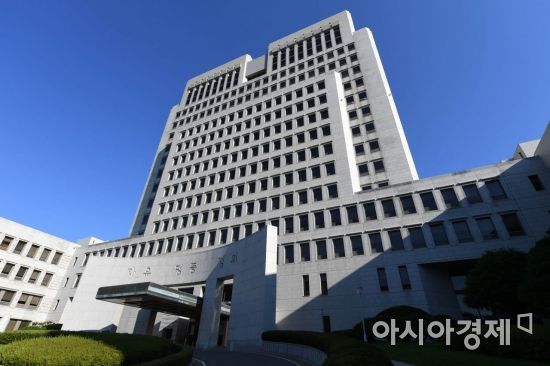
The court stated, "There is no error in the lower court's judgment that did not violate the rules of logic and experience, did not exceed the limits of free evaluation of evidence, or misinterpret the law regarding injury in violation of the Act on the Aggravated Punishment of Specific Crimes (injury in a child protection zone)."
Kim was prosecuted on charges of hitting a 9-year-old elementary school student A with the front bumper of his passenger car while running a red light in a child protection zone crosswalk in Yongsan-gu, Seoul, on the afternoon of December 21, 2022, causing injuries requiring about two weeks of treatment.
Article 5-13 of the Act on the Aggravated Punishment of Specific Crimes (Aggravated Punishment for Death or Injury of a Child in a Child Protection Zone) stipulates that if a driver violates the duty to drive with care for children's safety in a child protection zone and causes the death of a child (under 13 years old), the punishment is life imprisonment or imprisonment for three years or more; if injury is caused, the punishment is imprisonment for one to fifteen years or a fine of 5 million to 30 million won.
In court, Kim claimed that he did not hit A with his vehicle, and even if there was slight contact, it did not cause A's injury. He argued that since it was a minor bump, it was not a situation that would cause injuries affecting daily life.
However, the first trial court rejected Kim's claims and sentenced him to a fine of 4 million won.
The court first cited Supreme Court precedents regarding medical injury certificates.
The Supreme Court previously stated, "A medical injury certificate submitted by the victim of an injury crime generally records the location and extent of the injury, which the doctor determines by using medical expertise based on the victim's testimony about the cause of the injury. Although the injury recorded therein is insufficient as direct evidence proving that the injury was caused by the defendant's criminal act, if the diagnosis date and certificate issuance date are close to the time of injury occurrence, there is no special reason to doubt the credibility of the certificate issuance process, and the injury location and extent match the victim's claimed cause or circumstances of injury, and there is no special circumstance such as the victim being injured by a third party or the doctor issuing a false certificate, then the injury certificate, together with the victim's testimony, becomes strong evidence of the defendant's injury, and its evidentiary value cannot be arbitrarily dismissed without reasonable grounds."
The first trial court premised, "The above principle also applies when a victim receives a medical examination and submits a certificate after a traffic accident."
Based on CCTV footage at the time of the accident, the court pointed out ▲ the victim clearly hitting the defendant's vehicle, with the victim's body shaking though not falling down ▲ the defendant recognizing the collision and immediately stopping to ask the victim "Are you okay?" ▲ the victim complaining of pain in the left waist, neck, and shoulder and visiting an orthopedic clinic for examination ▲ the victim being a 9-year-old child who can be affected by relatively small forces compared to adults, and judged, "Although the victim did not fall down, it is sufficiently recognized that the victim collided with the vehicle driven by the defendant, and the shock the victim received cannot be considered negligible or minor."
Kim also argued that since A did not receive additional treatment after the accident day, it could not be considered a legally meaningful injury, but this was not accepted.
The court stated, "This accident was caused by the victim running into the departing vehicle, and the victim is a small 9-year-old child who can be easily injured by relatively minor impacts. The victim complained of pain in the left waist, neck, and shoulder on the accident day, and the examining doctor estimated a treatment period of about two weeks. The diagnosed sprains and strains involve ligaments, tendons, and muscles experiencing microtears or spasms, which can significantly interfere with daily life. Considering all these comprehensively, even if the victim did not receive additional treatment at the hospital, it cannot be said that this does not constitute an injury."
However, the second trial court's judgment differed. The second trial court overturned the first trial's guilty verdict and acquitted Kim.
The court first cited Supreme Court precedents on the evidentiary value of medical injury certificates, stating, "In criminal cases, a medical injury certificate can be strong evidence proving the defendant's criminal facts together with the victim's testimony. However, the existence of injury and causality must be proven beyond reasonable doubt, so when there are reasons to doubt the objectivity and credibility of the injury certificate, the evidentiary value must be judged very carefully."
It added, "Especially when the injury certificate is issued mainly based on the victim's subjective complaints of pain and medical possibility, the court must carefully examine whether the diagnosis date and certificate issuance date are close to the injury occurrence time, whether there are special reasons to doubt the credibility of the issuance process, whether the injury location and extent match the victim's claimed cause or circumstances, whether the discomfort complained of by the victim can be conclusively attributed to a new cause unrelated to pre-existing physical abnormalities, and the basis on which the doctor issued the certificate. The court must also closely review the timing, motivation, and course of the victim's medical treatment after the injury, and judge the evidentiary value according to logic and experience."
The court further stated, "Injury under the injury crime means damage to the body's integrity or physiological function. In this case, it is difficult to find that the victim's bodily integrity was damaged or physiological function impaired due to the collision with the defendant's vehicle, and the evidence submitted by the prosecution is insufficient to prove that the victim was injured in this traffic accident, nor is there other evidence to recognize this."
As grounds for this judgment, the court pointed out ▲ that the main diagnosis on the injury certificate, "sprain and strain of unspecified parts of the lumbar spine and pelvis," and the secondary diagnosis, "sprain and strain of the shoulder joint," are clinical presumptions rather than final judgments, and the certificate was prepared based on the testimony of A's guardian that the traffic accident caused the injury ▲ the CCTV footage shows A slightly contacting the vehicle's front bumper and below the waist, but according to the doctor's response to a fact inquiry, A complained of pain in the left waist, neck, and shoulder, with the injury area including the upper body above the waist, and at least the shoulder joint injury does not seem directly related to the traffic accident.
Additionally, the court cited ▲ A's father's statement that "A did not particularly complain of pain immediately after the accident but, as a parent, thought it was natural to take an X-ray to check for possible aftereffects," suggesting that the measures were taken from a broad perspective considering possible future sequelae rather than directly reflecting the victim's condition immediately after the accident ▲ the father's testimony that no visible bruising or swelling was observed on A on the accident day ▲ A did not receive injections, medication, or physical therapy after the injury diagnosis, nor revisit the hospital or other medical institutions ▲ the CCTV footage shows A did not fall after contact but turned and walked back to the sidewalk, and A's gait and behavior after the accident showed no limping or touching of the injured area, all as reasons to deny injury recognition.
Finally, the court concluded, "Although the injury certificate states that the victim requires about two weeks of follow-up, the victim did not particularly visit medical institutions and appeared to attend school without absence and live daily life normally after the traffic accident. Even if the victim sustained some injury from the accident, it seems to have healed naturally."
The Supreme Court also found no problem with the second trial court's judgment.
© The Asia Business Daily(www.asiae.co.kr). All rights reserved.
![Clutching a Stolen Dior Bag, Saying "I Hate Being Poor but Real"... The Grotesque Con of a "Human Knockoff" [Slate]](https://cwcontent.asiae.co.kr/asiaresize/183/2026021902243444107_1771435474.jpg)
















