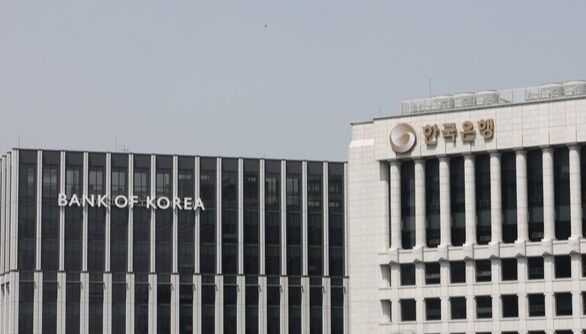
The Bank of Korea announced on the 3rd that the neutral interest rate in South Korea for the first quarter of this year is estimated to be between -0.2% and 1.3%.
The research team, led by Manager Do Kyung-tak of the Bank of Korea, presented this estimate at the 'BOK International Conference' last May and released a report titled "Estimation of Korea's Neutral Interest Rate" on the same day with the same content.
The neutral interest rate refers to the theoretical interest rate level at which the supply and demand of funds are balanced under stable prices without inflation or deflation. If the real interest rate is higher than this neutral rate range, it is considered contractionary; if lower, it is considered accommodative.
The research team stated that using four models proposed in previous studies, the long-term neutral interest rate in Korea had been declining for a long period but stopped declining after COVID-19 and slightly rebounded.
It fell continuously from 1.4% to 3.1% in the first quarter of 2000 to -1.1% to 0.5% in the first quarter of 2020, then rose again to -0.2% to 1.3% in the first quarter of this year.
Estimates for other countries showed a trend not significantly different from Korea's.
The research team explained that this trend is known to be related to various socioeconomic factors such as changes in productivity and potential growth, demographic changes, demand and supply of safe assets, and the spillover effects of the global neutral interest rate.
They further explained, "Changes in Korea's neutral interest rate are significantly influenced not only by domestic factors such as potential growth rate but also by external factors such as the U.S. policy interest rate."
The research team identified productivity increases related to artificial intelligence (AI) and responses to climate change as upward factors for the neutral interest rate, while continued population aging and declines in potential growth rate were cited as downward factors.
Earlier, Bank of Korea Governor Lee Chang-yong mentioned at the conference in May, "We intend to estimate the neutral interest rate considering financial stability," adding, "The neutral interest rate considering financial stability appears slightly higher than the neutral interest rate considering only price stability."
© The Asia Business Daily(www.asiae.co.kr). All rights reserved.