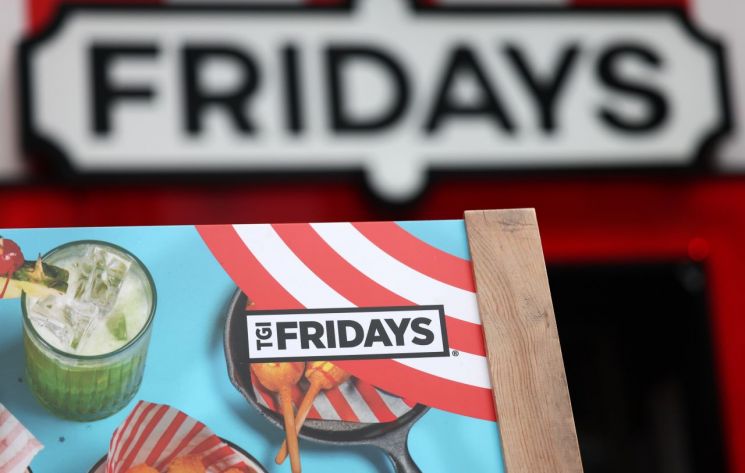
American family restaurant TGI Friday's (hereinafter TGIF), which was also popular in Korea, has filed for bankruptcy protection (Chapter 11) due to financial difficulties.
On the 2nd (local time), TGIF announced in a press release, "We have voluntarily filed a petition under Chapter 11 of the Bankruptcy Code today to resolve existing debts and lead the restaurants to long-term success."
The U.S. federal bankruptcy law 'Chapter 11' is a procedure that allows companies to continue operations under court supervision while restructuring their debts.
Rohit Manocha, chairman of TGIF, said, "The main causes of financial difficulties stem from COVID-19 and our capital structure," adding, "Through this restructuring, we will be able to build an optimized corporate foundation going forward."
However, this bankruptcy protection filing is limited to the U.S. corporation that owns and operates 39 restaurants within the United States. The company explained that 'TGI Fridays Franchisor, LLC,' which owns the global franchise brand and intellectual property rights, is not included in this filing. This entity owns the rights to the franchise brand sold to 56 businesses in 41 countries.
Recently, large-scale food service companies in the U.S. have been filing for bankruptcy protection one after another.
The seafood restaurant chain 'Red Lobster,' popular for its lobster and shrimp menu, also filed for bankruptcy protection and received court approval last September.
Italian chain 'Buca di Beppo,' fish taco chain 'Rubio's Coastal Grill,' and Mexican restaurant chain 'Tijuana Flats' are among the companies that filed for bankruptcy protection this year.
TGI Fridays is a representative casual dining chain in the U.S., which started in Manhattan, New York in 1965 and expanded its chain worldwide over 60 years. After peaking in 2008 with 601 restaurants in the U.S. and sales of $2 billion (approximately 2.761 trillion KRW), it has been on a downward trend, with sales in the U.S. last year amounting to only $728 million (approximately 1.005 trillion KRW).
© The Asia Business Daily(www.asiae.co.kr). All rights reserved.

















