Court Sentences 10 Years Imprisonment Matching Prosecutor's Demand
"Insulting Acquaintance at University Gathering the Best Minds"
The main perpetrator of the so-called 'Seoul National University Deepfake' (Seoul National University Nth Room) case, in which fake videos were created and distributed using photos of female alumni from Seoul National University, was sentenced to a heavy prison term in the first trial. Generally, the sentence in criminal trials tends to be lighter than the prosecution's demand, but in this case, the sentence matched the prosecution's request, resulting in a severe punishment.
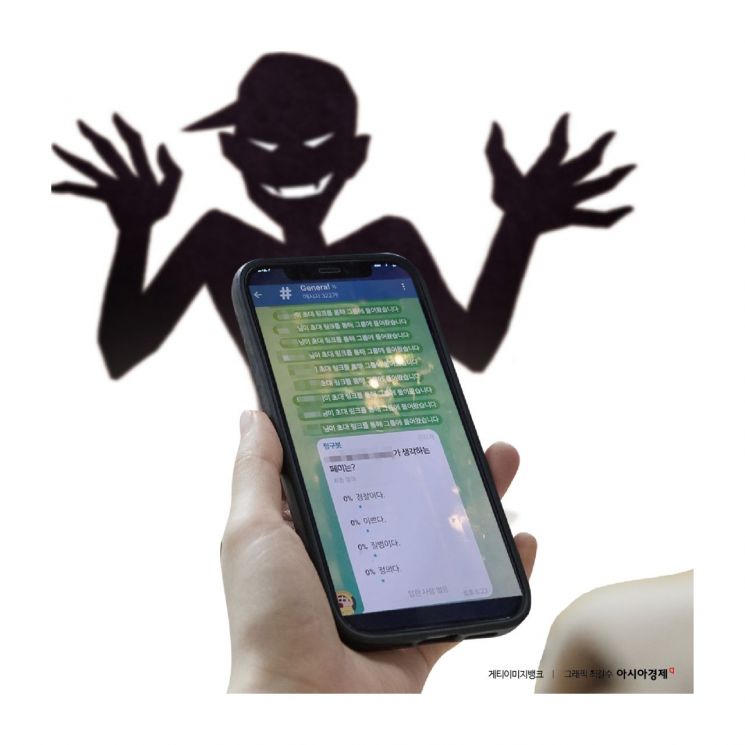
On the afternoon of the 30th, the Criminal Division 31 of the Seoul Central District Court (Presiding Judge Park Jun-seok) sentenced the main defendant Park (age 40), who was indicted for violating the Act on the Protection of Children and Juveniles from Sexual Abuse (production and distribution of sexual exploitation materials), to 10 years in prison. Co-defendant Kang (age 31), indicted for violating the Sexual Violence Punishment Act (editing and distribution of fake videos), was sentenced to 4 years in prison. Additionally, they were ordered to complete 80 hours of sexual violence treatment programs, disclose personal information for 5 years, and face employment restrictions for 5 years in facilities related to children and persons with disabilities.
The court stated, "The defendants committed 'digital sexual crimes' of 'humiliating acquaintances' against alumni at a university where the nation's top intellects gather," and criticized, "The victims did nothing wrong to the defendants and did not provide any pretext for the crime, yet the defendants selected victims as if choosing prey, sexually humiliating and obliterating their dignity." Furthermore, the court noted, "The fake obscene materials synthesized and distributed by the defendants and the conversations exchanged about them are extremely disgusting and vulgar in appearance and content, to the extent that a third party would find it difficult to confirm whether they are synthesized," and emphasized, "The damage should be assessed as equivalent to the leakage of actual intimate photos."
The court also said, "The victims had to live their social lives in fear and anxiety, suspecting all male acquaintances until the defendants were caught," and added, "They suffered severe disruption in daily life, unable to even post ordinary photos on social networking services (SNS) due to fear of being exploited for crimes, and will continue to live in endless anxiety. Therefore, recovery from the damage caused by this crime is practically impossible." The court rejected the defendants' request to consider mental factors such as exam stress, depression, obsessive-compulsive disorder, and ADHD in sentencing. "The defendants claim they committed the crime due to psychotic symptoms and ask for leniency, but in reality, they perversely expressed inferiority and hatred toward socially successful women, intoxicated by the anonymity and collective atmosphere guaranteed by Telegram," the court said, adding, "They committed the crime with arrogance, believing they could avoid punishment by exploiting security."
Moreover, the court emphasized, "Law-abiding members of society are defenseless except for not posting photos on SNS," and stated, "Therefore, it is the judiciary's duty to strictly punish the defendants to make them realize the serious disregard for law and morality hidden behind mere anonymity and to restore social order."
The Seoul National University Deepfake case involves Park and Kang, both Seoul National University alumni, who from July 2021 to April this year produced and distributed obscene materials by synthesizing photos of female alumni and others. Investigations revealed that the number of confirmed victims reached 61, including 12 Seoul National University alumni.
Rushed Legal Amendments Following Criticism of "Light Punishments," But Could Not Be Applied
The law related to deepfakes is Article 14 of the Special Act on the Punishment of Sexual Violence Crimes (Sexual Violence Punishment Act), enacted four years ago. It stipulates that editing, synthesizing, or processing video materials without the victim's consent to induce sexual shame, or distributing such materials without consent, is punishable by up to 5 years in prison or a fine of up to 50 million won. The punishment was weak, and it was pointed out that there was a blind spot because possession alone was difficult to punish.
However, as related cases including the Seoul National University Deepfake case occurred one after another, the National Assembly hastily strengthened the penalties last month. The statutory maximum sentence was raised from 5 to 7 years, and producers could be punished even if the purpose of distribution was not proven. However, the defendants in the Seoul National University Deepfake case had already been brought to trial, so the strengthened law could not be applied.
© The Asia Business Daily(www.asiae.co.kr). All rights reserved.

















